
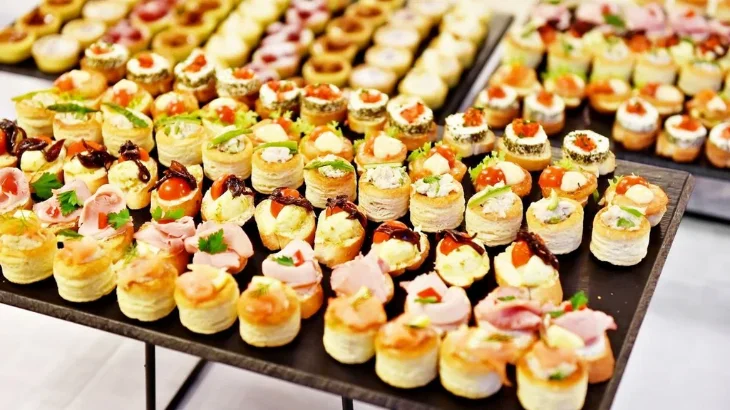

Booking a caterer feels straightforward until you’re sitting across from someone, tasting a prawn toast, and realising you forgot to ask whether the price includes staff, setup, and the serving trays. Then it’s awkward.
The good news is that a handful of well-chosen questions , asked before you sign anything , will tell you almost everything you need to know about whether a caterer is right for your event. Not just whether the food tastes good, but whether they’ll actually deliver what you’re expecting on the day.
This checklist is written for anyone considering finger food catering for an upcoming event: a birthday, a corporate function, a wedding cocktail hour, or anything in between. Save it. Bring it to the conversation. Your future self will be glad you did.
First, Why the Questions Matter
It’s tempting to book based on a recommendation and a menu you like the look of. But research from Toast’s restaurant catering study found that 58% of people say food quality is the most important factor when choosing a catering service. That number suggests most people are focused , rightly , on what the food will taste like. But quality on the day depends on a lot more than the menu: it depends on preparation, logistics, staffing, timing, and communication.
The questions below help you test all of those things before you commit.
1. What’s actually included in the price?
This is the question that saves the most grief. Catering quotes can look comparable on paper and be wildly different in reality, depending on what’s included.
Ask specifically whether the price covers:
- Service staff on the day
- Setup and pack-down time
- Serving equipment (trays, platters, tongs, napkins)
- Gratuity or service charge
- Travel to your venue
- Any hire items like chafing dishes or cool boxes
Experienced caterers recommend that clients ask for a full breakdown of what’s in , and what’s not in , the quote before comparing options. A lower headline price can easily become a higher final bill once extras are added in.
At Andrews Finger Food, we believe in transparent pricing from the first conversation. What’s in the quote is what you pay.
2. Can you accommodate dietary requirements?
This one sounds obvious, but the follow-up questions are where it gets useful.
It’s not enough to hear “yes, we do gluten-free.” Ask how they handle it. Are allergen-free items prepared separately, or on the same surfaces as everything else? Will dietary options be clearly labelled at the event? Can they accommodate multiple requirements , say, a guest who is both vegan and nut-free , without sending out a separate sad-looking plate that announces itself to the room?
Event catering specialists consistently flag that failing to plan for dietary restrictions is one of the most common , and most avoidable , catering mistakes. It can leave guests feeling uncomfortable or, in cases of serious allergies, genuinely at risk.
The right answer from a caterer isn’t just “yes, we can do that.” It’s a clear explanation of how they do it.
3. How far in advance do I need to book?
More than most people expect. Catering industry guidance typically recommends booking at least two to three weeks out for smaller events and four to six weeks for anything larger or more complex , and that’s a minimum. Good caterers fill their calendars quickly, particularly during peak periods like spring and end-of-year.
Ask your preferred caterer about their availability early, even before you’ve finalised all the details. Holding a date while you sort out the guest list is far better than losing the caterer you actually want.
One of the most consistent mistakes clients make is leaving catering until too late and ending up with a compromise. Don’t let logistics make your decision for you.
4. Can you tailor the menu to our event?
Every event has a different guest profile, atmosphere, and set of expectations. A retirement party for sixty guests feels different to a product launch for twenty-five, even if both run for the same duration.
Ask whether the caterer works from a fixed menu or whether they can adjust items, swap things in or out, or build something more bespoke around your brief. Ask about portion sizing too , a cocktail-hour finger food spread for guests who are eating before dinner is planned differently to one where the food is dinner.
This is one area where finger food catering Five Dock clients of Andrews Finger Food often tell us made the biggest difference: we work with you on the menu, not just present a take-it-or-leave-it list. Your event has a shape. The food should fit it.
5. Can we arrange a tasting?
If the answer is no, that’s worth noting.
A tasting is not just a nice-to-have. It’s a practical way to check that the food you’ve seen on a menu or in photos actually tastes the way you’re hoping. Presentation can be impressive without the food being particularly good. A tasting tells you the truth.
Industry experts recommend treating the tasting as one of the most consequential meetings in the planning process , not just a fun afternoon of eating, but a genuine chance to test the food, discuss portions, and see how the caterer responds to feedback. If they’re rigid and defensive, that tells you something. If they’re engaged and curious about what you want, that tells you something better.
Ask whether there’s a fee for the tasting and whether that cost can be applied to your booking if you go ahead.
6. Who will actually be there on the day?
This question catches people off guard, but it matters.
The person you meet during the booking process , the one who takes your brief, understands your event, and makes all the promises , may not be the person running the show on the day. Ask who will be your main contact, who will be on-site managing the service, and how many staff will be present relative to your guest count.
Wedding caterers often advise a ratio of roughly one server per ten to twelve guests as a reasonable benchmark. For a more active finger food service, where items are being passed around the room, you may want a higher ratio.
Knowing who you’re dealing with , and that they’ve been briefed properly , is the difference between a smooth event and one where small things fall through the cracks.
7. What’s your cancellation and change policy?
Nobody books catering expecting to cancel. But things happen: venue changes, unexpected weather for outdoor events, sudden changes in guest numbers, or a family situation that forces a rescheduled date.
Ask about the caterer’s policy on each of these before you sign anything. What notice do you need to give? What’s the fee for reducing numbers? Is there any flexibility if something genuinely unexpected happens?
A good caterer will have clear, written policies and will walk you through them without any awkwardness. If the response is vague, or if you’re handed a contract without any explanation of the terms, slow down.
8. Can you share any references or examples from similar events?
This is less about distrust and more about confidence. A caterer who has run a corporate cocktail function for 120 people in a rooftop venue, and has a client who’ll speak to the experience, is a more known quantity than one who’s only done seated dinners for small groups.
Ask for examples of events that are similar in size, format, and style to yours. Ask if they can share photos, or if they have a past client you could speak with briefly. Most caterers who are proud of their work are happy to point you toward it.
A Note on Gut Feel
No checklist replaces the simple question of whether you like dealing with these people. Catering involves a lot of back-and-forth in the lead-up to an event, and then trusting someone to represent you , your party, your business, your occasion , in front of your guests. That relationship matters.
If a caterer answers your questions clearly, takes your brief seriously, and seems genuinely interested in making your event good, that’s a strong signal. If answers are vague, corners are cut in the early conversations, or you feel like you’re being managed rather than heard, trust that feeling too.
The best catering relationships are ones where both sides are communicating well from the start. At Sydney finger food catering specialists such as Andrews Finger Food, that’s exactly the kind of conversation we’re interested in having.