
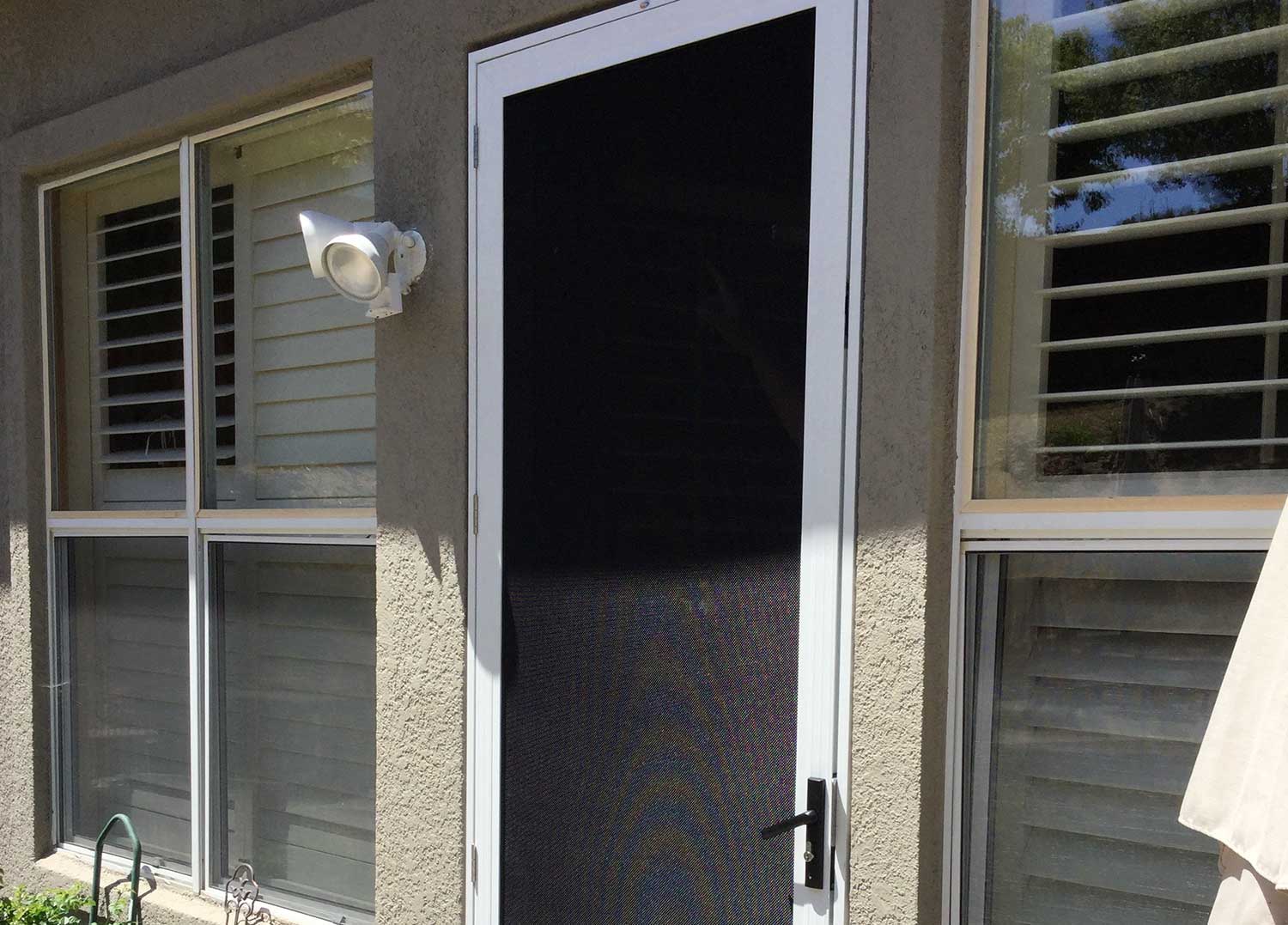

You’ve just found out your Sydney property is rated BAL-19, or maybe BAL-29, and you’re staring at a bushfire assessment report full of terms you’ve never had to think about before. What does that number actually mean for the doors and windows on your house, and does it have anything to do with keeping intruders out? For homeowners in leafy pockets of Sydney backing onto reserves, gullies or national park, this isn’t an abstract building-code detail — it directly shapes what you’re allowed to install on your home, and what genuinely protects it.
What a BAL Rating Actually Means
Bushfire Attack Level (BAL) measures how severely a building could be exposed to ember attack, radiant heat, and direct flame, expressed in kilowatts of radiant heat per square metre. Ratings run from BAL-LOW through BAL-12.5, BAL-19, BAL-29, BAL-40, up to BAL-FZ (Flame Zone), the most severe category. Your rating depends on your distance from bushland, the type of vegetation, and the slope of the land, and it’s confirmed through a written bushfire assessment. According to the NSW Rural Fire Service, 85% of houses lost during a bushfire are lost to ember attack rather than direct flame contact, which is exactly why window and door screening carries so much weight in the construction rules.
Sydney Has More Bushfire-Prone Land Than Most People Assume
It’s tempting to think of bushfire risk as a regional or semi-rural concern, but plenty of established Sydney suburbs sit right on the edge of the mapping. Ku-ring-gai Council’s most recent review identified more than 3,100 hectares of bushfire-prone land across the LGA, affecting 11,298 individual properties in that area alone. If your home backs onto a reserve, a gully, or bushland corridor anywhere across greater Sydney, it’s worth checking your property against the mapping before assuming the rules don’t apply to you.
What AS 3959 Actually Requires From Screens
Once your BAL is confirmed, Australian Standard AS 3959 sets out the construction requirements for every exposed building element, including windows and doors. In higher-risk zones, screens and mesh generally need to be non-combustible, with steel or corrosion-resistant stainless steel favoured over aluminium or plastic components that can soften or deform under heat. The mesh aperture matters too — a fine enough weave stops embers from being drawn through while still allowing airflow. Frames, seals, and hardware all need to hold their integrity under sustained heat, not just resist a single moment of exposure.
Bushfire-Rated Doesn’t Automatically Mean Break-In Rated
This is where many homeowners get caught out. A screen tested and certified for bushfire performance under AS 3959 hasn’t necessarily been tested for forced-entry resistance under AS 5039, and vice versa. They’re separate certifications assessing completely different failure modes. If home security is just as important to you as bushfire compliance — which it usually is — ask your supplier directly whether the product you’re being quoted has been tested to both standards, and ask to see documentation for each. Sydney home security solutions that are dual-tested exist, but they’re not the default, and a supplier who can’t answer the question clearly is worth a second look.
Getting the Installation Right
A compliant product poorly installed won’t perform to its rating in either category. Gaps around frames, incorrect fixings, or seals that don’t fully close all undermine ember resistance regardless of what the mesh itself is rated for. Ask for written confirmation of both the AS 3959 BAL rating and, where relevant, AS 5039 compliance before installation begins, and keep the documentation with your other property records — it’s often required for insurance purposes and future development applications. If you’re comparing quotes for Parramatta security doors or screens anywhere else in a mapped bushfire-prone area, ask each supplier for the same paperwork so you’re comparing like for like.
Insurance and Resale Considerations
Beyond the immediate safety benefit, keeping BAL compliance documentation on file can matter well beyond the day the screens go in. Insurers sometimes ask for evidence of bushfire construction standards when assessing claims on properties in mapped areas, and buyers’ solicitors increasingly request the same paperwork during due diligence on a sale. A folder with your AS 3959 certification, installation compliance labels, and any accompanying AS 5039 documentation is a small thing to keep organised now that can save considerable back-and-forth later.
The Bottom Line
If your home sits on mapped bushfire-prone land, your BAL rating isn’t just paperwork — it determines what you’re legally required to install, and getting it wrong can mean failed compliance or a false sense of protection. Confirm your rating, ask for AS 3959 documentation, and if security from intruders matters to you too, make sure that’s addressed separately rather than assumed.
Frequently Asked Questions
How do I find out my property’s BAL rating?
A BAL rating is usually confirmed through a bushfire assessment prepared by an accredited consultant or your local council as part of a development or renovation application. You can also check whether your land is mapped as bushfire-prone using the NSW RFS online tool.
Do existing homes need to be upgraded to meet current BAL requirements?
Generally, no — upgrades are mandatory for new builds, renovations, and additions on mapped land, not retrospectively for existing dwellings. The NSW RFS does still recommend voluntary upgrades to improve ember protection in older homes.
Can one screen be certified for both bushfire and security performance?
Yes, but only if it’s been independently tested and certified against both AS 3959 and AS 5039 separately. Always ask for documentation covering both standards rather than assuming one certification implies the other.
What materials perform best in higher BAL zones?
Non-combustible materials such as steel and corrosion-resistant stainless steel mesh generally outperform aluminium or plastic components, which can soften or deform under sustained radiant heat, compromising the screen’s protective seal.
Does a BAL rating apply to renovations, or only new builds?
It applies to alterations and additions on bushfire-prone land too, not just new construction. Even smaller renovations may need to meet the same construction requirements as the rest of the dwelling if they’re within the mapped area.