
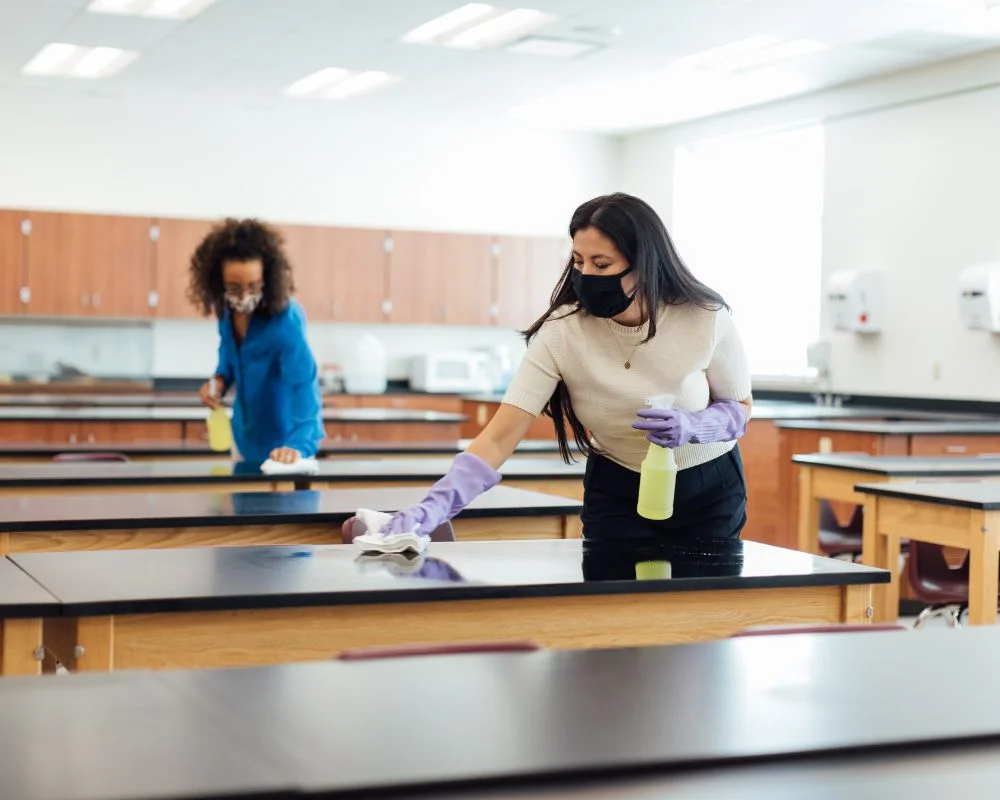

By the time the afternoon bell rings, a school has been through a lot. Hundreds of students have queued at the canteen, washed their hands (or not), dragged sand in from the playground and left fingerprints on every door, desk and tap. By 8.30 the next morning, all of that needs to be gone.
That’s where a clear daily cleaning checklist earns its keep. It takes the guesswork out of the job, makes sure nothing gets missed and gives principals and business managers a simple way to check the standard is being met. Here’s what should be on it.
Why a Daily Checklist Matters
Without a written checklist, cleaning tends to drift. Some areas get extra attention while others are quietly skipped, and the gaps only show up when a parent complains or a toilet block starts to smell.
Daily cleaning also matters for student health. According to Australian Bureau of Statistics data, about one in ten boys and around one in sixteen girls aged 14 and under had asthma in 2022. Dust, mould and other allergens can set off symptoms, so keeping floors, surfaces and air vents clean every day helps make classrooms safer for these children.
A checklist also protects your school. If questions are ever raised about hygiene, a signed-off record shows exactly what was cleaned and when.
Toilets and Washrooms
Toilets are the most important area on any school checklist. They’re used constantly, they spread germs quickly and they’re the first thing families judge. Every day, cleaners should:
- Clean and sanitise toilet bowls, seats, urinals and flush buttons
- Wipe down basins, taps, mirrors and hand dryers
- Mop floors with a disinfectant cleaner
- Empty sanitary and general waste bins
- Refill soap, paper towel and toilet paper
- Check for blocked drains, leaks or vandalism and report them
Classrooms and Learning Spaces
Classrooms are where students spend most of their day, so they need a thorough daily going-over. The focus is on the surfaces students touch and the floors they sit on.
- Wipe desks, chairs and benchtops
- Clean whiteboards and wipe down shared devices such as keyboards and tablets
- Empty bins and recycling
- Vacuum carpets and mats, and sweep and mop hard floors
- Spot-clean marks and spills on walls and doors
Junior classrooms often need a little extra time. Younger children are messier, sit on the floor more often and share toys and equipment throughout the day.
Libraries, Halls and Specialist Rooms
Libraries, halls, science labs, art rooms and music rooms don’t always get used every day, but when they do, they need cleaning that night. A quick check of the timetable tells cleaners which rooms were in use and need attention.
In libraries, that means vacuuming carpets, wiping tables and shared computers, and emptying bins. Science labs and art rooms need benches and sinks cleaned thoroughly, as paint, glue and spills can quickly stain surfaces if left overnight. Halls used for assemblies, sport or after-school activities should be swept or mopped and checked for rubbish before the next day’s classes begin.
Canteens, Kitchens and Staff Rooms
Anywhere food is prepared or eaten needs careful daily cleaning to prevent pests and food-borne illness. In canteens, the canteen team usually handles food preparation surfaces, but cleaners should still take care of the floors, bins and eating areas.
In staff rooms, the daily list should cover benchtops, sinks, the outside of the fridge and microwave, tables and chairs, and the floor. Overflowing staff room bins are a common complaint, so emptying them every day is a must.
Floors, Entrances and Hallways
Entrances and hallways carry the heaviest foot traffic in the school, and they’re where dirt from outside first comes in. Sweeping or vacuuming these areas daily stops sand and grit from spreading through the rest of the building.
Entry mats should be shaken out or vacuumed, and any wet or sticky patches cleaned straight away to reduce the risk of slips. A tidy front entrance also makes a good first impression on visitors.
High-Touch Points Across the School
Some surfaces are touched hundreds of times a day, no matter which room they’re in. These deserve their own line on the checklist so they’re never overlooked:
- Door handles and push plates
- Light switches
- Stair rails and handrails
- Drinking fountains and bubblers
- Lift buttons and shared phones
During flu season or a gastro outbreak, it’s worth cleaning these points more than once a day.
What Doesn’t Need Doing Every Day
Not every job belongs on the daily list. Dusting high shelves, cleaning internal windows and wiping down lockers can usually be done weekly. Bigger tasks, like deep-cleaning carpets or stripping and resealing floors, are best saved for the school holidays.
Outdoor areas follow their own timetable too. Walkways, covered outdoor learning areas and eating spaces pick up gum, food stains and grime over a term, and booking school pressure cleaning on the Gold Coast during the holidays keeps them clean and safe underfoot without disrupting students.
Making the Checklist Work
A checklist is only useful if it’s followed. The best results come when the list is tailored to your school’s layout, signed off each night and reviewed regularly with your cleaning provider.
Working with experienced Gold Coast commercial cleaning services gives you a team that already knows what schools need. A good provider will walk through your site, build a checklist around how each space is used and adjust it as your needs change through the year.
The Takeaway
A daily school cleaning checklist should always cover toilets, classrooms, food areas, floors and high-touch points. Everything else can be scheduled weekly or during the holidays.
Get those daily basics right and you’ll have a school that looks good, smells fresh and gives students and staff a healthier place to learn and work.
Frequently Asked Questions
What should be on a daily school cleaning checklist?
At a minimum, a daily checklist should cover toilets and washrooms, classrooms, canteens and staff rooms, floors and entrances, and high-touch points like door handles, light switches, railings and bubblers. Bins should be emptied and supplies such as soap and paper towel restocked every day.
What time of day should schools be cleaned?
Most daily cleaning is done after students leave in the afternoon or evening. This gives cleaners full access to rooms without disrupting lessons, and it means the school is fresh and ready when students arrive the next morning.
Which areas in a school carry the most germs?
Toilets, door handles, drinking fountains, shared keyboards and desks are usually the biggest germ hotspots. These are touched by many students throughout the day, which is why they should be cleaned and sanitised every day.
Does a school cleaning checklist need to be signed off?
It’s a good idea. A signed checklist shows exactly what was cleaned and when, helps you spot any missed areas and gives you a clear record if hygiene concerns are ever raised by staff or parents.
Should the daily checklist change during flu season?
Yes. During winter or an illness outbreak, high-touch surfaces and toilets should be cleaned more often, sometimes with an extra midday clean. Your cleaning provider should be able to step this up quickly when needed.