
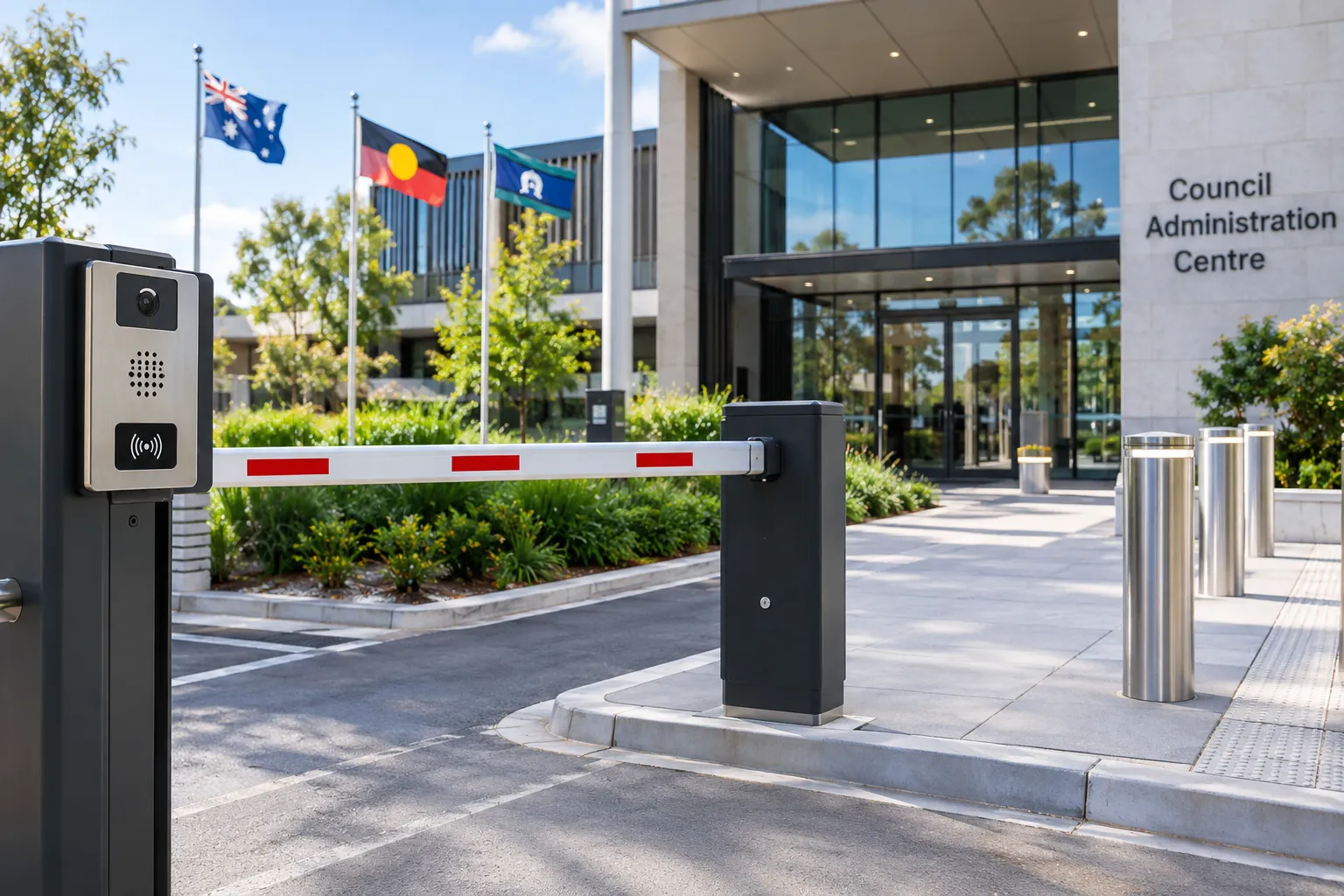

Council and government facilities in Australia function differently from private businesses. They must stay open and welcoming to the public, while also protecting staff, vehicles, equipment, and sensitive records. A works depot, a waste transfer station, a council chambers car park, and a water treatment plant all require different levels of access, often within the same organisation.
Balancing these priorities starts at the gate. The right access setup lets the public in where they belong and keeps everyone else out of areas they don’t need access to. As a trusted provider of physical automated security systems in Australia since 2007, we provide insights that help you make informed decisions.
This blog explains several council and government facility access solutions, enabling you to choose the best intervention for your facility and gain long-term peace of mind.
The Cost of Leaving Facilities Exposed
Public property damage is expensive. Worse, ratepayers end up footing the bill. In late 2024, Townsville City Council reported more than $200,000 in vandalism damage across just one council division in a single year, from broken beach taps and drinking fountains to repeated repairs on public toilet blocks.
Those figures relate to open public spaces rather than gated sites. The findings indicate how quickly costs add up when these public spaces are easily accessible. Depots full of trucks, fuel, tools and materials are an even bigger target, which is why site managers must prioritise controlling vehicle and foot access.
Common Council and Government Sites
These are the common council and government sites in Australia. Understanding each facility’s access needs allows you to determine the appropriate intervention for your property:
- Works depots: Depots accommodate trucks, plants, fuel and tools. Access is usually limited to staff and approved contractors, with tight control after hours.
- Waste and recycling centres: These facilities welcome the public during opening hours and lock down completely overnight.
- Administration buildings and chambers: These structures need secure staff and councillor parking, while keeping visitor parking easy to use.
- Water, sewage, and power infrastructure: These facilities are critical to the community and need strong protection from tampering.
- Libraries, pools, and community centres: They need flexible access for staff, hirers, and cleaners at different times.
- Emergency services sites: Fire, ambulance, and police stations need fast, reliable exit for response vehicles at any hour.
Access Options That Suit Public Facilities
Understanding the functions and benefits of access options for public facilities allows you to protect your facility and make informed buying decisions. These include:
Boom gates: These gates control high-traffic car parks and site entries. They suit visitor parking, staff car parks, and the entry lanes at waste centres.
Automated security gates: Automatic security gates, such as sliding or swing gates, provide a solid physical barrier for depots and infrastructure sites. When closed, they secure the whole opening, not just a lane.
Pedestrian gates and turnstiles: These access options manage foot traffic into secure areas, allowing staff to walk in while the public stays out.
Bollards: These structures protect building entries and public plazas from vehicles, while still allowing people to walk freely.
Choosing How People Get In
Councils and agencies deal with large numbers of staff, contractors, and visitors. Integrating the appropriate access method allows them to control traffic and drastically improve security measures. These access methods are worth considering for your government and council facility:
- Swipe cards or fobs: They can be added or cancelled from a computer, which matters when staff change roles or contractors finish their work.
- Number plate recognition: This access method lets fleet vehicles and approved contractors drive straight in without stopping.
- Intercoms with cameras: These innovations let reception or security staff check and admit visitors remotely.
- Time-based access: This access feature opens gates automatically for public hours and locks them outside those times.
Most systems also keep a log of every entry and exit. For public bodies, that record helps with audits, incident investigations and questions from the community.
Things Government Buyers Should Consider
Whether considering boom gates, automated security gates, pedestrian gates, or bollards, these considerations allow government buyers to make sound, long-term buying decisions:
Procurement rules: Councils and agencies usually buy through tenders, quotes. or approved supplier panels. Choose a supplier who understands that process and can provide clear documentation, insurance details and compliance information.
Accessibility: Public facilities must be usable by everyone. Gates, intercoms, and card readers should be placed at heights that suit wheelchair users, with clear signage and enough time for people to pass through.
Safety standards: Automated gates must include safety features, such as obstruction sensors and safe closing forces, so they stop or reverse if they detect an obstruction.
Emergency access: Fire, ambulance, and police crews need to get in quickly. Plan for emergency override systems, and make sure gates fail in a safe position during power cuts.
Long-term value: Public assets are expected to last. Consider only durable equipment, local servicing, and spare parts that can meet your facility’s long-term access requirements.
Working With a Local Supplier
Choosing QLD boom gate solutions from a supplier who knows local conditions makes a real difference. Queensland’s heat, humidity, storms and coastal salt air are tough on gates and electronics. A local supplier can recommend equipment that can withstand those conditions, install it properly, and respond quickly when something needs attention.
A good supplier will also look at the bigger picture, helping you plan access across several sites rather than treating each gate as a separate job. Ask for a site visit, a written quote that lists every component, and a maintenance plan with set response times. Those details make tender comparisons easier and help protect public money over the life of the equipment.
At Create Security, we can help secure your council and government facility with innovative automated security systems that deliver a high return on your investment and long-term peace of mind. Book an appointment to discuss your unique requirements and experience transformative automated security technology.
Frequently Asked Questions (FAQs)
Can one access system cover several council sites?
Many access control systems manage multiple sites from one computer. Staff cards can open the gates they need across depots, offices, and facilities. Access can also be changed centrally when roles change.
How do automated gates handle emergency vehicles?
Gates can be fitted with emergency override systems, such as siren detection, key switches, or remote release from a control room. We recommend planning these features with local emergency services so crews never get stalled during critical response times.
Can gates open and close on a public schedule?
Time-based settings can open gates automatically for public hours at waste centres or car parks, then lock them at closing time. Holiday schedules can be programmed in advance.
What happens to automated gates during a power cut?
Gates with battery backup keep working for a set number of cycles. Others can be released manually. Decide in advance whether each gate should stay open or locked during an outage.
Do access systems keep records of who entered?
Most modern systems log each entry and exit with the time, date, and card or number plate used. These records help with audits, incident investigations, and managing contractor attendance.