
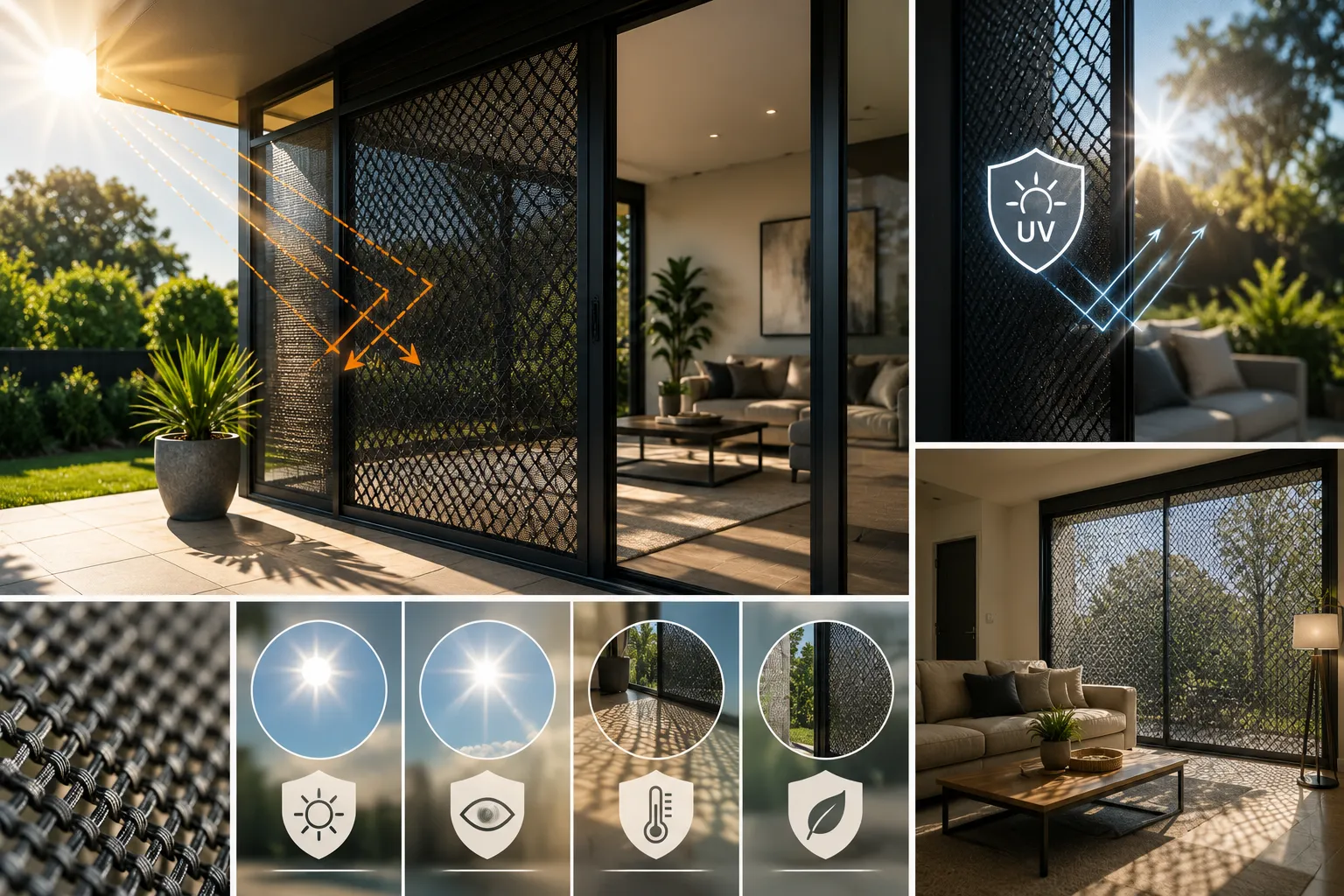

Anyone who’s sat near a west-facing window on a summer afternoon in Sydney knows the glare and heat can be brutal, even with the glass closed. It raises a fair question for homeowners weighing up security doors and screens: could the mesh doing the job of keeping your home secure also help cut down on sun exposure? The honest answer is more nuanced than a simple yes, but there are real benefits worth understanding before you assume your windows alone have you covered.
Australia has some of the highest ambient UV levels in the world, and most of that exposure happens outdoors. But the amount of time people spend near sunny windows at home, reading, working from a home office, or just sitting in a favourite spot in the lounge room, is easy to underestimate. Understanding what your windows are and aren’t blocking is the first step to making a sensible decision about screens.
What Actually Stops UV at Your Windows
Standard household glass already blocks UVB, the ray mainly responsible for sunburn, but only laminated glass fully blocks UVA, the type that penetrates deeper into skin and drives long-term damage. Regular residential window glass can let a substantial share of UVA through, which is part of why furniture and flooring near a sunny window fade over time. Security screens sit in front of that glass and add a further physical layer, reducing the amount of direct sunlight, and the glare and heat that come with it, reaching the room, even though a flyscreen-style mesh isn’t a laminated-glass substitute. Tinted or laminated glazing remains the most effective single upgrade for blocking UVA outright, but not every homeowner wants to replace their windows, which is where a well-chosen security screen becomes a practical middle ground.
Where Security Screens Genuinely Help
A well-fitted security screen filters and diffuses direct sunlight rather than blocking it outright, which is exactly why afternoon glare feels noticeably softer in a room with screens fitted. Less direct sun hitting furniture, floors and skin also means less accumulated heat indoors, which is a welcome side benefit during a Sydney summer. For homeowners in Hunters Hill, where many properties have large west-facing windows that catch the afternoon sun hard, Hunters Hill security screens are often chosen as much for comfort and glare control as for the security they provide. It’s a common pattern across Sydney’s leafier, established suburbs, where older homes tend to have larger single-glazed windows that were never designed with today’s summer intensity in mind.
Where Screens Aren’t a Substitute for Sun Protection
It’s worth being upfront: a security screen is not a medical-grade UV filter, and it shouldn’t replace sensible sun protection habits. Cancer Council Australia notes that UV exposure through windows carries minimal risk for most people, but recommends extra care if you spend long periods sitting right beside a sunny window, since UVA can still reach you there. If you or a family member spends hours each day near a large glazed door or window, a home office desk, a favourite reading chair, a nursery window, screens plus curtains or blinds during peak UV hours is a more complete approach than screens alone. Skin damage from UV builds up gradually, so it’s the long daily habits near a sunny window that matter most, not the occasional walk past one.
Choosing Screens With Sun Comfort in Mind
If reducing glare and heat is a priority alongside security, mesh density and colour both make a difference, a tighter weave in a darker finish generally cuts more glare than a lighter, more open mesh, though it will also reduce visibility slightly more. The team at OnGuard Security can talk through which mesh options suit a north or west-facing aspect if sun comfort is as important to you as the security itself. It’s also worth thinking about which rooms matter most, a home office or main living area that gets hard afternoon sun benefits far more from a denser mesh than a spare room that’s rarely used during the day.
Security screens won’t do the job of sunscreen, but they’re a genuinely useful layer against glare, heat and everyday UV exposure through your windows. Pair them with sensible habits on the days the UV index climbs, and you get both a safer and a more comfortable home, one less thing to worry about whether it’s a scorching afternoon or a quiet evening with the doors open.
Frequently Asked Questions
Do security screens block UV rays completely?
No. They reduce direct sunlight and glare but aren’t a laminated-glass substitute, so some UVA can still pass through the window itself. They’re a helpful addition to sun protection, not a replacement for it.
Will security screens make my house less bright inside?
Slightly, depending on mesh density and colour. Most homeowners find the trade-off worthwhile, since softer natural light reduces glare on screens and furniture without making rooms feel dark.
Can security screens help reduce heat inside my home?
Yes, to a degree. By diffusing direct sunlight before it hits glass and flooring, screens can reduce the heat build-up in a room, particularly on north- or west-facing windows during summer afternoons.
Do I still need sunscreen if I’m sitting near a screened window?
Generally no for short periods, but if you’re near a sunny window for hours at a time, some UVA can still reach you through the glass. Clothing or closing curtains during peak UV hours adds extra protection.
Does mesh colour affect how much glare a screen blocks? Yes. Darker, tighter-weave mesh generally cuts more glare and direct light than lighter, more open weaves, though it can reduce outward visibility slightly, so it’s worth discussing your priorities before choosing.