
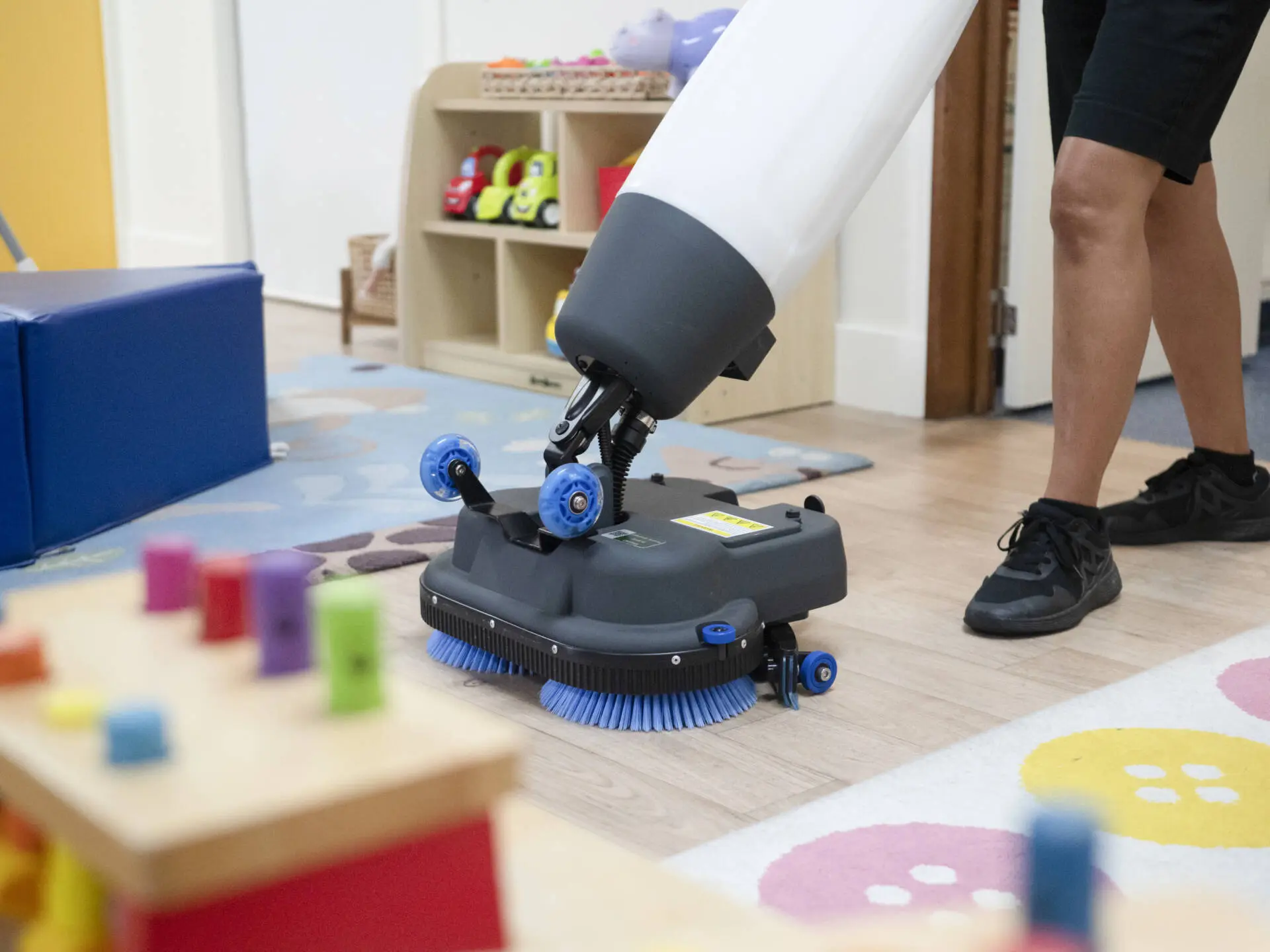

Ask five childcare directors what “cleaning” covers at their centre and you’ll likely get five different answers. Some picture a person emptying bins and mopping floors after closing. Others picture a full checklist stretching from cot rails to air vents. This gap matters, because when a family walks through your centre for the first time, or an assessor arrives for a spot check, the difference between the two shows immediately.
If you’re comparing quotes or wondering whether your current arrangement is actually covering what it should, it helps to know exactly what a genuine childcare cleaning service includes — and where the line sits between general tidying and the deeper work that keeps a centre genuinely hygienic.
Daily Cleaning Tasks
The daily list is where most of the health benefit sits, because it targets the surfaces children touch, mouth and sit on constantly. This typically includes wiping down tables, chairs, door handles and light switches, disinfecting nappy-change stations after every use, cleaning and sanitising toys and shared equipment, and mopping and vacuuming all floor areas. Bathrooms and kitchen or food-prep areas are cleaned and disinfected at least once a day, often more in centres with younger age groups or higher enrolment numbers.
Bins are emptied and lined, cots and sleep mats are wiped down between uses, and any visible spills or accidents are dealt with immediately rather than left for the next scheduled clean. None of this is glamorous work, but skipping any of it is usually the first domino in an illness outbreak moving through a room.
It’s also worth noting who is responsible for restocking as part of the daily routine — soap, paper towels and hand sanitiser running out partway through the day undoes a lot of the good that regular cleaning does, so a proper service usually includes basic consumable checks alongside the cleaning itself.
Weekly and Periodic Deep Cleaning
Beyond the daily routine, a proper childcare cleaning service includes tasks that don’t need doing every day but still need doing regularly. Carpets, rugs and soft furnishings are vacuumed and periodically steam cleaned to remove dust, allergens and ground-in dirt that everyday cleaning can’t reach. Windows, skirting boards, air vents and light fittings are wiped down on a rotating schedule, and outdoor play equipment, sandpits and shaded areas get their own periodic attention too.
These tasks are usually scheduled outside operating hours or on weekends, so they don’t interrupt the children’s day and the centre is ready to go when doors open the next morning.
Compliance-Focused Cleaning
Cleanliness isn’t just a nice-to-have in childcare — it’s tied directly to regulatory obligations under the National Quality Framework. ACECQA’s most recent national performance data shows that the rule requiring premises, furniture and equipment to be kept safe, clean and in good repair is one of the most frequently breached requirements nationally, sitting just behind emergency and evacuation procedures. A dedicated cleaning service helps close this gap by keeping records of what was cleaned and when, giving directors documentation they can point to if an assessor asks how hygiene standards are being maintained.
This kind of paper trail also matters at reassessment time, when services are expected to demonstrate consistent practice rather than a one-off effort made just before an inspection.
What a Professional Provider Adds Beyond Basic Tidying
A general cleaner might tick off the daily list above without understanding why the order of tasks matters — for example, cleaning a nappy-change area before wiping down a snack table, rather than after, risks spreading contamination rather than removing it. A Oz Commercial Cleaning Gold Coast team trained specifically for education and care settings understands this sequencing, along with which disinfectants are appropriate around young children and how long surfaces need to stay wet with a product before it’s actually effective.
That knowledge is the real difference between a centre that looks clean and one that is properly, measurably hygienic. It also means fewer surprises: a provider who knows the sector won’t need reminding that toy bins need daily attention or that cot rails are a high-touch area, because it’s built into how they work every day.
Choosing the Right Childcare Cleaning Partner
When comparing providers, ask exactly what’s included in the quoted price — daily tasks, weekly deep cleans and periodic work should all be spelled out, not bundled into a vague “general clean” line item. A specialist Gold Coast childcare cleaning provider should be able to walk you through their schedule room by room and explain how it lines up with National Quality Standard expectations, not just hand over a generic office-cleaning checklist with a few extra lines added.
It’s also worth asking about staff vetting, since cleaners working in an occupied centre, or arriving before children leave, need the same background-check standards as anyone else on site.
Price comparisons across providers can be misleading if one quote covers daily tasks only and another bundles in weekly deep cleans as standard. It’s worth asking providers to itemise their inclusions rather than comparing a single bottom-line figure, since two very different service levels can otherwise look identical on paper.
The Bottom Line
A genuine childcare cleaning service is far more than someone emptying bins at the end of the day. It’s a structured combination of daily hygiene tasks, scheduled deep cleans, and documentation that supports your compliance obligations — all handled by people who understand why a childcare centre needs a different approach to cleaning than an office ever would.
If you’re not entirely sure what’s covered under your current arrangement, it’s worth asking for a full breakdown. The gap between “cleaned” and “clean enough for a childcare centre” is usually smaller on paper than it is in practice.
Frequently Asked Questions
What’s the difference between daily cleaning and a deep clean?
Daily cleaning covers high-touch surfaces, toys and bathrooms that need attention every day. Deep cleaning covers less frequent tasks like carpet steam cleaning, air vents and light fittings, usually scheduled weekly, monthly or quarterly outside operating hours.
Should nappy-change areas be cleaned after every use?
Yes. Nappy-change stations should be disinfected after every single use, not just at set times during the day, since this is one of the highest-risk areas for spreading bacteria between children and staff.
Do childcare cleaners need any special training?
Ideally yes. Cleaners working in childcare settings should understand child-safe chemical use, correct disinfectant contact times, and cross-contamination risks specific to nappy-change and food-prep areas, which differ from general commercial cleaning.
How does cleaning affect our National Quality Standard rating?
Cleanliness and hygiene fall under Quality Area 2 and Quality Area 3 of the National Quality Standard. Poorly maintained premises and inconsistent hygiene practices are common reasons services fall short during assessment and rating visits.
Can we request a documented cleaning schedule from our provider? Yes, and it’s worth doing so. A written schedule showing daily, weekly and periodic tasks gives you a reference point for staff, families and regulatory assessors, and helps confirm nothing is being missed.