
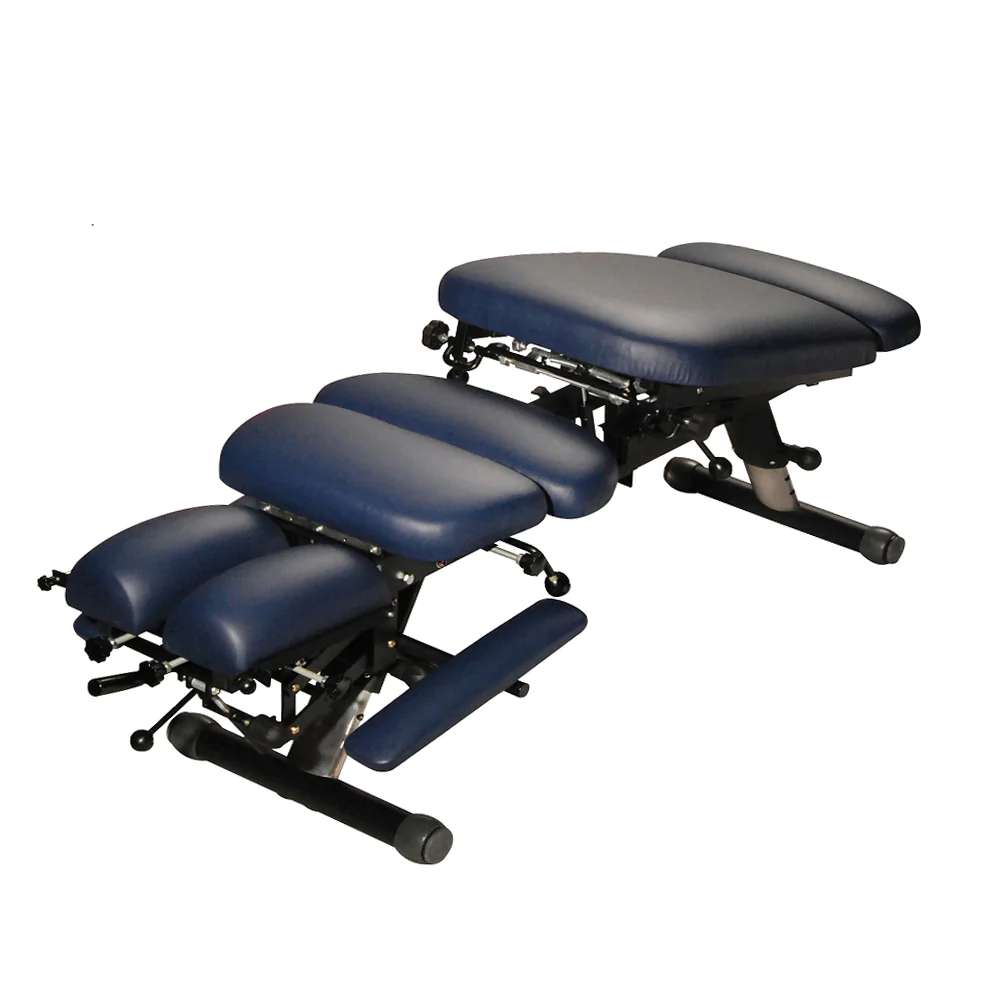

The chiropractic doctor’s office should not be strange to many people as it is an aspect of medical practice that is quickly gaining popularity both in the medical industry and other health-related industries, like fitness and sports. Chiropractic involves adjusting joints and muscles to relieve pressure and pain in the body. This practice is gaining popularity because it proffers a non-invasive measure to correct and treat irregularities in body parts.
One instrument popular in many chiropractic doctor’s offices is the drop piece table, as it is the primary and most-essential facility needed to perform chiropractic. This table has made chiropractic practice more straightforward and convenient for doctors performing the treatment and the patients receiving treatment. However, for educational purposes, this article will outline what a drop-piece table is, its history, how the table works, and its benefits.
What Is a Drop Piece Table?
As mentioned earlier, the drop-piece table is instrument chiropractic doctors use to administer treatment. The drop piece table tells the chiropractic doctor what laboratory is to a laboratory technician. The laboratory technician can conduct tests without an actual laboratory, but a laboratory ensures the test results are uncontaminated and accurate.
Likewise, as many alternative facilities can be used, a chiropractic doctor can administer treatments without a drop-piece table. However, like the laboratory, drop-piece tables make administering treatment convenient and easier for the chiropractic doctor and the patient.
How Did the Drop Piece Table Come to Be? (Its History)
The drop piece table was discovered in Alma Mater, Palmer College of Chiropractic, by its student. This unique invention that has gone forth to redefine chiropractic practice is an invention of chance, as there is no such thing as accidents.
A student of my Alma Mater, Palmer College of Chiropractic, named Dr. J. Clay Thompson, purchased a table with a broken headpiece to administer treatment to patients. The exciting thing was back then, the table was described as faulty, but Dr.. Thompson was a student looking to try new things. He used the broken headpiece table to administer treatment for some time, after which he changed to a table with a sturdy headpiece.
However, he noticed that the table with a study headpiece (excellent working table) had his patients complaining as they were displeased with the adjustment experience from the treatment. This complaint caused him to reminisce on and compare patients’ reactions to the experience of using the broken table to the experience of using the table’s sturdy headpiece. Thompson discovered that patients’ enjoyed their experience from adjustments performed using a table with a broken headpiece more than they experienced from adjustments performed using a table with a sturdy and good headpiece.
Thompson was curious to understand why patients preferred the experience of the broken table to the experience of the sturdy and functional table. His examinations showed that the difference in experience between both tables was the drop in the table with a broken headpiece during adjustments. He then associated the drop experienced in the broken headpiece table with Newton’s first law, which states, a body remains in a state of rest unless acted upon by external forces.”
Thus, the motion from the broken headpiece table makes the adjustment experience convenient for patients. The functional table with a sturdy headpiece did not experience any motion change during adjustments, which was discomforting for the patient receiving adjustments. This discovery birthed the drop piece table, with Dr. Thompson naming it Thompson’s table.
How Does the Drop Piece Table Work?
As mentioned earlier, the drop piece table or Thompson’s table obeys Newton’s first law of motion. The first version of the table only featured a broken headpiece that dropped some distance. This drop allowed the muscles in the headpiece area to be relaxed, and gravity also acted on this dropped part; thus, the doctor would not need to exert much pressure when adjusting the joints and muscles around the headpiece area. Plus, the drop made adjustments easier on the patient’s nerves and muscles.
The drop-piece table designs that followed feature drops or breaks in various parts of the table asides from the headpiece. These breaks or drops in other table parts were tailored for a technique Dr. Thompson invented. This technique is mainly used when using a drop-piece table for adjustments, and understanding this technique gives a better understanding of how the drop-piece table works.
The Thompson technique is divided into five categories, which are the guidelines for the sections the Thompson table is divided into. These categories include:
- Cervical syndrome
- Positive Deerfield
- Negative Deerfield
- Bilateral Cervical Syndrome
- X-Deerfield
Hence, the drop piece table inspects and adjusts vertebral subluxation from the leg to the head. The drop sections on the table make adjustments easy for the doctor because when the patient lays down on the table, the table is adjusted based on the area to be examined and adjusted. It is essential to mention that the Thompson technique is not the only technique drop piece tables are used for; some include SOT, Diversified and Logan basic, and Gonstead.
Benefits of Drop Piece Tables
We have seen what drop-piece tables are, their history, and how they work. We should know how they have benefited from chiropractic treatment. These are some ways drop-piece tables have benefited chiropractic treatment:
- Reduces Fatigue: Chiropractic is a treatment that demands effort, as the doctor needs to examine and position body parts before adjusting. Even when adjusting pressure is needed, this energy use can be telling on the doctor’s shoulders and joints. This leaves them subject to fatigue as they perform treatments on different people. However, drop-piece tables reduce the amount of effort the doctor uses when adjusting, and the table can be adjusted to ease the doctor’s effort.
- Convenience: Sometimes, patients are uncomfortable with how the doctors direct their body parts during adjustments; plus, the heightened pain worsens the experience. This inconvenience does not exist with drop-piece tables, as the design allows body parts to be adjusted in a natural position; thus reducing the pain experienced and making the experience convenient.
- Versatility: As mentioned earlier in the text on how drop piece tables work, these tables allow doctors to perform different adjustment techniques. Although, the predominant technique drop piece tables are used for is the Thompson technique.
- Any chiropractic doctor can administer treatment: Before the advent of drop piece tables, the gender that populated chiropractic practice was male. They had a big stature as this was needed to perform adjustments accurately. However, the drop piece table changed the narrative as anyone can administer treatment because they make it easy to perform adjustments.
Conclusion
Drop Piece tables have become an essential tool in chiropractic practice; thus, every chiropractic doctor has one in their office. This article has explained what drop-piece tables are, their history, and more.