
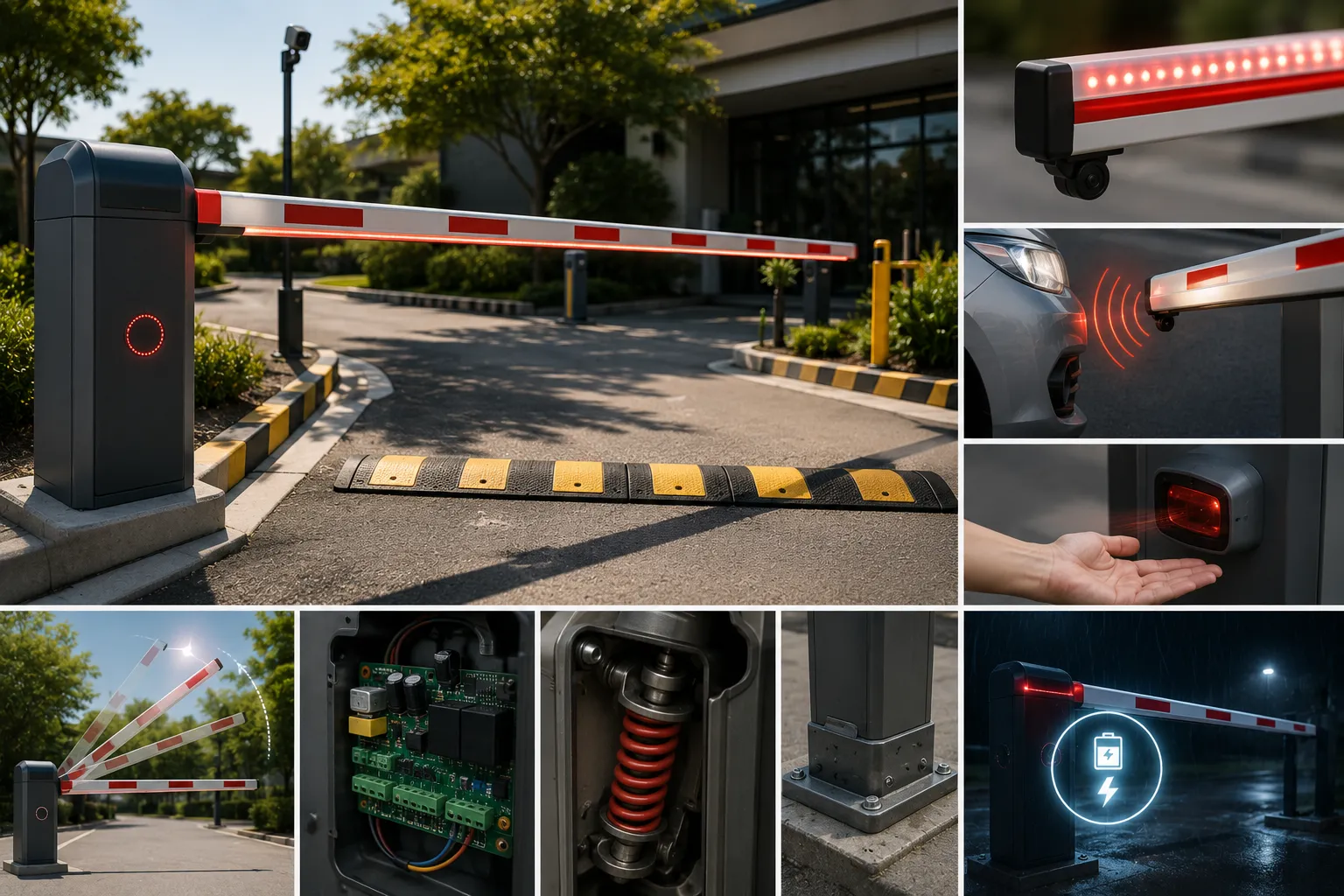

A boom gate arm weighs enough to hurt someone. It swings through a lane where cars, delivery vans and people on foot are all moving at once, often within a metre or two of each other, and at a busy site it does that a few hundred times a day. Most Sunshine Coast boom gates handle this without trouble for years. The ones that do not are usually missing a safety feature, and nobody notices the gap until somebody gets hurt.
Vehicles Kill More Australian Workers Than Anything Else
It helps to put the risk in perspective. In 2024, vehicle incidents accounted for 42% of all workplace fatalities in Australia, or 79 of the 188 traumatic injury deaths recorded that year, according to Safe Work Australia. That is more than three times the next biggest cause, falls from height, and vehicles have held the top spot for a decade running.
Most sites funnel vehicles and people into the same few metres of driveway, and a boom gate is the equipment standing in that gap. What it can actually stop depends on hardware that rarely comes as standard, so the question has to be asked while you are still comparing quotes.
1. Sensors That Stop the Arm Before It Hits
Photoelectric beams and radar sensors watch the space under the arm. While anything is sitting in that space, the arm stays up.
A boom gate without sensors has no way of knowing whether the lane below it is empty. It runs on timing alone and does not account for a courier who is still unloading when the arm starts coming down.
Ask where the sensors sit, too. A single sensor on the entry side leaves a blind spot on the exit side, which is exactly where somebody is most likely to be standing.
2. Manual Override That Gives Control Without a Technician On Site
Power cuts happen and motors fail. When that lands at four in the afternoon with a queue building at the entrance, somebody on site needs to lift the arm by hand without waiting for a technician to drive out. A manual release does that job, provided it is labelled and somebody can actually reach it.
Without one, drivers get out and duck under the stuck arm. That puts a person underneath a powered arm with no way of knowing when the electricity will come back on. Ask your Sunshine Coast automatic boom gates supplier to demonstrate the release of rather than describe it, and check that an average person can work it without tools.
3. Visibility in Daylight, Rain and Darkness
Drivers need to see the arm early, not at the last car length. Reflective striping, LED tips and high-contrast colours, usually red and white or yellow and black, buy back reaction time in poor light and heavy rain.
However, markings only work if the driver is looking at the arm. This is where Sunshine Coast car park boom gates with flashing lights and a beeper as the arm starts moving give everyone nearby a second cue that does not depend on where their eyes happen to be pointed. Sites with forklifts moving around the gate should treat that as standard rather than an optional upgrade.
4. Breakaway Arms That Turn a Collision Into an Inconvenience
Sooner or later, a vehicle will clip the boom arm. A breakaway or fail-safe arm releases on impact by design, so the force spends itself on the arm rather than on the car, the driver, or anyone standing beside it.
Repair cost and recovery time separate a breakaway arm and one with a rigid arm with no release, which absorbs the full hit. A breakaway arm usually clips back into position on the spot, and traffic keeps moving while your team gets on with the day.
5. Australian Standards and Who Installs Your Gate
Compliance is a fair question to put to a supplier of Sunshine Coast boom gates directly. Placement is where things usually go wrong because a sensor mounted at the wrong height or angle will satisfy a bench test and still miss a person standing in the lane.
Installation should finish with the gate running against your own traffic at the times of day your entrance is busiest, rather than a switch-on and a handshake. We recommend asking for that testing in writing, so the paperwork matches what is bolted to your driveway.
6. Servicing That Keeps the Safety Features Working
Most sites settle into a service interval of 6 to 12 months, and high-traffic entrances need attention sooner than that. A proper visit also covers sensor alignment and arm balance and ends with somebody physically pulling the manual release to confirm it still works.
Choose a Boom Gate That Protects Your Site
A boom gate either controls access without putting anyone at risk, or it becomes the hazard it was installed to prevent. Six things decide which one you end up with: obstacle detection, a manual release, clear markings, a breakaway arm, compliant installation and a service schedule.
Create Security installs, upgrades and services boom gates across the Sunshine Coast, and we are happy to answer questions about these boom gate safety features. Contact us to know exactly where your entrance stands, well before the question gets answered for you by an incident report.
Frequently Asked Questions
What safety sensors should a boom gate have?
Detection needs to cover both sides of the arm, not only the approach. Photoelectric beams and radar are the two technologies in common use, and better installations run both so that one keeps working when the other takes a knock.
How often should a boom gate be serviced?
Most manufacturers recommend between 6 and 12 months, but cycle count is the more honest guide. A busy commercial car park boom gate that lifts several hundred times a day wears its sensors and counterweights far faster than a boom gate on a small depot. If your entrance sits at the heavy end of that range, book on usage rather than on the date.
What happens if a boom gate loses power?
Every boom gate should have a hand release that lets staff raise or drop the arm without power. Battery backup keeps the gate cycling normally for a period after the mains drop out, which matters if your entrance cannot sit open.
Can a boom gate injure someone if a vehicle hits it?
It can. An arm that holds firm on impact pushes that force into the vehicle and, if somebody is standing close, into them. Breakaway designs let go instead, which takes most of the force out of the collision.
Do boom gates need to meet Australian Standards?
Yes. Both the equipment and the way it goes in fall under Australian Standards covering automated equipment and workplace safety. Ask which ones apply to your site, then ask for the sign-off in writing once testing is finished.