
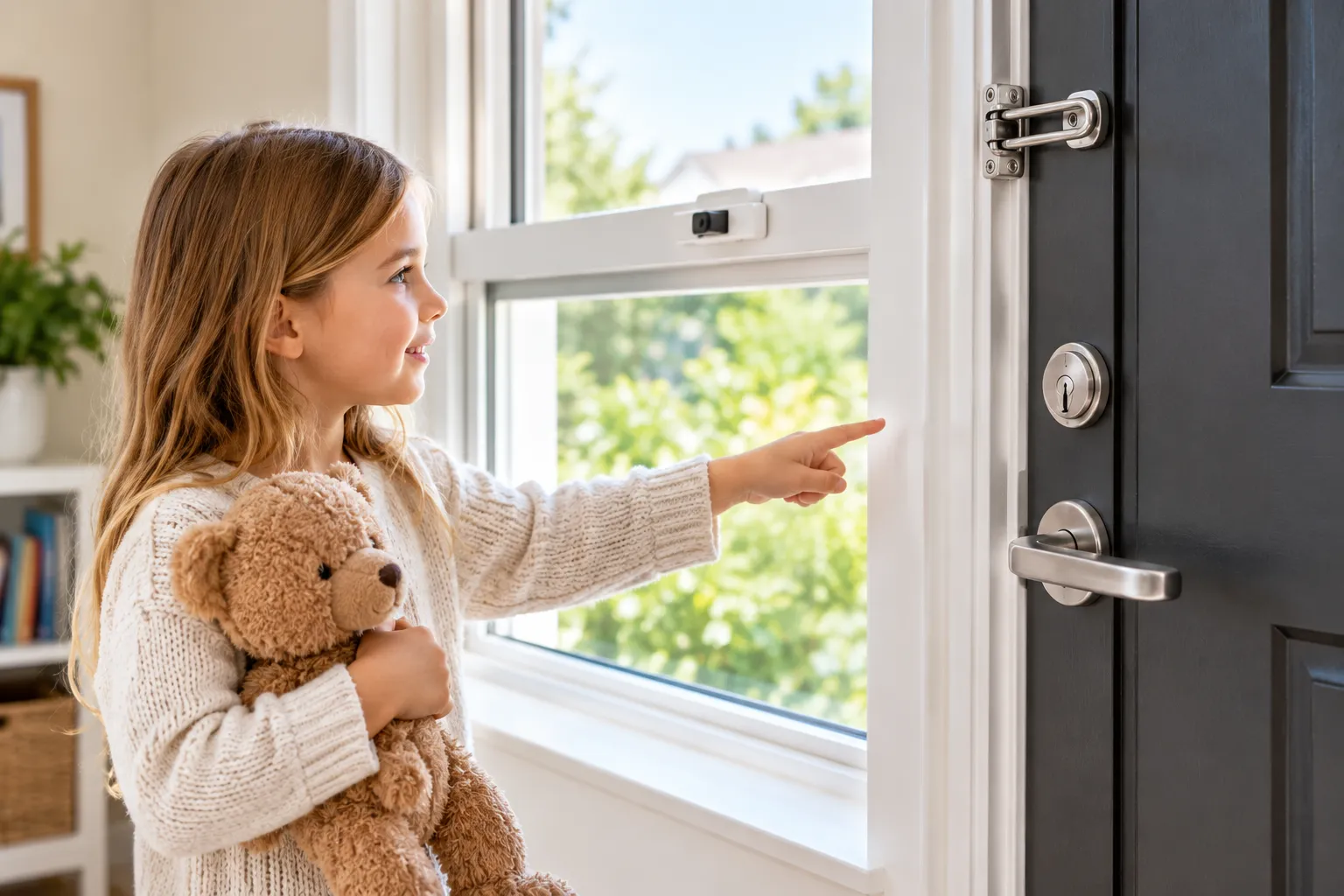

It’s a familiar moment for a lot of Sydney parents: your child is old enough to let themselves in after school, but not quite old enough that you stop thinking about it on the drive home. Are they locking the door behind them? Would they know what to do if someone knocked while they were alone? Door and window security isn’t just about the hardware you install — it’s also about whether the people using it, including your kids, actually know how it works and why it matters.
Why This Conversation Matters More Than You’d Think
Plenty of families assume a break-in is a night-time, worst-case scenario, but the pattern in NSW looks quite different. According to NSW Government crime data, more than half of all break and enter incidents happen between 6am and 6pm on weekdays, and almost all occur when a home is unoccupied — exactly the window when a child might be arriving home alone after school. That timing makes it clear: teaching kids solid door and window habits isn’t overcautious, it’s addressing the exact scenario that matters most.
There’s No Single Rulebook, So Habits Matter
Australia doesn’t have one nationwide rule about what age a child can be left alone. As Raising Children Network explains, most states leave it to parental judgment rather than a fixed age, with Queensland the main exception. That means the responsibility sits with families to decide when a child is ready — and a big part of that readiness is whether they know how to secure a door properly, recognise a legitimate visitor, and avoid opening up to someone they don’t know.
Simple Habits Worth Teaching
A few straightforward rules go a long way toward making a security door or screen actually do its job. None of these need to be delivered as a lecture — they work best as a short, repeated routine your child does automatically, the same way they’d check for traffic before crossing a road. Walking through the routine together a few times, rather than just explaining it once, is what makes it stick.
• Lock the door immediately after coming inside, rather than “later.”
• Never open the door to someone they don’t recognise, even if the person says it’s urgent.
• Use a peephole or the mesh of a security screen to check who’s there before touching the lock.
• Keep windows locked when a room is unoccupied, not just the front and back doors.
• Know the difference between a delivery knock and someone trying door handles — and who to call if something feels wrong.
Hardware That Makes the Right Habit the Easy One
Kids are far more likely to lock up properly if the hardware makes it quick and obvious, rather than fiddly. A deadlock that’s stiff or a screen that doesn’t latch cleanly teaches a child to skip the step altogether. This is where it helps to talk to a supplier who understands household routines, not just security ratings. The team at OnGuard Security can walk you through door and screen options that are simple enough for a ten-year-old to use correctly every single time, without compromising on strength.
Getting the Right Setup for Your Home
Every home is a little different, and so is every family’s routine — some kids are home alone for twenty minutes before a parent arrives, others manage a couple of hours most afternoons. If you’re weighing up new doors or screens with this in mind, it’s worth looking at what’s actually fitted now and whether it suits a child using it independently. Families comparing Auburn security screens often start with exactly this question: not just what stops an intruder, but what a child can operate confidently and correctly on their own.
It also pays to think about the whole house, not just the door your child walks through. A garage side door, a laundry window, or a sliding door onto the back patio are all places where an older lock or a stiff latch quietly undoes the good habits you’ve taught elsewhere. A quick walk-through of the property, treating it the way your child would after school, often turns up one or two spots worth upgrading before they turn into a weak link.
A Practical Takeaway
Good security doors and screens only work as well as the habits behind them. Teaching kids to lock up straight away, check before opening, and never let a stranger in isn’t about scaring them — it’s about giving them a simple, repeatable routine that matches how and when break-ins actually happen. Pair that routine with hardware that’s easy to use properly, and an empty afternoon at home becomes a lot less worrying for everyone.
Frequently Asked Questions
1. What age can my child be home alone in NSW?
There’s no fixed legal age in NSW — it’s a parental judgment call based on maturity, how long they’ll be alone, and whether they can handle an emergency. Most guidance suggests easing into short periods before longer stretches alone.
2. Should my child answer the door if they’re home alone?
Generally no, unless they know exactly who it is and you’ve agreed they can. Teach them to check through a peephole or security screen mesh first, and to never confirm to a stranger that they’re home alone.
3. Are security screens strong enough for kids to operate safely?
Yes — quality security screens are designed for everyday use, with locks a child can operate confidently while still meeting Australian security standards. The key is choosing hardware that’s easy to use correctly, not just hardware that’s strong.
4. What’s the most common mistake kids make with home security?
Forgetting to lock the door straight after coming inside. It’s a small habit, but since most break-ins happen during the day while homes are unoccupied, a few unlocked minutes is exactly the window that matters.
5. Should windows be part of the security conversation too?
Definitely. Kids often think of “locking up” as just the front door, but an unlocked window in a back bedroom or laundry is just as much of a gap. Make window checks part of the same after-school routine.