
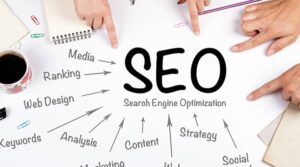

For businesses looking to prosper online in today’s digital environment, creating an SEO-friendly website that ranks highly with Google is essential. The secret to improving visibility, generating organic traffic, and maximising conversions is search engine optimisation (SEO). Understanding the best practises and techniques for website design, however, can be time- and effort-consuming due to Google’s constantly changing algorithms.
This in-depth manual will cover the nuances of creating an engaging website that complies with Google’s ranking criteria and is SEO-friendly. The following methods and approaches will help you achieve improved rankings, more visitors, and long-term success online.
Research and optimisation of keywords
Researching keywords in-depth is the first step to effective SEO. You can adjust the material on your website based on the pertinent search terms and phrases used by your target audience. To find popular and pertinent terms, use keyword research tools like Google Keyword Planner, SEMrush, or Moz.
To effectively target particular niches, take user intent and long-tail keywords into consideration. Include these keywords strategically in all text on your website, including headings, titles, meta tags, URLs, and the text itself. However, put user experience first and stay away from keyword stuffing, which might lower your ranks.
Website Structure and Navigation That Is User-Centered
A well-organized website with simple navigation improves user experience while also making it easier for search engines to read and crawl your website. Create a website structure that is simple to navigate and clear, allowing easy access to all pages. Create a reliable and easy-to-use navigation menu for your website. Breadcrumbs make it easier for users and search engines to understand the organisation of your site.
To ensure effective crawling and indexing, create an XML sitemap and upload it to Google Search Console. Improve the internal linking structure of your website to improve user engagement and navigation.
Designing for mobile first and being responsive
Your website must be mobile-friendly given the rising use of mobile devices. Adopt a mobile-first design strategy that puts the smartphone experience ahead of the desktop experience. To ensure that your website adapts fluidly to various screen sizes and resolutions, use responsive design approaches.
Utilise browser cache, reduce the number of redirects, and compress pictures to increase mobile usability and speed. Utilise tools like Google’s Mobile-Friendly to check the responsiveness of your website. Test for problems right away, then fix them.
Page Speed Improvement
Speed of page loading is important for both user experience and search engine rankings. Reduce the amount of code and script files on your website, compress photos without sacrificing quality, and make use of content delivery networks (CDNs) to speed up website loading. Use cache plugins, minify CSS and JavaScript, and enable browser caching.
Use tools like Google PageSpeed Insights and GTmetrix to regularly check how quickly your website loads, and then make the required adjustments to give users a quick and seamless experience. For faster mobile loading, take into account employing AMP (Accelerated Mobile Pages).
Creation of Interesting and Effective Content
Success in SEO is mostly dependent on producing high-quality, pertinent, and engaging content. Create content that provides insightful information and addresses the concerns of your target audience. Include the keywords you found throughout your research in all of your material, including the body, headings, and subheadings.
To increase engagement, strive for a well-balanced mix of text, graphics, and multimedia components. Update and expand your material frequently to show users and search engines that it is authoritative and current. Think about utilising a variety of content types, such as infographics, videos, and podcasts, to accommodate various user preferences and enhance the user experience as a whole.
Techniques for On-Page Optimisation
The goal of on-page optimisation is to make each individual web page more visible and relevant in search results. Start by making sure that meta titles and descriptions are optimised, contain pertinent keywords, and are distinct for each page. Your website’s meta title appears in search results as its headline, so it should be catchy and appropriately describe the page’s content. The content of the page is succinctly summarised in the meta description, which should encourage readers to visit your website.
Utilise header tags (H1, H2, H3, etc.) to organise your material and improve both user and search engine readability. In addition to segmenting the information into sections, header tags give search engines context and a hierarchical structure to better grasp the significance of each component. To improve accessibility and offer context, use descriptive alt text for photos.
Because search engines cannot directly analyse photos, alt text provides important information about the content of the image. Make sure your URLs are optimised by making them succinct, descriptive, and keyword-rich. A well-structured URL is simpler to comprehend and remember while giving users and search engines information about the page’s content.
Use schema markup to give search engines more information about your content. Structured data, also known as schema markup, employs a standardised framework to convey particular information about your content, including ratings, reviews, events, and more. Utilising schema markup enhances search engine comprehension.
Building Superior Backlinks
Backlinks are essential to SEO since they are seen as endorsements from other websites. Concentrate on obtaining high-quality backlinks from sources that are reliable and pertinent to your industry. By guest posting on credible websites, cultivating connections with influencers and sector leaders, and producing engaging content that naturally draws backlinks, you may create a strong link-building strategy.
Avoid backlinks that are spammy and of low quality, as these might damage your website’s reputation and rankings. To ensure the quality and relevancy of your backlink profile, monitor and audit it frequently.
Integration of social media
By adding social sharing icons to your website, you may incorporate social media into your SEO strategy. This makes it simpler for users to share your content on several social media networks, boosting its exposure and opportunity for participation. Engage in active social media engagement with your audience, promoting the material on your website to increase traffic and broaden your audience.
Likes, shares, and comments are examples of social signals that indirectly influence your search rankings since they show that your content is popular and relevant. To improve the visibility and SEO performance of your website, establish and use a strong social media presence.
Monitoring, analysis, and optimisation in real time
For continuing optimisation, regular tracking and evaluation of your website’s performance are essential. To learn more about user behaviour, traffic sources, and popular content, use tools like Google Analytics. Utilising Google Search Console or additional SEO tools, keep an eye on the ranks of your website.
Examine the information to find its advantages, disadvantages, and potential improvement areas. Conduct audits frequently to look for technological problems, broken links, and out-of-date content. To further optimise your website and stay ahead of the competition, make data-driven decisions.
Maintaining Current Knowledge on SEO Trends and Algorithm Changes
Maintaining your website’s exposure and ranks requires keeping up with the newest trends and algorithm updates because SEO is a dynamic area. To stay up to date on new tactics and best practises, read credible SEO blogs, take part in industry forums, and go to conferences.
Review and modify your SEO approach on a regular basis to take into account Google’s algorithm adjustments and shifting user trends. To stay ahead of the curve, embrace innovation and be proactive in putting new strategies into practise.
Conclusion
Designing a website that is Google-friendly and optimised for SEO demands a thorough and multidimensional strategy. You may increase organic traffic to your website, increase its visibility, and enhance your search engine rankings by putting the concepts and tactics described in this tutorial into practise.
Keep in mind to prioritise user experience, provide relevant and high-quality content, develop authoritative backlinks, and keep up with the most recent SEO trends. You may unlock the full potential of your online presence and achieve long-term success in the constantly changing digital landscape with a well-designed and SEO-optimized website.