
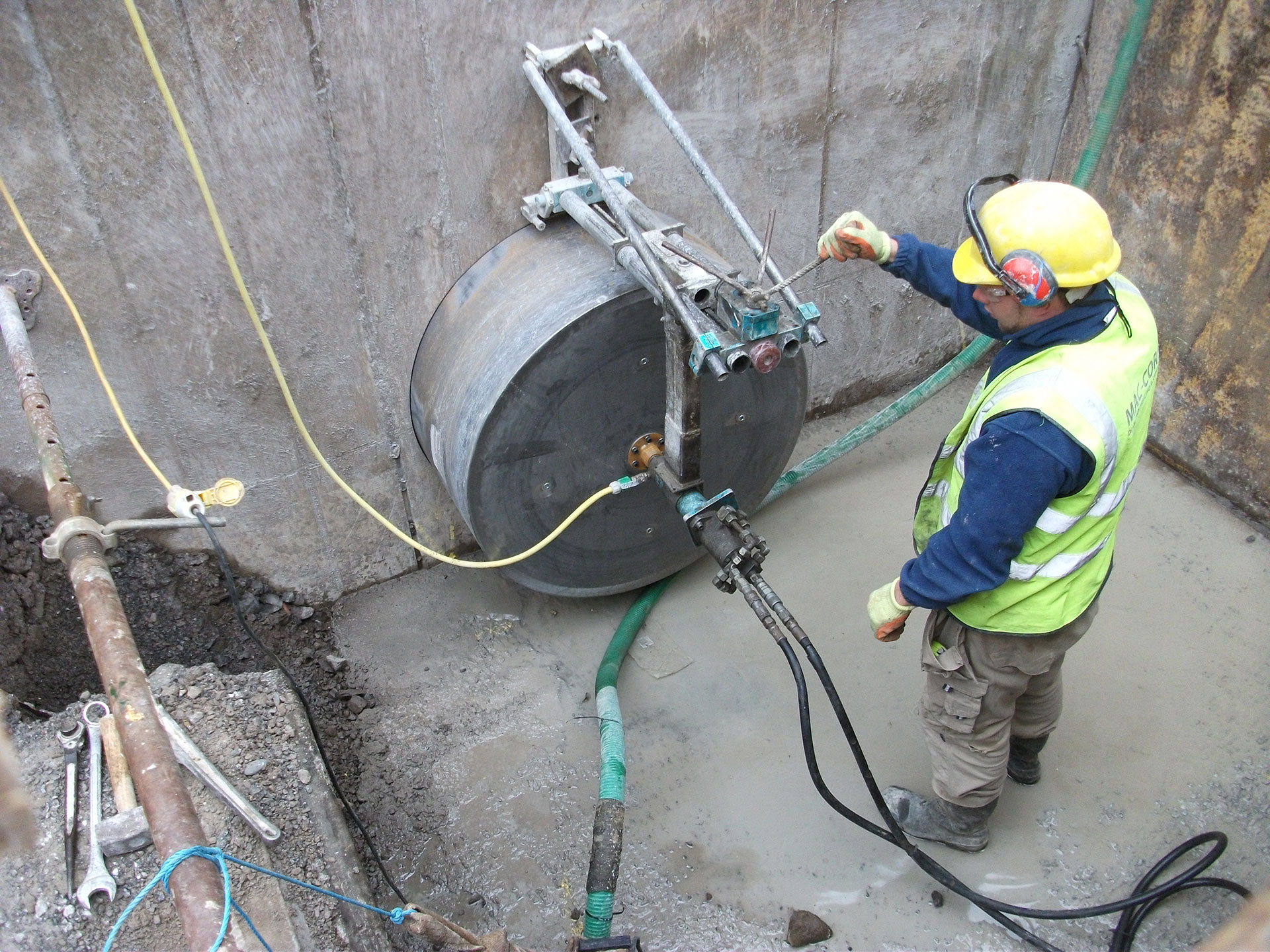

Core drilling, also known as concrete core drilling, is a process that involves drilling holes into concrete or masonry surfaces to create a precise and clean-cut opening without damaging the surrounding area. This technique is used in various industries to cut precise cylindrical holes in different materials, such as concrete, asphalt, and stone. Core drilling is essential in construction, engineering, mining, and exploration projects.
Want to learn more about core hole drilling services? Read on as we explore core drilling, how it works, the tools and equipment you need, and its numerous applications across various industries.
How Does Core Drilling Work?
Core drilling requires a specialized tool called a core drill. The core drill is fitted with a drill bit that can cut large holes in masonry surfaces such as concrete, brick, and sandstone. The main component of the core drill is the core drill bit, a hollow cylinder fitted with diamond or carbide segments along its cutting edge. The drill bit is designed to remove the material as it rotates, creating a clean and precise hole.
When the rotating drill bit is placed on the spot to be drilled, it grinds away at the material’s surface, creating a ring-shaped hole.
As the drill progresses, it grinds a cylindrical piece of material from the surface called a core that is collected inside the hollow tube of the drill bit. The length and diameter of the drill bit determine how deep it can go before it gets filled with the cylindrical core. Once the tube is full, the drill bit can’t go further, so it is removed from the surface to extract the core from its centre. The collected core can be used for various purposes, such as testing the quality of the material or analyzing its composition.
This process leaves a clean and precise cut opening on the material’s surface. Throughout the drilling process, the drill must be cooled with a steady flow of water to reduce friction and heat generated during the drilling process.
Types of Drill Bits
There are several types of drill bits available, but diamond drill bits and carbide drill bits are the most commonly used ones for core drilling. Each type is suited to cut through different materials and perform specific functions.
Diamond Core Drill Bits
Diamond bits are made of industrial diamonds embedded in each tooth, allowing the rotating drill bit to grind away at the material easily. Although diamond bits are the more expensive of the two options, they offer numerous advantages.
The precise placement of the diamond particles on the bit’s surface ensures maximum cutting efficiency and the long life of the drill bits. Also, the diamonds’ unmatched hardness makes diamond drill bits highly durable and effective at cutting through hard materials such as concrete cutting, stone, asphalt, and steel. This also gives the drill bits the ability to produce cleaner, more precise, and more visually appealing cuts.
While diamond drill bits are known for their durability and ability to cut through a wider range of materials, they may generate significant heat after continuously drilling through hard surfaces. If this heat is not managed properly, the drill bit will heat up, partially warping or melting over the diamonds. This significantly reduces the cutting efficiency of the drill bits. In this case, you must redress or retip the bits to bring the diamond back out.
Carbide Core Drill Bits
Carbide core drill bits are made from a unique blend of tungsten and carbide, which forms tungsten carbide. This material is well-known for its incredible strength, durability, and resistance to wear and tear. Carbide core drill bits can withstand high heat and stress thanks to their strength, making them ideal for heavy-duty drilling projects. Carbide core drill bits are particularly effective when drilling through soft to medium-hard materials, such as wood, plastic, concrete, brick, and stone. However, they may struggle against metal such as steel or rebar.
Also, carbide core drill bits may not produce as clean and precise holes as diamond drill bits. However, a carbide core bit can be an extremely cost-effective option if your drilling requirements do not demand precise, clean cuts or necessitate cutting through hard metals like rebar and steel.
Equipment Used for Core Drilling
Core drilling requires specialized equipment that can handle the drilling process efficiently. The equipment used for core drilling includes:
- Drill Rig: A drill rig is the machine used for drilling holes. It consists of a drill bit, drill string, and other components.
- Safety gear: Essential protective equipment, including gloves, safety glasses, helmets, and steel-capped boots, is crucial to preventing injury at the drill site.
- Water Tank: Water is required to cool the drill bit during drilling to reduce friction and prevent overheating or warping.
- Vacuum pump: To remove debris and dust from the drilling area.
- Power generator: You’ll need a power generator to supply electricity to the drilling equipment in remote locations or areas without power.
Applications of Core Drilling
Core drilling is widely used in different industries, including:
- Construction
Core drilling is used for creating openings in concrete walls, floors, and ceilings for plumbing, electrical, and HVAC installations. Core drilling also creates holes for anchor bolts, dowels, and rebar.
- Engineering
In the engineering industry, core drilling is used for creating openings in bridges, dams, and other structures for inspections, maintenance, and repairs. Another application of core drilling is to remove damaged or deteriorated surfaces. In this case, a core drilling machine can be used to create a series of closely spaced holes in damaged structures, which can then be broken up and removed in sections.
- Mining and Exploration
Core drilling is also a popular technique used in geological or mining exploration, where core samples obtained from the process can provide information about the geological structure of the earth’s crust and the location and quality of minerals and oil and gas reserves.
Steps to Core Drilling
Here are the steps you should follow if you want to learn how to use drill through tile, concrete, brick, or any other common household wall or floor.
- Choose the Right Bit
The type of bit you will need depends on the material being drilled. If you’re drilling through hard materials such as concrete, asphalt, and stone, diamond bits are your best bet, and use carbide-tipped bits for softer materials such as wood and plastic. If possible, measure the wall’s thickness to select a core drill bit appropriate for your working surface.
- Check for Obstacles
Before drilling, ensure there are no obstacles behind the surface you plan to drill through, such as cables, pipes, or other sensitive equipment. You can use wire detectors or stud finders to detect potential obstacles beforehand, enabling you to work around them.
- Prepare Your Drill Rig
You must set up your drill rig correctly to ensure the drill bit is aligned with the material being drilled. Misalignment can result in sloped or angled drilling. Ensure the drill rig is adequately secured to prevent it from moving during the drilling process. Also, adjust the speed setting of your drill to a level appropriate for the diameter of the hole you intend to drill.
- Lubricate the Bit
You must adequately lubricate the drill bit with water or other lubricants before and during drilling. A steady water supply to the drill bit helps keep it cool and reduces friction.
- Start Drilling
Align your drill to be as perpendicular to the surface as possible. Start the drill at low RPM and gently push it into the material’s surface to make a pilot cut. If you’re sure the drill is aligned correctly, increase the speed of the drill and push it further into the surface. Keep drilling until the core drill bit is approximately one inch into the surface, then pull the drill back. Once the hole is drilled, remove the core from the drill bit. Repeat this whole process until the desired depth is achieved.
Conclusion
By utilizing the information in this article, along with some practice and the right equipment, you can successfully perform core drilling on practically any wall or floor in your home. The only challenge you may face is holding the drill firmly and steadily to prevent drilling at undesirable angles. Remember to put on safety gear and ensure adequate airflow when utilizing a core drill.
Cutrite specialises in all aspects of concrete sawing, drilling, radio controlled demolition, concrete x-ray, pipe & cable locating and demolition.