
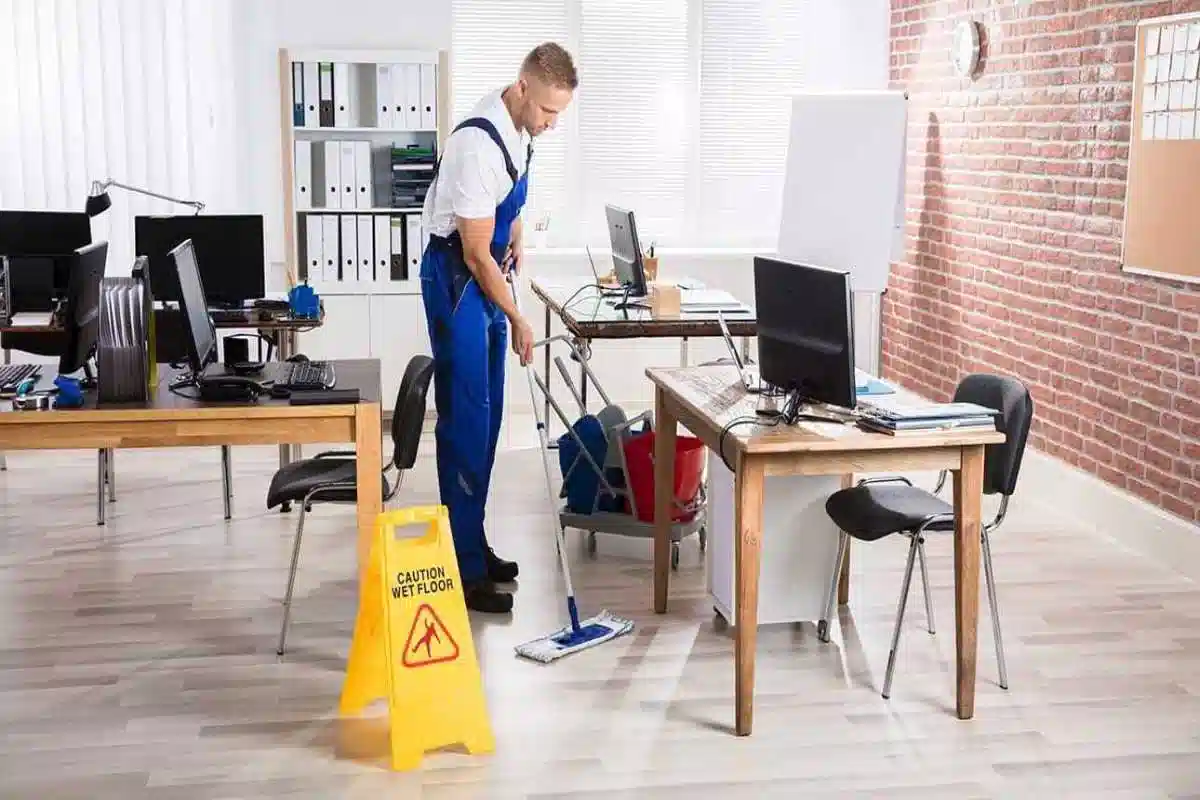

You’ve asked three cleaning companies to quote on your office, and the numbers have come back nowhere near each other — one nearly double the lowest. Before assuming someone is overcharging or cutting corners, it helps to understand what actually drives the price of office cleaning. “Clean my office” can describe very different jobs depending on the building, the schedule and the standard you expect, and each of those variables moves the quote.
The Size and Layout of Your Office
Floor area is the obvious starting point, but it isn’t the whole story. A 400 square metre open-plan floor with a handful of meeting rooms is quicker to service than the same area broken into dozens of small offices, corridors and storage rooms. More walls mean more edges, more doorways and more time spent moving between spaces rather than actually cleaning. Multi-level offices add further time for stairs and lift waits, and buildings with restricted after-hours access can add scheduling costs on top of the base rate.
High-use zones matter too. A kitchen, staff bathroom or busy reception desk needs far more attention per square metre than a quiet meeting room used once a week, so two offices of identical size can still land on very different quotes once a cleaner has actually walked the floor. This is why a proper quote usually follows a site visit rather than a number pulled from a floor plan alone — it’s the only way to price the complexity, not just the area.
How Often You Need a Clean
Frequency has a bigger effect on your ongoing bill than most business owners expect. A daily clean for a busy, high-traffic office costs more overall than a twice-weekly clean, but it also keeps kitchens, bathrooms and reception areas consistently presentable rather than needing a bigger reset at every visit. Quieter offices with lower foot traffic can often move to a less frequent schedule without any real drop in presentation, which is one of the simplest ways to bring cleaning spend under control without touching the quality of the job.
Hybrid work patterns have made this a live question for a lot of businesses. If your office is genuinely busy Tuesday to Thursday and half-empty on Mondays and Fridays, there’s often no reason to pay for five identical cleans a week. Matching the schedule to actual occupancy, rather than defaulting to “every weekday” out of habit, is one of the easier conversations to have with a provider when you’re reviewing costs.
The Type of Clean You Require
A standard clean covers vacuuming, mopping, bins, kitchens and bathrooms, and it’s priced accordingly. Once you add extras — carpet steam cleaning, window cleaning, strip-and-seal on vinyl floors, or the higher disinfection standards expected around a busy reception or a health-adjacent workplace — the price moves with it, because different tasks call for different equipment, chemicals and time on site. It pays to be clear with your provider about exactly what’s included in a routine visit and what’s billed separately, so quotes from different companies can actually be compared like for like.
It’s also worth separating the routine work from the occasional jobs. Most offices need a periodic deep clean — carpet extraction ahead of a board meeting, or an annual floor strip-and-seal — on top of the regular schedule. Folding these into your budget as planned, once-off items rather than surprises keeps year-on-year costs predictable and avoids the sense that your cleaning bill has crept up without explanation.
Staffing, Labour and Access Requirements
Labour is, by a wide margin, the highest cost in any commercial cleaning business, which is why staffing arrangements have such a direct effect on your quote. Australian Taxation Office small business benchmark data shows that for larger cleaning businesses, wages typically account for somewhere between 35% and 56% of annual turnover. When a quote looks unusually cheap, it’s worth asking how the provider is managing to keep that share of costs so low, since it often points to fewer staff, less supervision, or shortcuts on training. A trustworthy operator like Oz Commercial Cleaning will be upfront about staffing levels, insurance and how their people are trained, rather than leaving you to guess.
Choosing the Right Cleaning Partner
Once you understand what’s driving the numbers, comparing quotes becomes far easier. Look past the bottom line and check what each provider actually includes, how many staff they’ll put on site, and whether they carry public liability insurance and have police-checked employees. A commercial office cleaning company in Gold Coast QLD that’s happy to walk through their scope of work in detail, rather than just handing over a figure, is usually the safer long-term choice — even if their number isn’t the lowest on the page.
The Practical Takeaway
There’s no single fair price for office cleaning, because no two offices need exactly the same service. Size, layout, frequency, the type of clean and the staffing behind it all combine to produce the figure on your quote. The most useful thing you can do as a business owner isn’t to chase the lowest number — it’s to get a detailed breakdown of scope, frequency and staffing from each provider, so you’re comparing genuine value rather than guessing at it.
Frequently Asked Questions
How much does office cleaning typically cost in Australia?
Rates vary widely by city, office type and schedule, generally falling somewhere between roughly $35 and $75 per hour, or a few dollars per square metre per clean. The final figure depends on size, frequency and the scope of work involved.
Is it cheaper to pay hourly or per square metre?
Neither is universally cheaper. Hourly billing suits smaller or irregular jobs, while per-square-metre or fixed monthly pricing suits larger, more predictable offices and makes budgeting simpler over time.
Why did one quote come in much lower than the others?
A low quote often means fewer staff, shorter time on site, or fewer inclusions than competing quotes. Ask each provider for a detailed scope of work so you can compare like for like rather than just the bottom-line figure.
Does cleaning frequency really affect the price that much?
Yes. Daily cleaning costs more overall than a twice-weekly service, but it keeps high-traffic areas consistently presentable. Many quieter offices can reduce frequency without any noticeable drop in standard.
What should I ask a cleaning company before signing a contract?
Ask what’s included in a standard visit, how many staff will attend, whether they carry public liability insurance, whether employees are police-checked, and how extras like carpet cleaning or window washing are charged.