
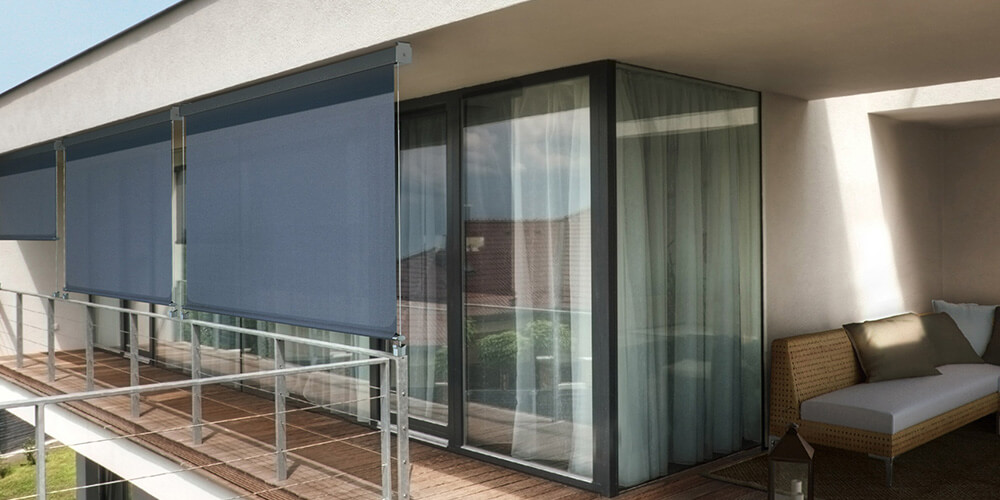

If you’re looking to update your window treatments, you may find that the various terminologies used in the industry can make the entire process of determining what you’re looking for, to put it mildly, confusing.
Suppliers, manufacturers, and interior designers use a variety of terms, including drapes, shades, blockout, and eyelet.
Furthermore, the variety of window treatment options and styles appears to be limitless, which can be overwhelming to most people. Plus, most of the time, fabricators appear to be speaking a completely different language than you do.
The table below provides an overview of the most common types of window treatments, as well as technical definitions.
Why Should You Cover Your Windows?
Every home is unique, and each individual’s taste in style, colour, and texture, among other things, reflects their personal likes and dislikes.
To be honest, nowhere does a person’s personality shine brighter than in the display of their home’s interior design.
This means that window treatments in a home must do more than simply match the styles and colours of the room, including the furniture. Instead, it should reflect a significant portion of your personality.
Windows treatments
The following are some of the benefits of window coverings:
- It can give the rest of the interior décor an elegant, casual, subtle, or dramatic backstory.
- Its decorations can help to tie the room together.
- It can be the focal point of any room.
- It has the ability to either diffuse or expand natural light.
- It can protect against the cold of winter and the heat of summer.
- It can shield the sun from the floor coverings and furnishings.
To cover windows, three types of curtains were traditionally used:
- A light-filtering sash curtain.
- A light-blocking draw curtain.
- Overdrapery is purely decorative.
In today’s world, window coverings include things like curtains, drapes, blinds, and shades.
Curtains or drapes?
What is the difference between drapes and curtains?
Many customers have this question, and there aren’t many simple answers. Drapes and curtains are both made of fabric panels and are typically sold in pairs.
The term drapes is frequently used to refer to thicker, more formal curtains. It is typically made of heavy, luxurious materials such as velvet or silk, lending a well-made appearance to the window.
Curtains are lined, pleated, and hung on the floor as well.
Curtain is a broad term that refers to window treatments such as drapes made from fabric panels.
Formats for Headings
Curtains and drapes are available in a variety of styles, which are typically defined by how the curtains or drapes are pleated or sewn at the top.
This is referred to as heading style, and the type of heading style you choose determines the overall appearance of the curtains design. The most popular curtain heading styles are as follows:
Pinch Pleat vs Tailored Pleat
Pinch pleat curtains, also known as Tailored pleat curtains, are a popular and widely produced pleated curtain style. The pinch can take the form of a double, triple, quadruple, or even quintuple fold stitched into the top of the panel.
Reverse box pleat or box pleat
Box pleats are pleats that are rectangular in shape and sewn to the top of a curtain panel. Box pleats produce deep, even folds in the finished curtain, lending it an elegant, tailored appearance.
Anthology cover or pencil fold?
Many individual pleats are sewn into the top of the panel with pencil pleats. Pencil pleat curtains have a more casual feel than gusset drapes and tend to be less bulky because the creases are much thinner, about the size of a pencil, hence the name.
It can be hung on a variety of pole and rail systems, just like pinch pleats.
The calyx folds
The calyx fold is a highly technical fold that is becoming increasingly rare.
This type of formal and traditional curtain fold got its name from its resemblance to a wine glass or goblet.
If you’re willing to spend the money on a goblet drape, this heading style works best on firmer fabrics and shows off the creases. This heading style is lovely, but it is not the most practical, so it is rarely used.
Perfect for non-purely decorative curtains and drapes.
Eyelet drapes
Eyelet curtains are the same as grommet curtains, but this modern heading style uses grommets to hang panels from a curtain rod.
The term “eyelet” refers to an open ring, usually made of metal, that is built into the top of a curtain and allows it to be opened and closed.
Eyelet curtains or eyelet drapes are popular with many homeowners because of their modern and simple appearance, and they complement more contemporary decorating styles.
Simply buy curtains that are wider than your window to give them more fullness and volume.
Curtain Lining Options
Lining is the fabric sewn to the back of the curtain panel; it can be plain or patterned and is only visible from the outside.
The type of lining you choose can affect the look and performance of your chosen curtain.
Below is more information about different types of curtains and how different linings affect their performance.
Drapes that are sheer
Sheer curtains are unlined curtains that let in light.
Lining is not used for sheer curtains because it would show through the sheer fabric and make the curtains more opaque.
These curtains are translucent because they are made of sheer, semi-transparent fabric. They do not provide much privacy to rooms; instead, they gently soften the light that enters through the window, making it a more decorative window treatment.
Blackout drapes
Many people enquire about the distinction between blackout and blockout curtains, and the answer is that they are the same. These curtains only differ in name depending on which supplier or manufacturer you deal with.
Blackout curtains, also known as blocking curtains, allow very little light to enter the room through the fabric.
Curtains that are insulated
Thermal curtains and insulated curtains are terms that are used to describe the same product as shading and blackout curtains.
Insulated curtains, also known as thermal curtains, have thermal properties that aid in the retention of heat both inside and outside your home. These curtains are made in the same way as blackout curtains and can offer the additional benefits mentioned above.
Conclusion
Curtains and window management come in a variety of parts and styles. Each of them has advantages and disadvantages. Fortunately, this article has covered the majority of them.
Even so, the main thing to consider is the curtain style that best suits your personality.