
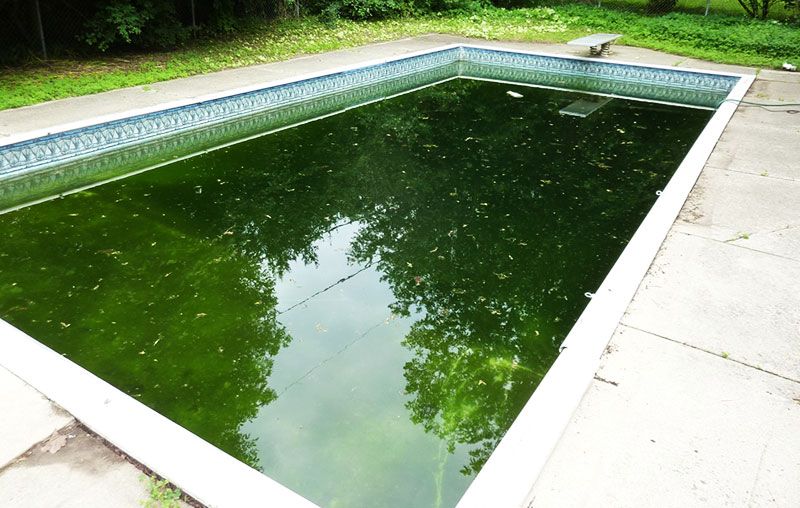

As you glance out of your window, the sun bathes your backyard in a warm glow – yet, the sight of your pool marred by an unsightly green tinge disrupts the tranquility of your personal oasis. This common woe for pool owners can often lead to undue stress.
At Poolclean, we understand the disheartening experience of witnessing your pool turn green. It’s not just about the color; it’s about your comfort, health, and the joy derived from a clear, inviting pool. This article is crafted to guide you through the comprehensive process of addressing a green pool, ensuring not only a solution to the problem but also a deep understanding of the reasons behind each action.
From diagnosing the issue to providing detailed, practical solutions, we’re committed to covering every aspect needed to breathe life back into your pool. Learn about the common causes of algae growth, grasp the importance of maintaining chemical balance, and follow the steps required to effectively treat your pool. And if the task appears overwhelming, remember, Gold Coast Clean & Sheen’s team of experienced professionals is just a call away.
Understanding the Issue: Why Do Pools Turn Green?
The primary culprit in this scenario is algae, a microscopic organism that flourishes in pool water under specific conditions. To reclaim your pool’s cleanliness and aesthetic allure, it’s crucial to comprehend the intricacies of algae growth.
Algae Growth Dynamics:
Algae spores, omnipresent in the environment, effortlessly infiltrate your pool through wind, rain, or contaminated equipment and swimwear. Once in the pool, these spores multiply rapidly, particularly in warm, stagnant water rich in nutrients, resulting in the notorious green tint.
Significance of pH and Chlorine Levels:
The chemical balance of your pool water, specifically the pH and chlorine levels, plays a pivotal role in algae growth. The pH level, ideally between 7.2 and 7.6, dictates the acidity or alkalinity of the water. Imbalances create an environment conducive to algae proliferation. Chlorine, a common sanitizer, combats algae and bacteria but is effective only at the right levels. Insufficient chlorine allows algae growth, leading to the undesirable green coloration.
Health Hazards and Structural Damage:
Beyond being an eyesore, a green pool poses health risks. It can harbor harmful bacteria like E. coli, causing skin, ear, and respiratory infections. Swimming in such a pool may lead to skin irritation and other health issues. Moreover, algae can damage pool surfaces and equipment, clogging filters and reducing the efficiency of the circulation system, ultimately causing staining and making surfaces hazardous.
Assessing Your Pool’s Condition: The First Step
Before embarking on the journey to restore clarity, a crucial step is understanding your pool’s current water condition through testing.
Importance of Water Testing:
Attempting to treat a pool without testing is akin to cooking without tasting – you won’t know what’s lacking or excessive. A green pool can result from pH imbalance, insufficient chlorine, or a combination of factors. Water testing provides a clear picture, enabling effective and efficient treatment.
How to Use a Pool Testing Kit:
- Collect a Water Sample: Use a clean cup to gather an unbiased sample from elbow-deep in your pool, away from skimmers or return jets.
- Apply the Test Reagents: Follow your testing kit’s instructions, adding specific reagents to the water sample for chemical level indications.
- Compare the Results: Match the sample’s color to the provided chart to determine chemical levels.
Ideal Chemical Levels:
- pH Level: 7.2 to 7.6 ensures effective chlorine action without skin and eye irritation.
- Chlorine Level: Maintain 1-3 ppm to combat algae and bacteria.
- Alkalinity: 80-120 ppm stabilizes pH.
- Stabilizer (Cyanuric Acid): Maintain 30-50 ppm to prevent chlorine degradation under sunlight.
Fixing Your Green Pool: Step-by-Step Guide
Transforming your green pool into a sparkling oasis is achievable with the right approach. Here’s how:
Adjusting pH Levels:
- Maintain a pH level between 7.2 and 7.6.
- Test using a pool testing kit.
- Use pH decreaser for high pH or pH increaser for low pH, following product instructions.
- Allow water circulation before retesting.
Shocking the Pool:
- Super-chlorinate your pool to eliminate bacteria and algae.
- Choose a pool shock product like calcium hypochlorite.
- Dissolve in water before adding to the pool in the evening.
- Run the pump overnight for effective shock treatment.
Selecting the Right Algaecide:
- Choose an algaecide based on the type of algae in your pool.
- Quaternary ammonium or copper-based algaecide works for green algae.
- Follow dosage instructions on the label.
Applying Algaecide:
- Pour the recommended algaecide amount directly into the pool.
- Run the pump for at least 24 hours to ensure even distribution.
Brushing and Vacuuming the Pool:
- Brush walls and floor to loosen algae.
- Use a pool vacuum to remove debris, repeating as necessary over several days.
Cleaning and Running the Pool Filter:
- Clean or backwash the filter per manufacturer’s instructions.
- Run the pool filter continuously for 24-48 hours post-treatment.