
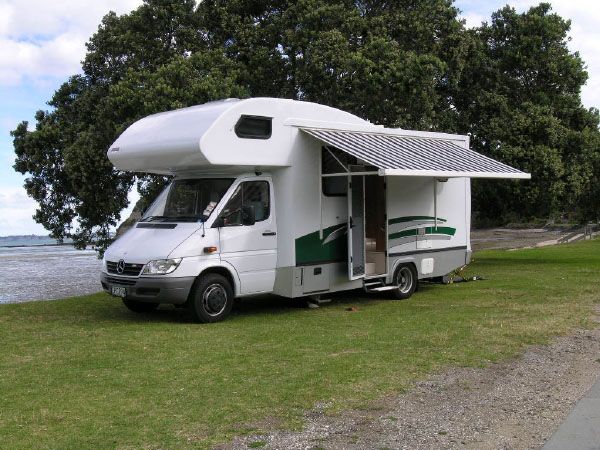

After examining the numerous recreational vehicles available on the market, such as travel trailers, fifth wheels, motorhomes, etc., you may have decided on the kind of rig that best matches your needs. Before you make your final choice, there is one key question that needs to be resolved, though: should I buy a brand-new or used RV?
The repercussions are severe and might even affect how much you value your “new-to-you” mobile home and the recreational opportunities it offers.
Of course, the important topic of whether to purchase a new or used RV doesn’t have a very simple answer.
Similar to buying a car, you’ll probably encounter a wide range of opinions and reasons on both sides, but ultimately, your decision will depend on how you answer the following questions:
How Important Is the Value of Your RV to You?
In many ways, buying an RV is similar to buying a car. For instance, as soon as you start driving a brand-new car off the lot, its value starts to degrade by up to 25%, and it continues to do so by another 10% by the end of the first year.
A brand-new RV offers the same benefits. However, the value of a used RV has often already decreased the most. Therefore, unless its condition significantly changes—for instance, if it is involved in an accident or can no longer be driven—its value should stay pretty stable. But why is this even pertinent then?
First off, even on the day you purchased it, your insurance would not fully cover the cost of the RV in the event of an accident.
You’d just receive the de-predicated value. Additionally, if you intend to sell your RV soon after purchasing it, even if it is in fantastic condition and has very low mileage, you won’t be able to recuperate much of what you paid for it.
If you purchased a used RV, this situation most likely wouldn’t occur. Because the price you pay for a used RV is partially influenced by its book value. Your insurance company would reimburse you for that amount if it was totaled, minimising your loss.
You might also try to sell the car for a price that was roughly equivalent to what you initially purchased, provided you didn’t treat it badly or put a lot of miles on it.
Of course, if you are certain that you will keep this RV for many years or at least for the foreseeable future, the off-the-lot dips in value might not be such a significant concern.
What Amount Would You Like to Invest?
The budget question is actually the most important one.
After all, unless you most likely win the lotto, you are on a budget. Simply put, a new RV will cost you a lot more money than a used motorhome. Even if you are good at haggling, you won’t be able to get a price that is even near to what you would spend for a comparable old RV.
One explanation is that older recreational vehicles often require more maintenance than new ones, and all these repairs are less likely to be covered by warranties. The possible expense of modifying a used RV to meet your preferences and needs is something else to take into consideration.
However, in the end, the majority of RV owners would pick a used car over a brand-new one. Insurance, tax, and licensing fees are often lower for used recreational vehicles. On the other hand, if affordability is not your main concern, you might prefer the flexibility of choosing specific amenities for a brand-new RV.
Do You Have the Tools to Compare Prices?
Individual satisfaction varies; some individuals choose to stay in the RV lot after finding one they like and wish to buy. Nothing will stand in their way of obtaining their goals because, once they see them, they are crystal clear about what they desire.
Some folks would rather spend weeks browsing websites, browsing classified advertisements, and strolling through RV parks before making a decision.
But if you want to buy a used RV, be ready to compare shops, especially if you plan to work with a private seller.
You don’t only compare the features and costs of models from the same year when you purchase a used RV. As an alternative, you’re comparing the costs of recreational vehicles whose model years could vary by 3 to 5 years. When compared to the more expensive but improved 1999 RV, the 1996 model may be more inexpensive. You’ll also contrast items like mileage and wear and tear.
You should have the used RV thoroughly evaluated by a technician before making a final selection. This will enable you to determine whether extensive repairs, if any, are likely to be in your near future.
Are the newest amenities and technologies required for you to be happy with your RV?
The answer to the next question is perhaps more important than you might think. Consider a car as an example. Today, new automobiles come equipped with features like automated windows, rear window defoggers, CD players, and passenger-side airbags that weren’t as popular on cars a few years ago.
Some people don’t need a CD player in their car to get by, but for others, it can mean the difference between buying the car and moving on to the next one.
The same is actually true for an RV, but to a much greater extent since you’ll be in it more often than your car.
In addition, an RV has a lot more features than just a leather interior and a sunroof. Some RVs are so loaded with extra conveniences that they more closely resemble five-star hotels than true mobile homes.
But as you would have guessed, the most recent RV models will always have the most recent features. Therefore, if having a top-of-the-line, entirely contemporary recreational device is what you desire, buying a brand-new item is your best alternative.
Conclusion
In the end, the decision is yours. If you want to save money, don’t need the newest technology, and yet want a more trustworthy value for your RV, buying a used RV makes sense.
However, you might want to think about buying a new RV if cost or depreciation aren’t important factors and you want all the features.
The wisest course of action, though, might be to keep your options open. Your family will eventually find the right RV if you do your research and comparison shop.
Browse our range of used motorhomes for sale, available at our Gold Coast QLD yard. Call us today. ☎ 07 55 936 140.