
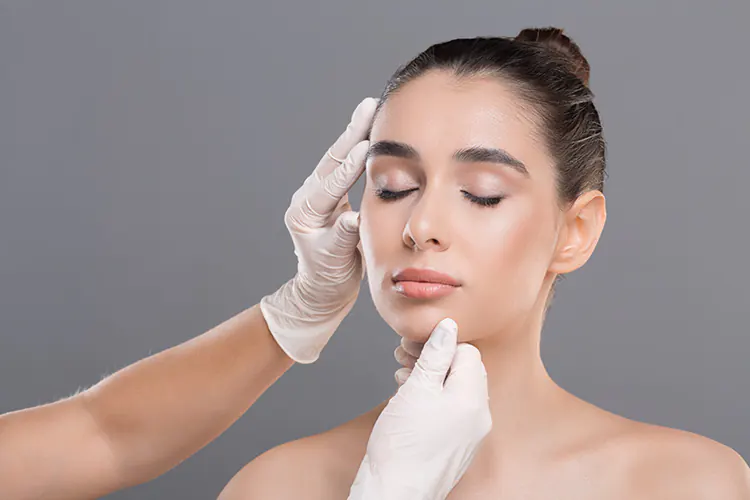

Most patients often wonder if there is a way to know if they would be happy with the result after a non-surgical rhinoplasty procedure. Well, the truth is that no one can foretell the future. But then, there is a way to know in this case.
Over the years, rhinoplasty specialists with extensive experience in surgery and consultations have learned the art of helping to predict how their patient’s nose will look after the rhinoplasty procedure and communicate to them beforehand if they will be happy with the result or not.
Non-surgical rhinoplasty is one of the most challenging plastic surgical procedures to master. The interplays between cosmetic and functional concerns and competing three-dimensional forces is often a tricky procedure for most young plastic surgeons. In addition, patients are still often surprised by what their nose looks like after many surgeries, and their dissatisfaction remains relatively high. Now how do you know if a rhinoplasty procedure will make you happy?
Several methods are used to measure the outcomes of rhinoplasty, although none is free of bias. Rather than just comparing a before and after picture of a patient, some experts have carried out a survey, asking patients to rate their degree of satisfaction with the procedure. The survey occurred twice, the first was before the procedure, and the next was after the procedure. Some of the questions asked during this survey are:
- Your level of satisfaction with your current nose appearance
- How does your nose affect your social confidence
- How does your nose affect the way you perceive yourself, and lastly
- How do you expect the rhinoplasty to affect you?
What were the survey results?
The survey has shown that non-surgical rhinoplasty significantly differs how a person feels about their nose appearance. However, in the case of improving social confidence and self-esteem, the result has been pretty low. The result also showed that how you feel about your nose before the surgery can affect how you feel after the procedure. So before getting rhinoplasty, you should critically examine your reason for doing so.
Another study looked at 544 patients who chose cosmetic plastic surgery and followed them at various intervals before and after the procedure. This study’s results indicated that many of these patients reported positive outcomes in various areas, including anxiety, social phobia, depression, body dysmorphia, goal attainment, quality of life, physical and mental health, well-being, self-esteem, and self-efficacy. It showed that those most likely to feel happy over the outcome tended to choose surgery to correct a physical feature they were not pleased with.
Of course, not everyone was satisfied with the result of the procedure. But those most likely not to feel pleased afterward often fall into one or more of the following categories:
- Those who have unrealistic expectations of the procedure/outcome
- Those who are correcting a minimal deformity
- Those motivated based on “fixing” a broken relationship
- Have a history of depression, anxiety, or personality disorder, and lastly
- Those who have previously had an unsatisfactory cosmetic surgery
Having realistic expectations seem to be the key to a positive psychological outcome from your rhinoplasty. You will be disappointed if you walk into your plastic surgeon’s office with outrageous expectations. If you lower your expectations and understand that plastic surgery isn’t a magic cure-all for everything, you probably will be pretty satisfied with your results.
Do you have a nasal defect? If so, how is it treated?
The word “defect” may suggest something quite disfiguring, but it may not necessarily mean something disfiguring in its real sense. It is a term used by medical specialists to describe “normal” anatomy issues. Sometimes, it might just refer to something slightly out of the norm, like in many cases of nasal deformity.
Many people are unhappy about the appearance and shape of their noses, and some have wondered if they have a nasal deformity. Well, there are several causes, symptoms, and treatments of nasal issues. We’ll discuss all that below.
What are nasal abnormalities?
Nasal defects are abnormalities in the shape or function of the nose and structural variations in the typical appearance of the nose. Nasal deformities are relatively common and can be either cosmetic or functional. Many people with cosmetic nasal deformities are unhappy with their appearance because of the shape of their noses. Occasionally, nasal deformities may result in breathing difficulties, impaired sense of taste and smell, and other concerns.
What are the types of nasal defects?
Generally, nasal defects can be classified as cosmetic or functional.
Cosmetic nasal deformities are visible abnormalities of the nose. They affect the physical appearance of the nose.
Functional nasal deformities are abnormalities in the inner structure of the nose. They affect the function of the nose, giving rise to problems such as difficulty in breathing, snoring, sinus infections, and sinusitis (inflammation of the sinus passages).
Cosmetic nasal defects:
- The saddle nose is a highly flat or concave depression of the nasal bridge. It is also known as the “boxer’s nose.” It can be caused by trauma, cocaine abuse, or certain diseases.
- Nasal/dorsal hump: This is the opposite of the saddle nose. It appears as a hump in the nose, usually formed by excess bone or cartilage. Often hereditary, it can also be caused by trauma.
- Under-projected nose (Aging nose): The aging process can cause the sides of the nose to droop (collapse inwards), leading to obstruction.
Functional nasal defects:
- Deviated septum: This is a situation where the wall of cartilage that divides the nostrils is malformed or bent to one side rather than straight. It can be congenital or caused by trauma.
- Enlarged adenoids: The inflammation of the lymph glands at the back of the nose (adenoids) can block the airway and cause sleep apnea.
- Swollen turbinates: The turbinates on the side of each nostril clean and humidify the air before it goes to your lungs. Swollen turbinates can hamper breathing.
What causes nasal defects?
Nasal deformities are commonly congenital (present at birth) or caused by injury. Additional causes for nasal deformities include:
- Previous nasal surgery.
- Nasal trauma.
- Medical conditions include Wegener disease, sarcoidosis, polychondritis, and nasal polyps or tumours.
- Weakening of the nasal structures due to aging.
Symptoms of nasal defects
Symptoms of nasal deformity depend on the cause and condition related to the deformity. However, the most common symptoms are breathing difficulties and nasal blockage. Other symptoms include:
- The deformed physical appearance of the nose
- Loud breathing.
- Facial pain or pressure.
- Frequent nosebleeds.
- Recurring sinus infections.
- Nasal cycle – alternating blockage of one side of the nostril.
How are nasal defects treated?
An otolaryngologist usually treats nasal deformities. Treatment of nasal deformities depends on the type and severity of the condition and the patient’s overall health and age. Cosmetic deformities may not require treatment unless desired by the patient. Surgery is the general option for improving the nose’s appearance and functionality. However, there are also non-surgical treatments like medications that can ease the symptoms. These include:
- Analgesics: Treating headaches and sinus pain.
- Decongestants: Reduces congestion and swelling of the nasal tissue.
- Antihistamines: While usually used for allergies, they can also help relieve congestion and dry up a runny nose.
- Steroid sprays: Reduce inflammation of the nasal tissue.
Surgical treatments include:
- Septoplasty is the surgical straightening of the septum, the cartilage between the nostrils. This procedure can improve breathing.
- Rhinoplasty: This procedure is aimed at reshaping the nose.
- Closed reduction: This procedure repairs a broken nose without surgery.
To learn if non-surgical rhinoplasty is appropriate for you, consult a certified Cosmetic clinic in Sydney.
Related posts: