
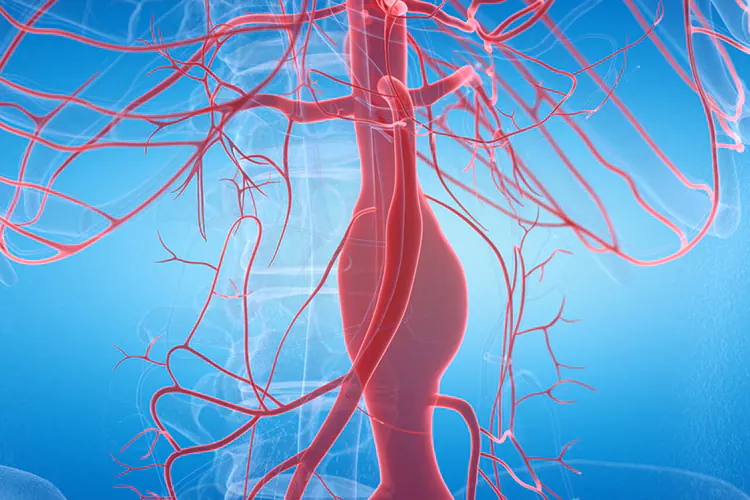

Abdominal aortic aneurysm (AAA) is a potentially life-threatening condition characterized by the enlargement of the aorta, the major blood vessel that supplies blood to the abdomen, pelvis, and legs. Traditional treatment options for AAA include open surgery and endovascular aneurysm repair (EVAR), which involve invasive procedures and significant recovery time. However, a new treatment option has emerged: Totally Percutaneous Endografting (TPE). This article explores the history of AAA treatment, the current approaches, and the potential of TPE in shaping the future of AAA treatment.
History and Current Approaches
The first recorded surgical intervention for AAA was performed in 1951, where the aneurysm was excised and the aortic defect repaired. However, this procedure had a high mortality rate, and the advent of EVAR in the early 1990s revolutionized AAA treatment. EVAR involves the insertion of a stent-graft through the femoral artery, which is navigated to the site of the aneurysm. Once in place, the stent-graft is expanded to provide structural support to the weakened aortic wall. EVAR reduces the morbidity and mortality associated with open surgery; however, it also has some limitations.
Limitations of Current Approaches:
EVAR requires the use of a large-bore sheath to introduce the stent-graft, which can cause complications such as bleeding, infection, and nerve injury. It also requires general anesthesia, which can be risky for some patients. EVAR is also not suitable for all patients, particularly those with complex anatomies or high-risk features such as renal insufficiency or a short neck.
The Rise of Totally Percutaneous Endografting
Medical science has come a long way, and advancements in technology have led to safer and more efficient surgical procedures. One such advancement is Totally Percutaneous Endografting (TPE), a minimally invasive surgical technique that has revolutionized the treatment of specific medical conditions. This procedure offers several advantages over traditional surgery, including reduced risk of complications and faster recovery times.
Simply put, TPE is a surgical technique used to repair an aneurysm or blockage in the blood vessels. It involves inserting a stent-graft into the affected area through a small incision in the groin, using ultrasound guidance. The stent-graft is then advanced retrograde towards the aneurysm, where it is expanded to create a seal with the blood vessel’s wall.
Compared to open surgery and other endovascular techniques, TPE is a minimally invasive procedure that requires only local anesthesia and sedation. It eliminates the need for general anesthesia, reducing the risk of complications such as bleeding and infection. Furthermore, TPE offers faster recovery times, allowing patients to return to their normal activities sooner.
The emergence of TPE has been a game-changer for patients, providing them with an effective treatment option that offers several benefits. TPE has evolved as a technique over the years, and medical professionals have continually tweaked and improved it to make it safer and more efficient for patients. In the early days of endografting, large-bore sheaths were used to insert the stent-graft, leading to complications such as bleeding and nerve injury. However, with the advent of smaller sheaths and ultrasound guidance, TPE has become much safer for patients.
Furthermore, TPE has been shown to be just as effective as traditional surgery in treating aneurysms. A study published in the Journal of Vascular Surgery found that TPE had a technical success rate of 100% and a primary clinical success rate of 98.4%. The study also noted that TPE had a lower incidence of complications compared to traditional surgery.
TPE is also being used to treat other conditions such as peripheral artery disease. In a study published in the Annals of Vascular Surgery, researchers found that TPE was a viable treatment option for patients with peripheral artery disease who could not undergo traditional surgery. The study noted that TPE had a high technical success rate and low incidence of complications.
Advancements in Totally Percutaneous Endografting
Recent advancements in Totally Percutaneous Endografting have improved patient outcomes and expanded the range of patients who can benefit from this procedure. Fenestrated endografts are designed with small holes, or fenestrations, which line up with the arteries that branch off the aorta. This allows the endograft to be placed in patients with anatomical challenges, such as those with complex aneurysm anatomy or narrow iliac arteries.
Branched endografts are another recent advancement in endografting technology. These endografts are designed with branches that extend off the main body of the graft and are aligned with specific arteries. This allows for the treatment of more complex cases, where multiple arteries are affected by the aneurysm.
Navigation technologies and imaging advancements have also improved endograft placement accuracy and precision. Three-dimensional imaging allows for a more detailed view of the aneurysm and surrounding anatomy, while image-guided navigation helps the surgeon to accurately place the endograft in the correct position.
These advancements in Totally Percutaneous Endografting have the potential to greatly improve patient outcomes, allowing for safer and more effective treatment of AAA. In the future, it is likely that endovascular treatment will continue to play an increasingly important role in the treatment of AAA, particularly as new technologies and techniques are developed.
The Future of Abdominal Aortic Aneurysm Treatment
Abdominal Aortic Aneurysm (AAA) is a potentially life-threatening condition that affects thousands of people every year. Fortunately, recent advancements in medical technology have led to new and innovative treatments that offer hope to those affected by this condition.
One of the most promising advancements in AAA treatment is the development of totally percutaneous endografting. This minimally invasive procedure reinforces the vessel and prevents it from rupturing. Recently, researchers have made significant advances in this area, including the development of Bioresorbable endografts and tissue engineering, and Drug-eluting endografts.
Bioresorbable endografts are designed to dissolve over time, leaving behind a natural, healthy vessel. This approach has several potential benefits, including improved healing and durability. Tissue engineering involves the use of cellular and biomaterial-based strategies to create new vessels that can repair or replace damaged tissues. This approach has the potential to revolutionize AAA treatment by providing patients with a biocompatible, durable, and long-lasting solution.
Drug-eluting endografts are another promising advancement in AAA treatment. These endografts are coated with drugs that help to prevent inflammation and promote healing, reducing the risk of complications and improving outcomes. Additionally, they may help reduce the need for post-operative medication and follow-up visits.
Integration of Robotic-Assisted Procedures
Robotic-assisted procedures are rapidly gaining popularity in a range of surgical applications, including AAA treatment. These systems allow surgeons to control robotic arms equipped with specialized instruments, providing enhanced visualization and precision during surgery. Robotic-assisted procedures have the potential to improve patient outcomes and reduce the risk of complications by allowing for more precise and accurate placement of endografts.
However, there are still numerous challenges associated with the integration of robotic-assisted procedures into the healthcare system, including the high cost of equipment and training, concerns over reliability and safety, and the need for skilled operators. Despite these challenges, researchers and clinicians remain optimistic about the potential benefits of this technology.
Patient-Centered Care and Personalized Medicine
Patient-centered care and personalized medicine are becoming increasingly important in AAA treatment. These approaches emphasize the importance of tailoring treatments to individual patients based on their unique needs and preferences. This can include measures such as individualized medication regimens, personalized rehabilitation plans, and patient education and support programs.
The potential benefits of patient-centered care and personalized medicine are numerous, including improved patient outcomes, reduced costs, and increased patient satisfaction. Researchers and healthcare providers are currently exploring ways to integrate these approaches into current treatment protocols, with the goal of improving the overall quality of care for patients with AAA.
Conclusion
AAA is a serious medical condition that requires timely and appropriate treatment. While traditional approaches such as open surgery and EVAR have been successful in reducing morbidity and mortality rates associated with AAA, they have limitations. The emergence of TPE offers a new approach to AAA treatment that has several advantages over traditional approaches. As more data becomes available on its safety and efficacy, TPE is likely to become a viable alternative for treating AAA and play a significant role in the future of AAA treatment.