
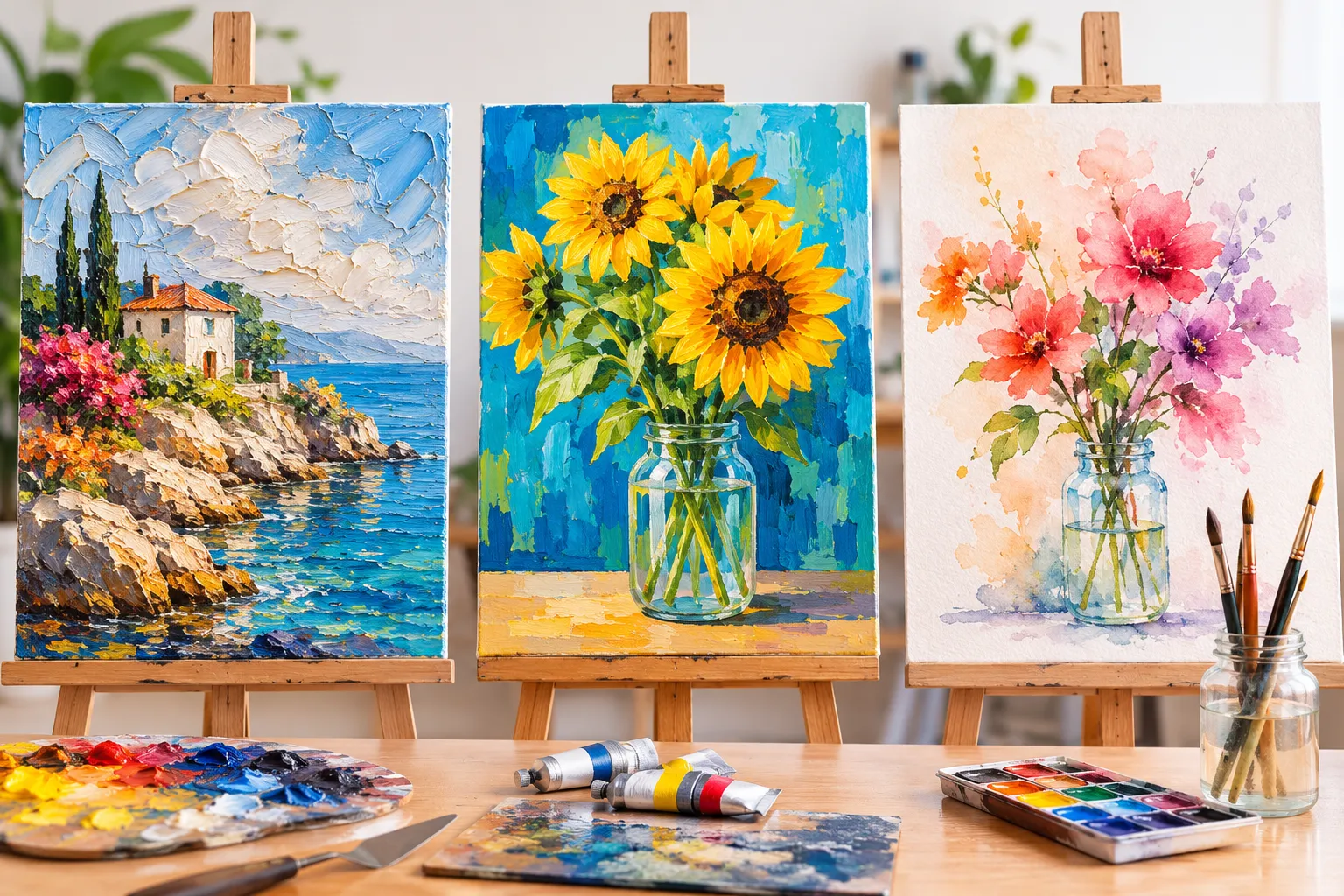

Australian art enthusiasts remain passionate about paintings. In 2025, local art auctions traded more than $148 million worth of art, and every one of the year’s top 10 prices went to a painting, as reported in the Australian Financial Review.
Whether you’re eyeing a painting for your living area, meeting room, or reception area, knowing the different mediums can help you make an informed, long-term buying decision. This critical factor affects how your art looks, ages, and retains its appeal over time.
No matter how long you’ve been collecting art, it’s never too late to acquire new knowledge. This blog explains the difference among oil, acrylic, and watercolour paintings, enabling you to choose the best option according to your preferences and receive strong value for money.
Oil Paintings: Rich, Deep and Made to Last
Oil paint is a byproduct of coloured pigment and a slow-drying (usually linseed) oil. Many artists have painted with this medium for more than five centuries, so expect the trend to continue.
Since oil paint dries slowly, artists can blend colours seamlessly and rework their painting within several weeks. Throw in a vivid imagination, and the end result is colourful, glowing artwork that stands out in any background. Artists can also apply a thick oil coating, allowing gallery visitors to see the texture of the brushstrokes or palette-knife marks.
Key takeaways for oil collectors: Premium oil painting can last for centuries. The artist or a reputable art conservator usually varnishes it for protection and hangs it without glass. Oil paintings thrive in a stable room temperature and should never be exposed to direct sunlight. You may discover that some oils can darken slightly or develop fine surface cracks, which comes with the ageing process.
Acrylic Paintings: Bold, Bright, and Hard-Wearing
While oil paintings have captured imaginations for centuries, acrylic versions burst onto the scene in the 1950s. The latter’s pigment is suspended in a water-based, quick-drying plastic binder to form a durable, flexible layer.
Acrylics have a strong, punchy colour and crisp edges. Not only that, but they’re also versatile: artists can make them look flat and graphic, thick and textured to mimic an oil painting, or thin and flowing like watercolour. Many contemporary Australian artists, including a large number of First Nations painters, work in acrylic.
Key takeaways for acrylic collectors:: Acrylics are durable and don’t tend to turn yellow over time. They can withstand humidity, making them suitable for many homes in Queensland. Similar to oil paintings, they can be hung without glass. It’s important to note that acrylic surfaces can accumulate dust, so dusting them gently with a soft, dry brush occasionally keeps their colours looking vibrant.
Watercolour Paintings: Light, Fresh, and Delicate
Watercolour paint is pigment mixed with a natural gum and thinned with water. Paper is usually the ideal surface, as it can illuminate through the thin colour layers. This distinction gives watercolours their luminous, airy feel.
If you’re into landscapes, seascapes, botanical studies, and serene landscapes, watercolours capture their beauty perfectly. The flowing paintwork blends seamlessly with the paper, giving each colour a sense of spontaneity. Watercolour artists are among the most skilled practitioners in Australia, as they cannot conceal their mistakes when using this medium. When you buy a watercolour painting from a known Gold Coast art exhibition, you’re getting your money’s worth.
Key takeaways for watercolour collectors: Watercolours are more fragile than paintings on canvas. Unlike oil and acrylic, they should be framed behind glass (ideally UV-protective glass) with an acid-free mount to separate the paper from the protective layer. Keep them out of direct sunlight, which can fade the colours, and away from damp areas, where paper can develop brown spots or mould. They’re often more affordable, making them a great way to start a collection or purchase painting on a budget.
Watercolour vs Acrylic vs Oil at a Glance
| Oil | Acrylic | Watercolour | |
| Look | Deep, glowing colour; smooth blends or thick texture | Bold, bright colour; flat to heavily textured | Soft, transparent colour; light and airy |
| Usual surface | Canvas or board | Canvas, board or paper | Paper |
| Framing | No glass needed | No glass needed | Behind glass, with a mount |
| Light sensitivity | Moderate | Low to moderate | High |
| Handles humidity | Fairly well | Well | Poorly |
| Care | Occasional light dusting; professional cleaning every few decades | Gentle dusting | Keep glass clean; check for damp |
| Typical price | Often highest | Wide range | Often most affordable |
How to Tell Them Apart
If you’re unsure about a painting’s medium, examine the label at the back or the gallery’s description. Upon closer inspection, oils have a satin sheet and soft blend, acrylics usually have consistent colours with a slightly plastic finish, and watercolours are painted on paper and framed in glass. Whenever you’re in doubt, consult your local art gallery staff to gain valuable insight.
Choosing The Right Medium for Your Home or office
There’s no best medium among oil, acrylic, and watercolour. Your choice ultimately depends on your personal preferences, visual appeal, and your display area. The following considerations can help you determine the best locations for your preferred medium:
- Bright, sunny rooms: Acrylics are the best option. Regardless of your choice, avoid placing your artwork in direct sunlight.
- Living areas and dining rooms: An oil painting can become a striking centrepiece for these gathering areas.
- Bedrooms, studies, and hallways: Softer light suits watercolours, whose gentle tones create a calm, soothing feel.
- Offices and reception areas: Acrylics and oils usually thrive better in busy areas and make a strong first impression.
- Kitchens and bathrooms: Steam and moisture can diminish artwork quality over time. Acrylics usually tolerate humidity the best, while oils should be kept away from direct heat and moisture. Watercolours require extra care, as their paper supports are usually vulnerable to damp areas.
Whenever possible, display your artwork in well-ventilated spaces away from sinks, stoves, and showers.
A respected Gold Coast art gallery can show you oils, acrylics and watercolours side by side and explain the nuances behind each medium, such as framing, display strategies, and upkeep. Visit the Anthea Polson Art Gallery today to explore creative Australian artwork and choose the best piece for your living space.
Frequently Asked Questions (FAQs)
Are oil paintings more valuable than acrylic paintings?
Not necessarily. The value depends more on the artist, work quality, condition, and history than on the medium. Since oils have been around for centuries, they often sell for more. However, many highly sought-after contemporary Australian artwork is acrylic.
Should I frame my acrylic painting behind glass?
No. Acrylics on canvas or board are usually hung without glass (either unframed or in a simple frame). Acrylics painted on paper are different and should be framed behind glass with a mount, like a watercolour.
How do I prevent watercolour fading?
Consider framing your watercolour painting behind UV-protective glass with an acid-free mount, keeping it away from direct sunlight, artificial light, and damp areas. Your watercolour artwork can last for generations when you frame and position it properly.
How do I clean oil or acrylic painting?
We recommend gently dusting the surface with a soft, dry brush. Never use water, cleaning sprays, or cloths, as they can damage the paint. If a painting is very dirty, stained or damaged, ask a professional art conservator to clean it for you.
Which type of painting suits an office best?
Acrylics and oils are usually the most practical choice. They’re durable, don’t need glass that can cause glare, and suit large walls. Watercolours can work well in quieter areas, such as meeting rooms, where light levels are lower and they’re less likely to be bumped.