
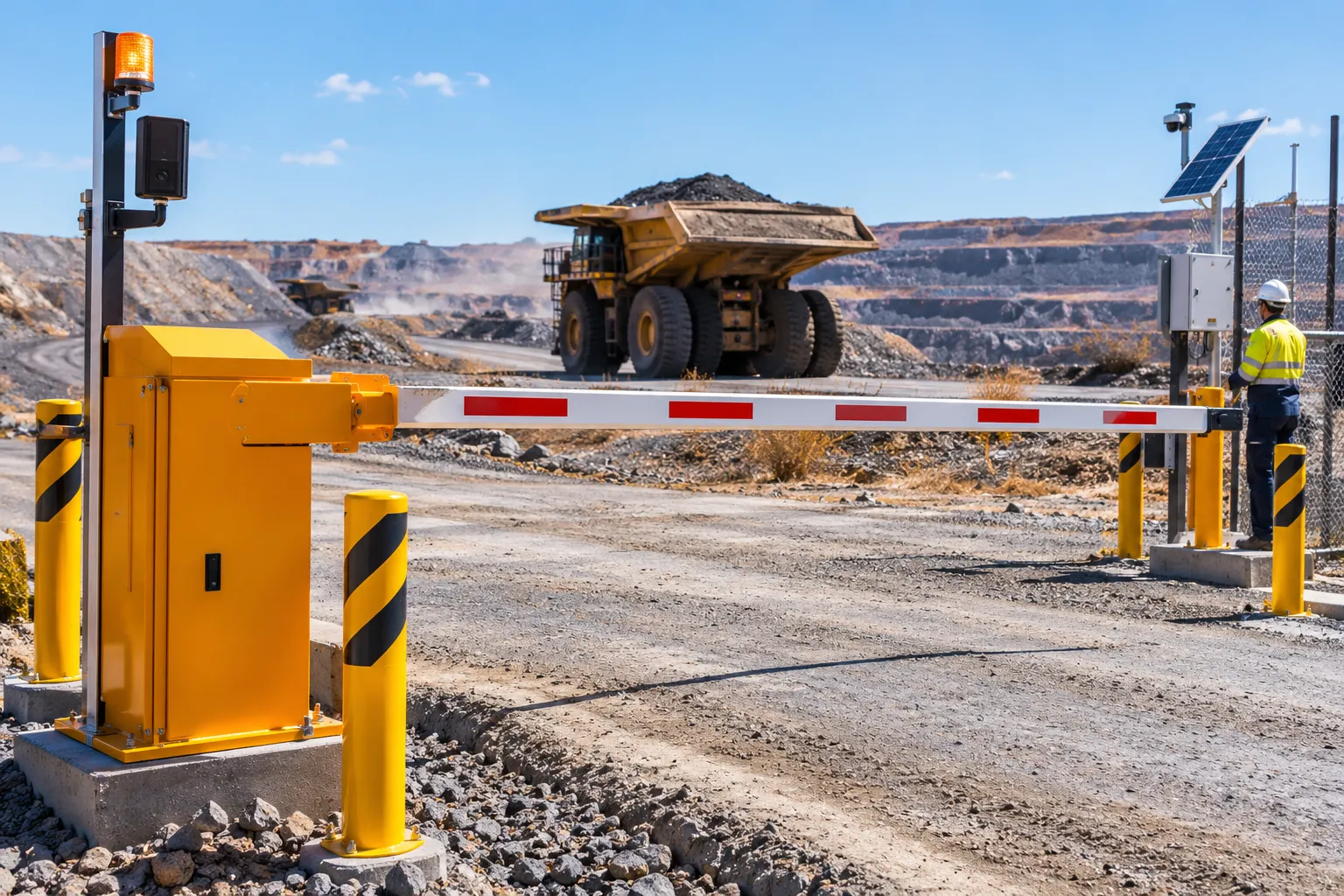

A boom gate at a suburban car park handles several hundred cars a day. At a mine site, it may face haul trucks, light vehicles, fuel tankers, and buses covered in red dust, while coping with 40-degree heat and monsoon rain around the clock. It’s a very different job.
For mining and resources companies, the main gate is where safety, security and site control begin. Choosing the right boom gate for that spot means looking well past the standard catalogue. With nearly two decades of experience in manufacturing boom gates for mining and resource projects in Queensland, we offer insights that help our clients make informed decisions.
This blog explains heavy-duty considerations for boom gates in mining and resources sites, facilitating seamless project timelines and delivering long-term peace of mind.
Why Site Entry Matters on Mine Sites
Mine sites hold some of the most valuable equipment and materials in the country, including fuel, explosives, copper cable, and heavy machinery. They also have strict rules about who can be on site, because every person needs the right inductions and permits.
Vehicle movement is one of the biggest risks. In its quarterly report for January to March 2025, Resources Safety & Health Queensland recorded 137 high potential incidents across the state’s mineral mines and quarries in just three months. Collisions between vehicles ranked among the top three hazards. This startling statistic makes mining site safety imperative, as vehicular collisions compromise both budget and worker safety.
A boom gate won’t prevent every incident on a haul road. However, it creates a safe entry point where every vehicle stops, gets checked, and enters on your terms.
What Makes Mining Different
Mining is a high-risk occupation where worker safety, site security, and operational reliability are critical. The following factors place heavy demands on entry systems, making boom gates specifically designed for mining environments essential:
Harsh conditions: Dust gets into motors and sensors. Heat cooks electronics. Cyclones and wet-season storms bring wind loads and flooding. A gate built for a shopping centre won’t last long. However, a boom gate specifically engineered for mining sites can withstand these conditions and facilitate seamless operations.
Remote locations: Many sites sit hours from the nearest town. If a gate fails, a technician may not arrive for days. Reliability matters more than almost anything else.
Constant traffic: Shift changes can push dozens of vehicles through the gate in a short window. Contractors, deliveries, and visitors arrive all day. The gate has to keep up without overheating or wearing out. Otherwise, operations and project timelines may be compromised.
Theft risk: Fuel, copper cable, tools, and spare parts are all attractive to thieves. Unfortunately, many remote sites are often lightly staffed at night. A locked boom gate backed by cameras and fencing protects your mining site and leaves it unscathed.
Strict access rules. Sites need to know exactly who is on the lease at any time, both for security and for emergency mustering.
Heavy-Duty Features to Look For
When comparing gates for a mining or resources site, these heavy-duty features deliver a high return on investment:
- Continuous-duty motors: These motors are engineered to run continuously without long cooling breaks.
- Sealed, corrosion-resistant housings: These protective housings keep out dust and moisture. Ask about the ingress protection (IP) rating to ensure optimal efficiency.
- Long, strong arms: Consider these arms for wide entries used by oversized vehicles. Manufacturers equip them with breakaway or flexible designs that minimise impact damage.
- Solar power and battery backup: These power sources are ideal for remote gates with no mains supply.
- Reliable safety sensors: Safety sensors, such as vehicle loops and photo-electric beams, prevent the arm from lowering and striking a vehicle or person.
- Wind ratings: These boom gates are ideal for cyclone-prone regions.
- Simple parts: A site electrician can swap basic parts quickly, and a supplier can easily provide you with the parts you need.
Linking the Gate to Site Access Systems
The best mine site gates do more than lift and lower. Linked to your access control system, a gate can check that a driver’s inductions are current before allowing site access. Swipe cards, number plate cameras, and long-range tags can all identify vehicles without the driver leaving the cab. These innovations significantly upgrade your mining or resources site security and deliver peace of mind.
Every entry and exit is logged, giving you an accurate headcount for emergency mustering. Remote monitoring lets security staff open the gate, speak to drivers over an intercom, or check camera footage from a central control room, even when the gate is many kilometres away.
Planning the Installation
When installing a boom gate for mining and resources, consider the whole entry, not just the gate. Allow room for long vehicles to pull off the road and queue safely. Consider separate lanes for light and heavy vehicles, plus a pedestrian path that keeps people clear of trucks. Good lighting and clear signage help drivers arriving at night or in poor weather.
Plan maintenance from day one. Involve your site electricians early so they understand the wiring and controls. Dust and heat speed up wear, so set a regular inspection schedule and keep critical spares on site.
Choosing a Supplier
When hiring a supplier, look for Queensland boom gate solutions designed for local conditions, such as the Bowen Basin heat and wet-season storms in the north. Experienced vehicle access control companies will visit your site, understand your traffic and access rules, and recommend equipment that aligns with your unique requirements rather than the cheapest alternative.
Ask about service coverage in regional areas, spare parts availability, response times, and how the gate will connect to your existing security systems. A slightly higher upfront cost often pays for itself in fewer breakdowns and less downtime.
If you need a boom gate for your mining and resource site, we can help. Since 2007, Create Security has provided related projects in Queensland with reliable automated security systems that enhance staff safety and improve long-term operational efficiency. Book an appointment today to discuss your project requirements and experience our innovative boom gates specifically engineered for mining and resources sites.
Frequently Asked Questions (FAQs)
How long do boom gates last on mine sites?
With the right equipment and regular servicing, a heavy-duty boom gate can last many years. Harsh dust, heat, and high traffic shorten the life of light-duty gates, so choose a model rated for continuous use and replace worn parts promptly.
Can boom gates work at remote sites without mains power?
Solar-powered gates with battery backup are common on remote mine sites. Your solar panels and batteries should withstand heavy traffic volume and cloudy wet-season weather, ensuring the gate keeps working overnight.
Can a boom gate check a worker’s inductions?
When linked to an access control system, the gate can check a card or vehicle tag against induction and permit records. If anything has expired, the gate stays down, and security is alerted.
What happens if a vehicle hits the boom arm?
Many heavy-duty gates use breakaway or flexible arms that bend or detach on impact, limiting damage to the vehicle and gate. Always keep spare arms on site so the entry can be restored quickly.
How often should mine site boom gates be serviced?
We recommend inspecting the arm, sensors and housing weekly in dusty conditions, and booking a professional service at least every six months. Busy or very remote sites may benefit from a planned maintenance contract with their supplier.