
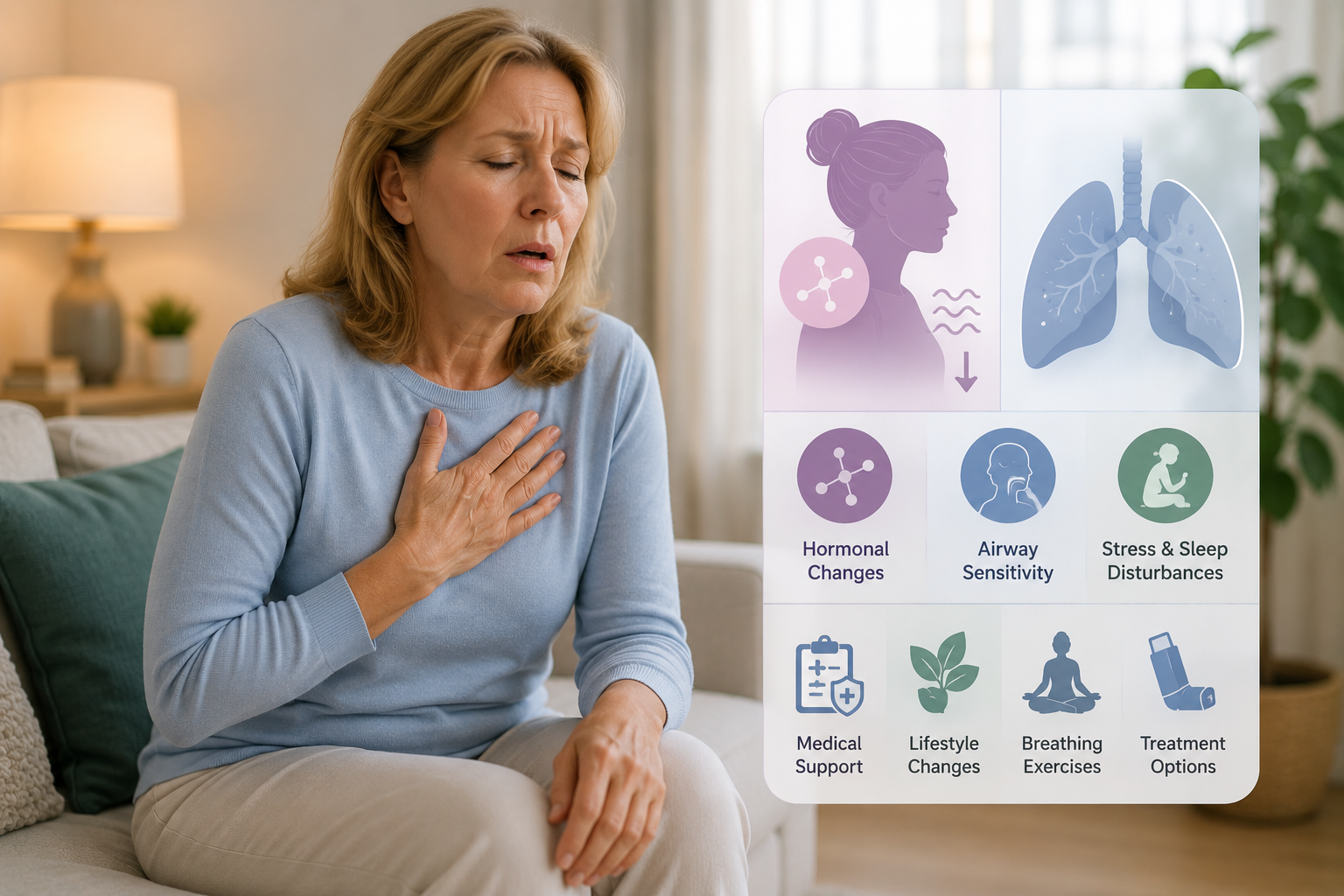

Menopausal women experience many changes in midlife, including hot flashes, sleep issues, decreased libido, and mood swings. Hormonal shifts, increased inflammation, and compromised lung function can also lead to menopausal asthma.
If you’ve been experiencing respiratory issues in your late 40s and beyond, you’re not alone. As a reputable online women’s health service on the Gold Coast since 2021, we explain the connection between menopause and asthma to our clients, enabling them to take charge of their long-term health and quality of life.
This blog delves deeper into menopause and breathing difficulties, providing valuable insights that allow you to enjoy life well into your golden years.
Breathlessness During Menopause
Studies have shown that menopausal women may experience respiratory issues and breathing difficulties (dyspnea) more than their premenopausal counterparts. Although experts have established a connection between declining oestrogen levels and breathlessness, some women transition into menopause without experiencing this issue.
Regardless of your situation, we encourage you to understand the link between menopause and dyspnea to improve your long-term health and well-being.
What Causes Menopausal Breathing Discomfort?
The typical causes of breathing issues during menopause include:
- Hormonal shifts: Studies suggest that progesterone helps support respiratory function and keeps the airways open. On the other hand, oestrogen improves progesterone’s positive effects on the respiratory system.
However, declining levels of both hormones may compromise respiratory function and cause breathing issues. Declining progesterone levels may also compress the airways and contribute to dyspnea.
- Greater inflammation levels: Studies have shown that oestrogen can help lower inflammation levels. Unfortunately, shifting oestrogen levels can lead to an increased inflammatory response and a higher risk of asthma and other breathing issues in midlife.
- Declining respiratory health: Lung function can diminish as one ages. Menopause can accelerate respiratory issues and increase the likelihood of dyspnea. Scientific evidence reveals that menopausal women show a decrease in Forced Vital Capacity (FVC), which measures how much carbon dioxide an individual exhales after breathing deeply.
- Respiratory issues: Menopause asthma symptoms become prevalent in some women, including shortness of breath, chest tightness, and wheezing.
On the other hand, some women develop Chronic Obstructive Pulmonary Disease (COPD), a respiratory issue where the airways become irreversibly obstructed. Some findings suggest that women who enter menopause before turning 40 years old have an increased risk of developing COPD than those who enter menopause almost 15 years later.
- Mental health issues: Menopausal women can develop anxiety and increase the likelihood of rapid, shallow breathing, leading to decreased oxygen intake and panic attacks.
Conversely, some menopausal women experience dyspnea and depression simultaneously. If you’re in this situation, consulting a specialist Gold Coast menopause clinic can relieve your symptoms and improve your long-term health and well-being.
- Obesity: Obesity can cause fat to accumulate around the airways, limiting the lungs’ ability to expand and increasing the likelihood of breathing issues. Worse, obesity also increases the body’s inflammatory response and the risk of developing asthma.
For these reasons, we strongly recommend maintaining your physician’s recommended body-mass index (BMI) through regular physical activity and a well-balanced diet. A general practitioner on the Gold Coast can offer tailored solutions to prevent obesity and improve long-term respiratory function in midlife and beyond.
Diagnosing Menopause-Related Breathlessness
Severe breathlessness can affect menopausal women’s daily activities and long-term quality of life. Your doctor can recommend further testing, such as respiratory function assessments and X-rays, to determine the triggers and develop a long-term treatment plan. Improved respiratory function can significantly improve your day-to-day function, ease the transition into menopause, and allow you to enjoy your golden years.
Managing Menopausal Dyspnea
You can successfully manage breathlessness during menopause by taking proactive steps and following these strategies:
- Anxiety management: Practising deep breathing exercises can help quell anxiety and improve long-term respiratory function. We strongly recommend box breathing, as this approach has been proven to successfully manage menopausal anxiety.
- Cool environment: Hot environments can trigger hot flashes and breathlessness. You can prevent these conditions by avoiding hot environments and staying in cooler ones. Work or relax in an air-conditioned or well-ventilated setting to increase comfort and prevent respiratory issues.
- Regular exercise: Scientific findings suggest that moderate-intensity exercises, such as swimming, running, and cycling, can improve respiratory function and breathing.
- Weight management: Maintaining a healthy BMI prevents fat from developing around the airways and improves breathing. You can achieve these goals by exercising regularly and eating a well-balanced diet consisting of plenty of fresh fruits and vegetables, lean protein sources, whole grains, and healthy fats.
- No smoking: Many studies conclude that smoking damages the lungs and increases the likelihood of breathing issues. We strongly recommend quitting smoking to help relieve midlife asthma and improve your long-term health.
When to Seek Immediate Medical Attention
Although occasional menopausal breathlessness can be manageable, sudden or severe episodes may require the immediate intervention of a physician on the Gold Coast. Please call your doctor immediately if you experience any of these symptoms:
- Wheezing or chest discomfort.
- Coughing up blood.
- Breathlessness with chills or fever.
- Breathlessness that worsens when lying down.
Frequently Asked Questions (FAQs)
Can menopause cause asthma?
Although menopause does not directly cause asthma, midlife hormonal shifts can lead to breathing issues or reveal underlying respiratory conditions in some women.
Can menopause make asthma worse?
Hormonal fluctuations, increased inflammation, changes in lung function, or airway sensitivity may make asthma worse for some menopausal women. If you’ve been experiencing worsening breathing issues, we strongly recommend consulting a physician on the Gold Coast to experience long-term relief.
Conclusion
Breathing difficulties during menopause are often associated with hormonal changes, inflammation, and age-related changes in lung function. Although not every woman will experience dyspnea in midlife, understanding their possible triggers can help her manage them effectively.
The right lifestyle modifications, medical guidance, and ongoing support can help you overcome menopausal breathlessness and related respiratory issues. Your general practitioner on the Gold Coast can recommend tailored solutions that improve your health and well-being in midlife and beyond.
Take charge of your long-term menopausal health now. Since 2021, Her Medical has helped women on the Gold Coast successfully manage asthma symptoms in midlife. Book an appointment to speak with one of our doctors today.