

Since the 1980s, inflation has proven to be one of the predominant attributes or elements in any economy. This is especially as commodity prices often experience increases with considerable differences in price percentage from the former price. Hence, with these inflation concerns growing, huge investor concerns also spread and becomes popular. Of course, inflation is a case that central banks of countries try to manage as it is often caused by specific government policies and actions, resulting in an increased price of certain commodities needed by the citizens in that country.
Purchase Gold and Silver – However, Suppose inflation results from an increase in the supply of money. In that case, deflation should entail a decrease in the money supply of an economy, and it is a measure used to stabilize the economy. No doubt, there has to be a correlation or intelligent management of inflation and deflation, making both of them an essential need for a thriving economy.
What Do Deflation and Inflation Entail?
Deflation is characterized by more commodities being purchased with minimal money, eventually leading to a crash in the economy as citizens become poorer. It starts with reduced or delayed demand for commodities, as citizens of that country wait for prices to get lower, and suppliers, in turn, reduce prices further lower and lower to entreat customers, slowly creeping but increasing the poverty level until the economy crashes.
In the case of inflation, it entails that there is a growing rush in demand as citizens are eager to purchase commodities before it increases in price, resulting in a more significant amount of money purchasing little commodities. The only issue is that if inflation is not controlled, the value of the country’s currency drops considerably, so it is essential to manage both inflation and deflation.
Inflation brings a kind of fear to investors, as the prices of commodities increase and the monetary value of their stocks and other investment reduce, resulting in enormous losses for the investors, which is why if there is a sense of incoming inflation, investors tend to run to invest in stable commodities.
What are Tangible Assets?
Stable commodities, which can also be called tangible assets, are specific investments that have intrinsic value and, no matter the economy’s condition, retain their value over a long period. Some examples of tangible assets are precious metals like gold and silver, oil estate, agricultural commodities, and many more. These commodities serve as a way to mitigate losses and even result in potential profit in times of recession or inflation.
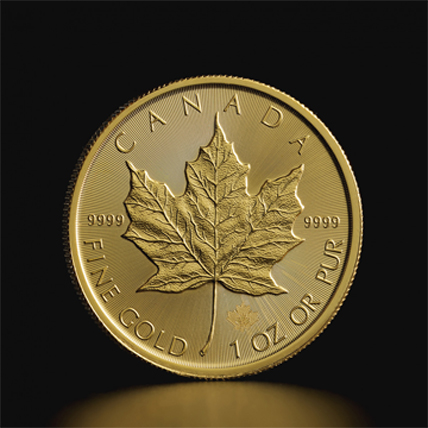
Precious metals, which are a great example of stable commodities or tangible assets, are a favourite for investors willing to survive inflation. For example, when there is an inflation encroachment, many investors pour a lot of money into gold investments, like gold bullions and coins, gold ETF and gold IRA, gold mutual funds, gold jewellery, and many other gold investment methods. Of course, investing in these commodities ensures that investors make a profit, even during inflation. Unlike stakes and shares, which can experience falling prices, gold investments experience rising prices in inflation; these investors stay profitable.
Are Precious Metals Beneficial for Long-Term Investment?
No one can ever guarantee the performance and effectiveness of any investment, even though investment in precious metals has performed dramatically well over the last few decades. For example, gold tends to increase annually to a percentage of about 8%. During times of recession, when the stock market goes through different levels of losses, precious metals tend to do the opposite, increasing in value. Plus, even if there is no occurrence of inflation, there is slow but steady growth in the profit margin in growth. Even in periods of deflation, losses in the value of precious metals are lesser than stocks or other traditional financial investments during inflation.
Who Can Benefit from Precious Metal Investment in Times of Inflation?
Anyone can benefit from investing in precious metals; but if we look profoundly considering everyone, it would be found that aged citizens are typically the majority of investors investing in gold. This is because, due to age and since they are closer to retirement, they tend to gravitate toward investment in stable assets with little risk and little potential for loss.
However, young individuals also invest in precious metals. Still, this is not much investment because they usually invest in other commodities that have huge returns but have huge risks too. Of course, young people are far from retirement and can withstand the scenario of loss more than the old, which is why old folks invest in precious metals that even though it experience loss, it is a manageable percentage of loss.
How Can I Invest in Precious Metals?
There are many ways an investor can invest in precious metals, but first, you must identify the type of precious metal you want to invest in from the many available, to name a few, gold and silver.
Secondly, you consider the amount of money you have available for the investment, outline your investment goals, weigh the percentage of profit and the potential risk that comes with it, and so on. There are many methods of investing in precious metals, some of which are:
- Bars and coins made from precious metals.
- IRA investments
- ETF (Exchange Trade Fund) investment.
- Jewellery
- Mining
- And finally, futures investment.
Before investing in any of these investment methods, it is essential to do your research on what each investment method entails and carefully research the broker you intend to invest in. But for beginner investors or investors willing to reduce risk, the easiest investment method of precious metals is the ETF fund, as it is an indirect investment method. Still, its profit gains will be smaller than a direct investment, such as bars or coins, which entails enormous risk and profit gains.
Conclusion
Inflation is a typical characteristic of the economy, such that many investments suffer losses of different levels when it occurs. Still, investments relating to stable or tangible assets are often seen to withstand the effects of inflation.
Precious metals, amongst others, are an excellent example of tangible assets known for their intrinsic value. Its ability to withstand the effect of inflation and, in most cases, is seen to rise in value and price, resulting in huge profits. This is why investors are advised to invest in any precious metals as one of their investments.
Today, older adults comprise most of the population of investors in precious metals, as precious metals have long-term benefits for investors and small risks involved. However, young individuals also invest in it to safely protect part of their funds from inflation.
Private Vaults Australia offers premium bullion bar storage, jewellery storage, gold and silver bullion storage in Brisbane, Sunshine Coast & across Australia.