
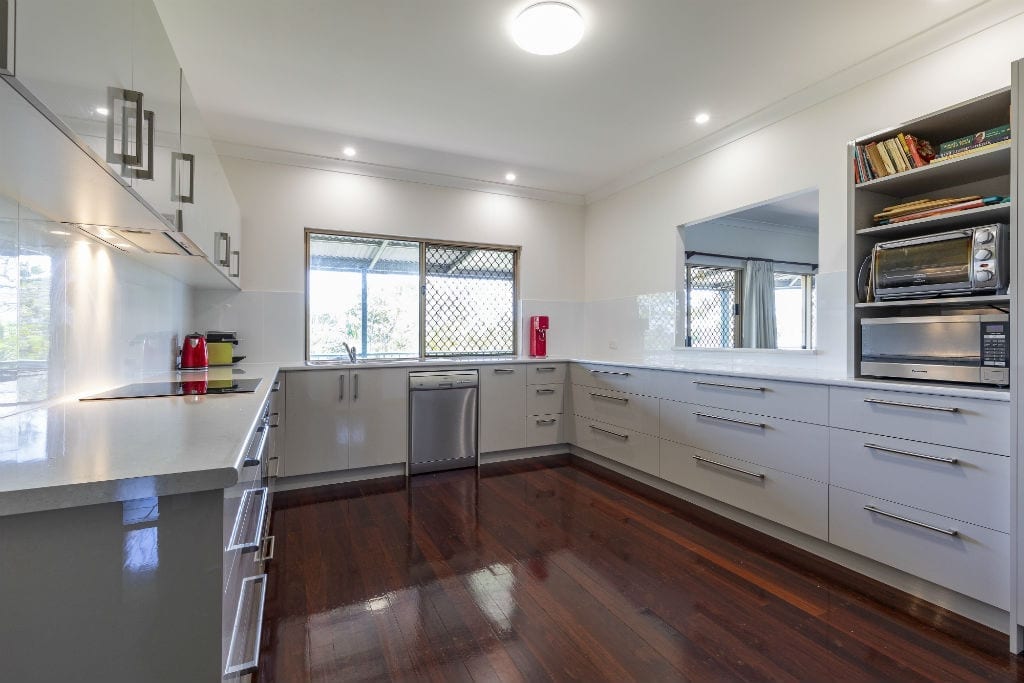

Whether you are moving into an existing kitchen, reconstructing the one you have, or building a new one, it is essential to understand a few key building measurements and organizational guides that can significantly help your culinary life.
Of course, the kitchen is one of the critical rooms in the house, and it is used for several things, including providing storage for your food and cookware, giving you room for prep and cleanup, and of course, also providing a place where you can cook and bake meals for the family. When the kitchen plan is thoughtfully arranged, these functions operate logically, making working in it a better experience.
Every good kitchen design starts with having a perfect measurement, and to achieve this, you will first need to decide what you need, what you want, and what existing items you would love to add to your new kitchen. After that, it’s advisable to draw an introductory room outline and floor plan to help others understand your ideas. You don’t need to worry about your drawings; they don’t have to be perfect works of art. They just need to be clear, simple sketches. Here are some supplies. You will need to draw out a kitchen layout.
- 25′ Retractable Steel Tape Measure
- Pencil (preferably colored)
- Eraser
- Note Pad and Clipboard
- Small Step Ladder (if possible
Now that you’re all set up let’s get started!
Designing the Three Major Areas of a Kitchen
Usually, the storage for dry goods and refrigerators should always be nearest to the kitchen entrance. The area for cooking should be situated toward the dining spaces, and the sink is best positioned between those two functions, thus creating the perfect working triangle. The best work triangle is less than 21 linear feet which is 6.4 meters. Work triangles that are more than 26 feet (7.9 meters) make moving from one function point to another within the kitchen very stressful and inefficient in most cases.
Everyone prefers what works best, so this is more like a guide and not a strict rule.
- Storage Area.
Most designers encourage placing the refrigerator and dry-goods storage at the kitchen entrance. Putting your kitchen closet on one side and a countertop about 15 to 24 inches on the other is a great idea. This will enable you to quickly put down items that you take out of the freezer and refrigerator.
The pantry can hold dry goods plus brooms and supplies like paper towels. You can use drawers in this area to hold things like plastic bags, foil, and anything that can contain food to be stored. Also, for the cabinets, it is advisable to have cake pans, measuring utensils, a mixing bowl, and other items to help you assemble meals.
- Preparation area.
Usually, the best place to locate your prep and cleaning space is around the sink. Also, you can keep your dishes and everyday glasses along with a trash bin and the dishwasher. Your countertop space on one or both sides of your sink should be 18-36 inches.
Since you’ll be taking things like plates, bowls, and other utensils from the preparation areas, it is best to keep it clear of other items. If your kitchen is small, leave at least 36 inches of uncluttered countertop space for preparation. However, a larger kitchen will have much more. This is one of the significant reasons why islands are so popular. They provide broad and well-lit surfaces to carry out most kitchen tasks.
- Cooking Center.
The cooking area should be arranged around the range of the cooktop and wall ovens. Also, putting your pots, baking sheets, and frying pan in the exact location of your burners and ovens is best. You can also place small appliances such as your coffeemaker or toaster in this area, which will help leave your preparation areas unobstructed.
Leave about 21-36 inches of countertop on one side of your cooktop, and place wall ovens with a free countertop next to them so you can set down hot food immediately.
Other Kitchen Measurement Considerations.
Getting the dimensions of all the pieces in your kitchen right is essential to make the best use of your space.
- Benchtop height.
Usually, the standard bench top height is often 900mm, including your kickboard. The height of a kickboard is often 150mm but can range between 100mm-200mm. But it all depends on how tall you are, and the height of the bench top could also range from 850mm-1000mm.
- Refrigerator depth.
The standard width for a refrigerator is less than 92 centimeters. The problem, however, is often the depth. Most manufacturers in recent years have designed them to be much deeper than a 61-centimeter base cabinet. You can also buy less deep freestanding refrigerators, but be attentive to the dimensions listed in its specifications to be specific.
Search for a depth of 76 centimeters or less, excluding handles, only if you can design your kitchen space to accept a deeper unit. It would be best if you also considered the swing of the refrigerator door. Always test the direction of the swing to see if it will meet an obstruction.
- Cabinet height.
Cabinets play an essential part in the kitchen’s configuration. Ideally, the upper cabinets should be 46 centimeters above the countertop and about 76 to 107 centimeters in height.
Cabinets set above this standard height or 7 feet will likely require a step ladder to be accessed. Cabinets above 8 feet are only practical for some people; however, they may serve as storage for seasonal or decorative items and can only be reached with step stools and ladders.
The base cabinet’s standard dimensions are 61 centimeters deep and 92 centimeters high. But since people are getting taller, some homeowners are bumping the counter height to 97 centimeters.
- Island bench.
The island bench must be in proportion with the rest of your kitchen and open-plan living area.
If you do not like a join in the island bench top, you can use a stone slab. The standard size for most slabs is around 3050mm x 1440mm.
Also, the standard depth of an island bench is 1200mm, which will create adequate room for stools on the other side. The best depth for the legroom is around 300mm.
- Distance between cabinets.
Another essential dimension to put into consideration is the distance between cabinets. The entrance can be as little as 92 centimeters when a cabinet is on only one side. Stay at least 107 centimeters away from the face of the cabinet to the one on the other side; 122 centimeters is a little bit better, but if you go beyond 152 centimeters, it becomes extensive in most cases. However, if the kitchen is U-shaped, you could get away with up to 244 centimeters.
Conclusion
Designing a kitchen is a complex and overwhelming overall project with many moving parts. If this is your first time renovating a kitchen, creating the perfect measurement for each functional area can be stressful. But it doesn’t have to be so. Follow this guide, and you’ll be a measurement wizard soon!