
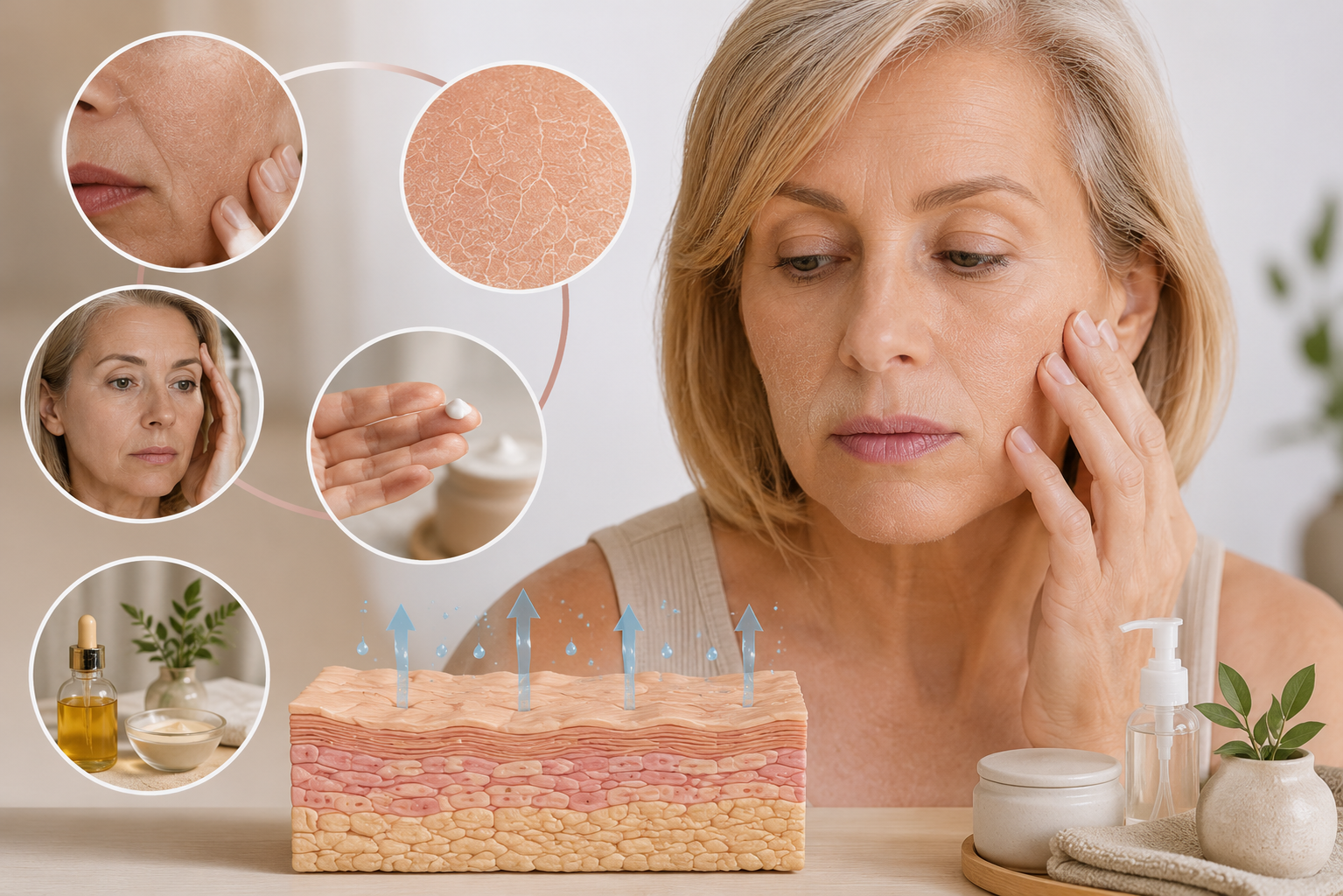

Menopausal dry skin may present a different sensation than occasional dryness. The former may manifest as chronic tightness, flaking, itching, sensitivity, or resistance to skin care treatments.
Australian women in their late 40s and beyond often experience these dermal symptoms due to shifting oestrogen levels. This female hormone supports collagen and oil production, skin density, and water retention. Declining oestrogen levels often compromise the skin barrier, leading to dry skin.
If you’ve been experiencing menopausal dry skin, there’s no need to worry. As a specialist Gold Coast menopause clinic helping Australian women adopt healthier habits in midlife and beyond, we offer unique insights that can deliver long-term peace of mind.
This blog explains the causes and treatment options for menopausal dry skin, enabling you to improve your health and quality of life.
When Does Dry Skin Develop During Menopause?
Menopausal dry skin can begin during perimenopause and become more noticeable as oestrogen levels diminish over time.
Dry skin is more likely to be associated with menopause if it coincides with other menopausal symptoms. Menopausal dry skin may occur alongside these midlife changes:
- Irregular periods.
- Hot flashes or night sweats that affect sleep quality.
- Post-cleansing skin tightness
- Resistance to skin moisturisers.
- Worsening symptoms in cold climates, travel, and dry indoor air.
Oestrogen levels play a critical role in supporting collagen production, skin hydration, and barrier function. Diminishing oestrogen levels lead to less collagen and elastin, which are essential proteins that help maintain optimal skin health. Less collagen and elastin can make women’s skin thinner, less resilient, and more prone to dryness.
Studies have also shown that lower collagen levels compromise the dermal support structure, affecting moisture retention and making the skin feel drier and less supple. This decline in collagen levels can eventually lead to fine lines and lower skin elasticity.
Causes of Menopausal Dry Skin
Lower oestrogen levels can make the skin barrier thinner, drier, and less able to retain moisture. This hormonal shift can compromise the following components, leading to menopausal dry skin:
- Collagen: This protein supports skin firmness, plumpness, and structural integrity.
- Hyaluronic acid: This natural sugar molecule helps retain skin moisture and optimise hydration levels.
- Natural oils: Reduced sebum production can cause the skin to dry and roughen.
- Skin barrier strength: A weaker skin barrier can lead to moisture loss and increased sensitivity.
- Skin thickness and elasticity: Thinner skin may be more prone to dryness, irritation, and the development of fine lines.
How Does Menopausal Dry Skin Feel?
Menopausal dry skin may feel different from weather-related dryness or reactions from skin care products. Middle-aged women experiencing skin dryness often experience more persistent, stubborn symptoms, including:
- Skin tightness after washing the face and the body.
- Visible flaking, peeling, or uneven skin texture.
- Ongoing or recurrent itchiness.
- Increased sensitivity to skincare products.
- Sensations of stinging or burning following product application.
- Diminished radiance and skin fullness.
- Increased visibility of fine lines and early manifestations of ageing.
- Worsening eczema or increased tendency toward skin irritation.
Menopausal dry skin can affect the face, arms, hands, neck, and vaginal region. Extreme cases usually report painful, cracking, or bleeding skin. As a trusted online women’s health service on the Gold Coast, we strongly recommend consulting your physician if you experience these symptoms.
Choosing the Best Treatment for Menopausal Dry Skin
Each menopausal woman is different. A reputable general practitioner recommends only tailored solutions that are unique to each client. He will recommend a strategy based on the severity of the skin’s dryness, symptoms’ responsiveness to dermal changes over time, and whether it coincides with other menopausal symptoms (hot flashes, night sweats, sleep issues, irregular periods, etc.).
If your menopausal dry skin is mild or seasonal, we recommend a gentle cleanser, rich moisturiser, and a humidifier to support skin hydration. When your skin often feels tight, sensitive, or itchy, barrier-supporting ingredients, such as ceramides, hyaluronic acid, glycerin, and fragrance-free formulations, can help restore and protect skin integrity.
However, if your dry skin doesn’t improve despite these interventions, we strongly recommend consulting a physician or skin care professional in your area to rule out underlying conditions, such as eczema, thyroid imbalances, medication side effects, or allergies.
Dry skin occurring alongside other menopausal symptoms may cause a healthcare professional to determine whether hormonal shifts are involved. If so, he will assess whether menopause-related interventions, such as hormone replacement therapy (HRT), are suitable for the client. It’s important to note that cracked, painful, inflamed, or bleeding skin requires the expertise of a reputable women’s doctor on the Gold Coast instead of self-diagnosis and over-the-counter skincare products.
How to Manage Menopausal Dry Skin
Understanding the different treatment options for menopausal dry skin enables you to make informed decisions and improve your long-term dermal health. These include:
- Make environmental and lifestyle adjustments: The following environmental and lifestyle adjustments can help relieve menopausal dry skin:
- Use a humidifier in dry environments and air-conditioned settings.
- Drink plenty of water every day.
- Minimise sugary and caffeinated beverages.
- Minimise long, hot showers.
- Sleep 7 to 8 hours every night.
- Manage stress to prevent inflammation and skin sensitivity.
- Consider barrier-supporting skincare: A consistent skincare routine helps improve moisture retention and support the skin barrier. Consider the following skincare practices to achieve these goals:
- Apply moisturiser immediately after bathing or cleansing to retain hydration.
- Use lukewarm water instead of hot water to retain moisture.
- Avoid harsh exfoliants and scrubs when the skin is irritated or sensitive.
- Consider fragrance-free skincare products if sensitivity is a priority.
- Moisturise twice daily to support hydration when skin dryness persists.
- Seek professional help: A dermatologist can help determine the underlying cause of menopausal dry skin. He may evaluate your skin to rule out eczema, psoriasis, allergies, product sensitivities, medication side effects, thyroid issues, or menopausal-related hormonal changes.
We strongly recommend consulting a women’s health practitioner on the Gold Coast if you’re experiencing painful, bleeding, cracking, or extremely dry skin that affects your quality of life and occurs alongside other menopausal conditions.
Your doctor can determine whether your menopausal dry skin is associated with skin barrier changes, hormonal changes, medication use, or a pre-existing health issue.
Frequently Asked Questions (FAQs)
Why does menopause cause dry skin?
Shifting oestrogen levels during menopause reduces collagen, natural oil production, and moisture retention, leading to dryness and heightened sensitivity.
What does menopausal dry skin feel like?
Dry skin during menopause may feel tight, rough, itchy, flaky, or sensitive. Some women also experience increased skin reactivity and more visible fine lines.
Can hormone replacement therapy (HRT) relieve menopausal dry skin?
HRT may improve skin hydration in some women. However, only a reputable and experienced skincare physician can determine whether hormone replacement therapy is appropriate for your situation.
Can menopausal dry skin be prevented?
While midlife hormonal shifts cannot be prevented, practising a consistent skincare routine, moisturising regularly, and staying hydrated can help minimise symptoms.
Conclusion
Menopausal dry skin is a common condition brought about by hormonal changes that can affect skin hydration, comfort, and quality of life. Understanding the connection among declining oestrogen levels, skin barrier function, and moisture retention enables women in Australia to proactively manage symptoms and prioritise long-term skin health.
Consistent skincare practices, lifestyle modifications, and professional medical guidance are proven interventions that can help relieve menopausal dry skin and improve day-to-day living. If your symptoms persist, consulting a trusted women’s general practitioner on the Gold Coast can help determine the underlying cause and a suitable treatment plan for your situation.
If menopausal dry skin is affecting your comfort and quality of life, our professional staff at Her Medical can help. Book an appointment today to discuss your situation with one of our reputable general practitioners.