
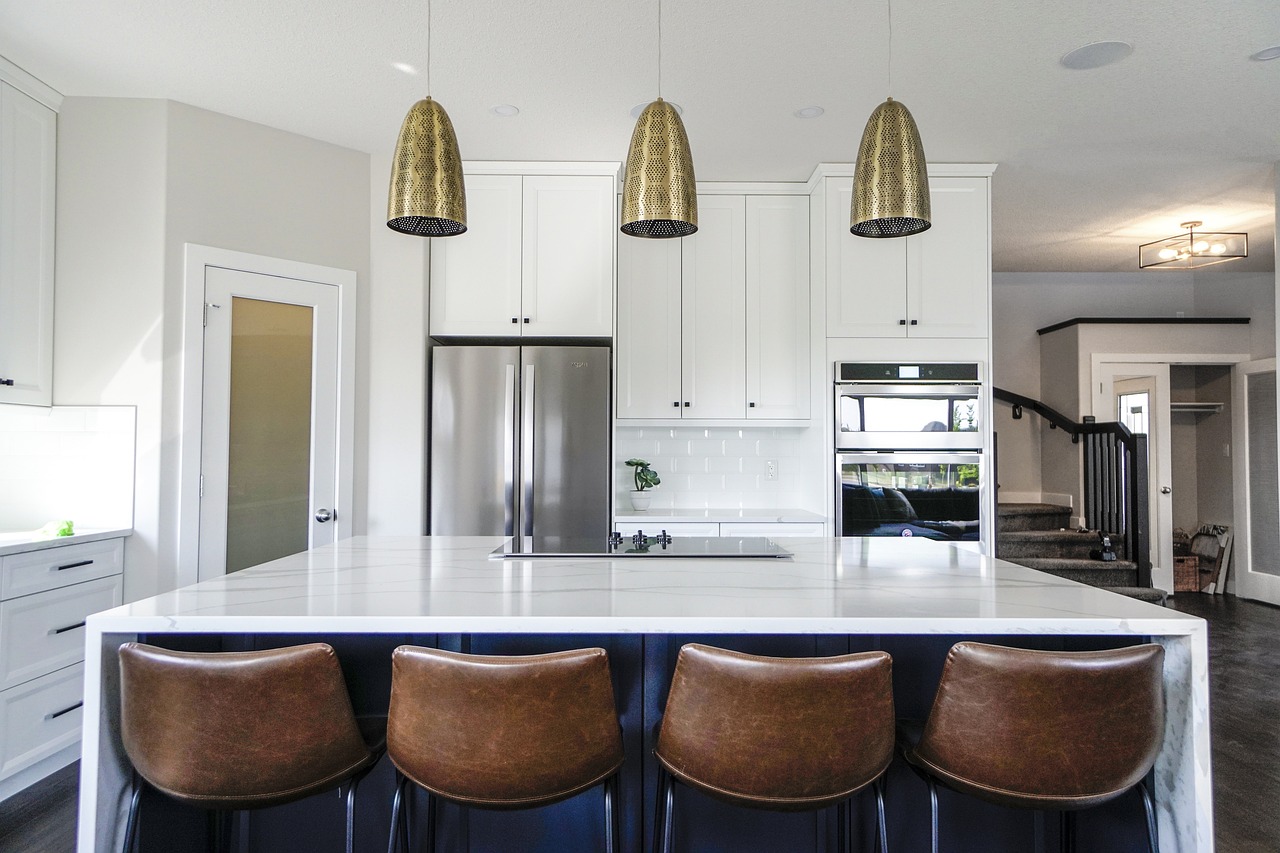

Do you ever daydream about the enticing aroma of your favorite dishes filling the air, the delight of hosting loved ones around a stylish kitchen island, and the convenience of an impeccably organized culinary sanctuary? It’s a vision that quickens the pulse of any aspiring chef. Yet, amidst this excitement, the intricacies of kitchen design measurements can sometimes seem daunting.
Perfectly harmonizing every cabinet, countertop, and appliance to achieve both elegance and functionality can be quite the challenge. That’s precisely why we’re here.
As an interior designer dedicated to transforming kitchen dreams into reality, I’ve witnessed firsthand the mix of enthusiasm and bewilderment. In this blog post, we’ll navigate you through the essential measurements that can either make or break your kitchen design, sparing you from the perplexing details that often lead to confusion.
Ergonomics for Effortless Culinary Creations
Cooking and food preparation can be deeply satisfying, but they can also strain the body. That’s why incorporating ergonomics into your kitchen design is vital. With the right layout and equipment, you can significantly reduce physical strain and enhance the efficiency of meal prep and cooking.
Let’s begin with the “magic triangle” – the sink, stove, and refrigerator. This trio forms the cornerstone of kitchen ergonomics. They should be arranged in a manner that creates a seamless workflow. Ideally, there should be no more than 9 feet of space between these three elements. This arrangement facilitates easy movement, minimizing the risk of tripping or mishaps.
Next, consider countertop comfort. The overall height of your kitchen countertop plays a pivotal role in your comfort while working. If the countertop is too high or too low, you’ll find yourself bending over or straining to complete basic tasks. When planning your kitchen, account for your height and the height of those who will use the space. A height of around 36 inches is generally ideal for most individuals.
Effective clearances and passageways are essential for fluid movement within your kitchen. Inadequate clearance can hinder mobility, while excessive space can make your kitchen feel congested. A general guideline is to aim for a minimum of 42 inches between counters and 48 inches between your island and counters.
Balancing space and movement is paramount. Strive for a layout that maximizes functional space while allowing effortless movement. An overly cluttered kitchen can impede mobility, leading to accidents, while an excessively spacious one can feel devoid of warmth. Seek a harmonious equilibrium between these aspects.
Cabinets and Storage Solutions: Maximizing Every Inch
Regardless of your kitchen’s size, it always seems that there’s never enough storage. Fortunately, various cabinet and storage solutions can help you make the most of every nook and cranny in your kitchen.
Optimizing cabinet height and depth is a game-changer. While most cabinets boast a standard depth of 24 inches, careful consideration of cabinet height is crucial. Taller cabinets offer more storage space, but keep in mind that unless you have a suitable step stool, the upper shelves may not be practically accessible. Therefore, choose cabinet height based on your and your family’s reach.
Upper cabinets have long been kitchen staples, offering ample storage. However, modern designs often incorporate open shelves alongside traditional cabinets. While open shelves lend a contemporary, uncluttered look, they may not always be the most practical storage solution, as they can accumulate dust and expose items to cooking residue.
To make an informed choice, consider your kitchen’s aesthetics and the functionality of each storage space. Reserve open shelves for displaying decorative or frequently used items, while utilizing cabinets for more practical storage.
For deep or corner cabinets, pull-out drawers and lazy Susans work wonders. Pull-out drawers facilitate efficient organization of kitchen utensils and cookware, eliminating the need to bend down and search in dark cabinets. Lazy Susans are ideal for corner cabinets, efficiently storing spice containers, jars, and canned goods that would otherwise get lost in the depths of the cabinet.
Seating and Dining Area Dimensions: Comfort Meets Functionality
The dimensions of your seating and dining areas can significantly impact their comfort and functionality, whether you’re crafting a cozy breakfast nook or furnishing a spacious dining room.
Starting with dining table clearance, ensure there’s ample room to pull chairs in and out without any obstructions. A rule of thumb is to allow at least 36 inches (or three feet) between the table and surrounding walls or furniture. Rectangular tables may require more clearance at the ends.
For bar stools and counter seating, height is crucial. Standard bar stool heights typically range from 28 to 30 inches, while counter stools are generally around 24 to 26 inches. However, take your counter or bar height into account to select stools that provide comfortable seating without feeling too high or low.
Creating a cozy breakfast nook involves bench dimensions. Ensure the bench offers comfortable seating with a seat depth of around 18 inches and a standard bench height of approximately 18 inches. Additionally, consider your table’s height when selecting a bench, aiming for a bench length that provides 24 inches of space per person.
Illuminating Your Culinary Haven: Lighting Considerations
Your kitchen is not merely a cooking space; it’s where memories are forged and connections are strengthened. Whether you’re sharing a family dinner or hosting a soirée, the right lighting can set the perfect mood for any occasion. Here are some lighting considerations to illuminate your culinary haven.
Pendant lights and chandeliers not only enhance the aesthetics of your kitchen but also provide essential task lighting. To determine the ideal height for these fixtures, adhere to the rule of thirds: hang them so that the bottom is roughly one-third of the distance from the ceiling. This ensures optimal lighting while maintaining proportionality in your kitchen’s design.
Under cabinet lighting is a functional and visually appealing addition to any kitchen. It not only illuminates your workspace but also creates an inviting ambiance. Opt for LED lights for energy efficiency and a clear, crisp light. Install these lights in the front of cabinets to prevent shadows on your workspace.
Natural light is a vital element in any kitchen, offering an inviting atmosphere and health benefits. When designing your kitchen, consider window placement. If possible, position windows on east or west-facing walls to maximize natural light. Choose lightweight window treatments to avoid blocking natural light.
Ventilation and Air Circulation: A Fresh Kitchen Oasis
The scents and vapors produced during cooking can be overwhelming, detracting from the enjoyment of your culinary creations. To combat this, proper ventilation and air circulation are essential.
Range hood placement is critical for effective ventilation. Install the range hood directly above the stove to efficiently extract smoke, steam, and odors. When selecting a range hood, consider your kitchen’s size, your cooking style, and your overall aesthetic. Consulting with a professional can help you choose the right one.
Proper ventilation sizing is equally important for smoke and odor management. Calculate the airflow needed to remove cooking byproducts efficiently, taking into account your kitchen’s size, your cooking habits, and your household’s size. A professional can assist in determining the appropriate size for your ventilation system.
To maintain a fresh kitchen, ensure proper air circulation. Open windows or doors to let fresh air in, and consider installing ceiling fans or standing fans to improve circulation. Regular cleaning of appliances, countertops, and floors is essential to prevent the buildup of unpleasant odors, facilitating effective air circulation.
Conclusion
Imagine a chef creating a gourmet dish without carefully measuring the ingredients—too much salt or too little olive oil could disrupt the entire culinary experience. Similarly, your kitchen, much like a well-crafted recipe, depends on precise measurements to blend comfort and aesthetics seamlessly.
Designing your kitchen goes beyond mere numbers and inches; it’s about crafting a space that resonates with your lifestyle and aspirations. It’s the art of merging aesthetics with functionality, transforming your cooking haven into a masterpiece tailored to your unique taste and daily needs.