
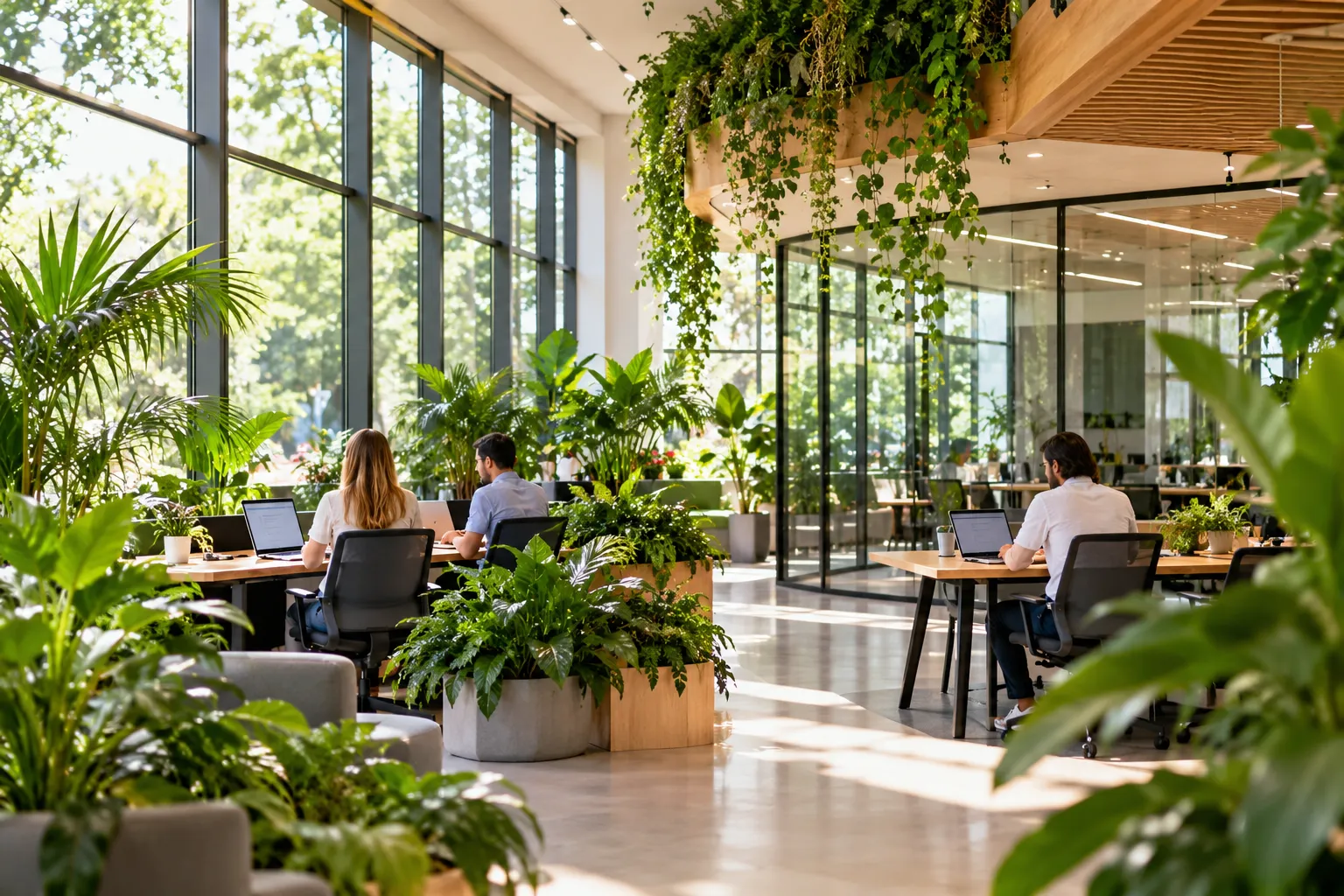

Why Everyone Is Talking About Nature at Work
Walk into almost any newly fitted-out office, and you’ll see green, leafy plants by the desks, stylish timber on the walls, maybe a green wall in reception. Nature-inspired offices have moved from trendy to mainstream in Australia.
But if you’re planning a commercial fitout, you want more than a nice look. You want to know whether bringing nature indoors actually helps people work better or whether it’s just expensive decoration. If you’re a manager or business owner considering a nature-inspired office, we, as Gold Coast office fitout specialists, provide innovative insights and solutions that transform your workspace.
This blog explains the link between a biophilic workplace design and productivity, helping you make informed decisions and improve long-term workplace collaboration.
What Is Biophilic Design?
The word “biophilia” means “a love of living things.” This concept makes people feel calmer and more alert when they’re connected to nature—something most of us know instinctively from a walk in the park or a weekend at the beach.
Biophilic interior design brings that connection indoors. It’s about much more than a few pot plants. It can include:
- Natural light and views of the outdoors.
- Indoor plants, planter boxes and green walls.
- Natural materials, such as timber, stone, wool and cork.
- Colours and patterns found in nature, such as soft greens, earthy browns, and leaf-like shapes.
- Fresh air, comfortable temperatures, and soothing background sounds
- Spaces that feel sheltered, like a quiet nook, alongside open areas with long views.
You can achieve optimal, long-term results when these elements mesh seamlessly together, rather than as a single feature added at the end. Collaborating with a highly experienced contractor can bring your nature-inspired vision to life.
What Does the Research Say?
Some of the best-known evidence comes from our home soil. Researchers at the University of Technology Sydney placed plants in offices and measured how staff felt before and after. Workers with plants reported a 37% drop in tension and anxiety, a 38% drop in fatigue, and a 44% drop in anger, while a comparison group without plants showed little improvement (UTS study, published by Greenlife Industry Australia).
It’s worth being honest about the limits. That study involved around 40 people, and it measured mood rather than output. Researchers generally agree that nature in the workplace improves how people feel. Proving a direct jump in productivity is more challenging because output depends on numerous factors, from management to workload.
Nevertheless, the connection makes sense. People who feel less stressed and less tired tend to concentrate better, take fewer sick days, and are more likely to stay with their employer. Biophilic design benefits often manifest in staff well-being, comfort, and retention, which improve long-term business productivity.
Practical Ways to Bring Nature Into Your Fitout
You don’t need a rainforest in reception to get results. Here are practical ways you can adapt biophilia in your office design, ranging from simple to more ambitious:
- Place desks near the light: Place workstations close to windows and keep tall storage and meeting rooms away from the glass, so daylight permeates into and illuminates the space.
- Add plants where people actually sit: Plants near desks and in meeting rooms have more impact than one large feature in the foyer. Planter boxes can double as room dividers.
- Choose natural materials: Timber joinery, wool carpets, stone benchtops, and cork pinboards bring warmth and texture that plastic and laminate can’t match.
- Use nature’s colour palette: Soft greens, sandy neutrals, and timber tones create a calmer feel than stark white or grey.
- Improve fresh air and comfort: Good ventilation, steady temperatures, and less noise matter as much as visual appeal.
- Create a mix of spaces: Organise open areas with long views and smaller, sheltered spots where people can focus or recharge.
- Consider a green wall: A living wall makes a strong first impression. However, it needs proper lighting, watering, and ongoing care.
Mistakes to Avoid
A biophilic office design works best with meticulous planning and careful execution. Watch out for these common traps:
- Treating plants as an afterthought: Plants placed in dark corners struggle and can look gloomy, which has a detrimental effect on mood and productivity.
- Neglecting ongoing care: Live plants need watering, feeding, and replacing. Consider hiring a plant maintenance service or choose hardy species your team can look after.
- Relying on fake greenery: Artificial plants can soften a space. However, they gather dust and don’t offer the same benefits as genuine greenery.
- Ignoring the basics: Poor lighting, stuffy air, and constant noise will undo the good work of any green wall.
- Expecting overnight miracles: Nature in the office supports well-being over time. It works alongside good management and a healthy culture, not instead of them.
So, Is It Worth It?
Combining a biophilic workplace design and realistic expectations can work for most businesses in Australia. Bringing nature into the workplace won’t fix a poor culture or an impossible workload. However, it can make your office calmer and healthier, increasing focus, drastically reducing sick days, improving motivation, and making a strong impression on clients and recruits.
If you’re planning a new fitout, our commercial fitout company can seamlessly integrate natural elements into your workplace. We can arrange your desk placement, materials, and lighting to create a productive, nature-inspired atmosphere. Book an appointment today to discuss your vision and experience our transformative biophilic fitout solutions.
Frequently Asked Questions (FAQs)
Is biophilic design expensive?
Simple steps like placing desks near windows, adding plants, and choosing natural colours cost little, especially with careful, long-term planning. Features such as green walls or large skylights cost more and need ongoing maintenance.
How many plants does an office need?
There’s no fixed rule on how many plants offices need. However, research suggests even one plant within view of each workstation can make a significant difference in how people feel. Spread plants through the space rather than grouping them in one spot, and choose species suited to your light levels.
Do artificial plants work well in a biophilic office?
Artificial plants can make a space look softer, but they don’t respond to light and seasons or improve the feel of a room in the same way. They also gather dust, which leads to tedious upkeep. Real plants usually deliver better results.
Can a biophilic design work in an office without windows?
This strategy can work, but with careful planning. Good artificial lighting that mimics daylight, shade-tolerant plants, natural materials, nature-inspired colours, and artwork showing natural scenes can all help create a sense of connection to the outdoors.
Does biophilic design help attract staff back to the office?
A cosy, attractive office gives people a reason to come in rather than work from home. Natural light, plants, and quiet spaces make the office feel more inviting, though flexibility and team culture matter, too.