
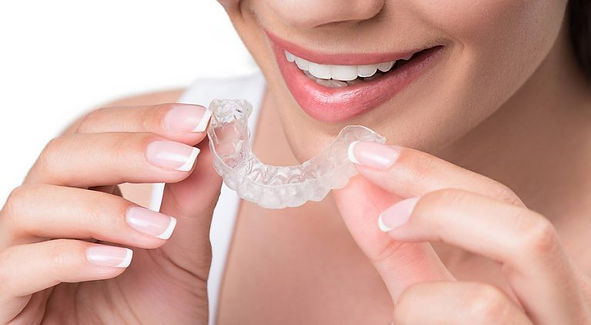

In simple terms, dentures are fake teeth used to replace damaged teeth. They are also known as prosthetic or fake teeth and are custom-made to fit an individual plagued with missing or removed teeth. Dentures are perfect substitutes for damaged teeth, as they replace in function and likeness the damaged natural teeth.
Why are Dentures Important?
Cavities, accidents, and dental diseases, like dentinogenesis imperfecta, can cause tooth damage needing removal and replacements. Dentures cannot function as effectively as natural teeth, but they are an ideal substitute for missing natural teeth. This is because they help retain the shape and appeal of your mouth while improving your overall appeal.
Lost teeth can either be replaced partially in the case of few teeth loss or fully (where the whole lower or upper dentition is gone), and it helps to eat food comfortably, in chewing and churning of food.
Types of Dentures.
Dentures can be divided into two depending on the needs of the patient.
- Partial dentures
Partial dentures are used when there is little teeth loss caused by the removal of decayed teeth or accidents (blow to the teeth). As a patient willing to try partial dentures, the doctor recommends two varieties of partial dentures, ranging from fixed to removable. However, in most cases, fixed partial dentures are the better option.
The fixed partial denture comes in a crown and bridge formation, where the teeth used in bridging occupies the empty gap from the removed teeth. The crown sits to connect both bridges on the right and left of the gap from the missing tooth and is cemented in place.
Removable partial dentures are almost similar to their fixed counterparts; the difference is that clips are used instead of crowns. And the clips are not cemented in place, so the patient can easily remove them when required. The absence of a crown in the removable partial dentures makes them less stable than fixed partial dentures but less expensive if compared.
- Complete dentures.
As the name complete implies, a situation where the whole set of teeth or the complete upper set (which is the maxillary arch) or complete lower set (which is the mandibular arch) has been removed or lost, and dentures have to be used to replace the entire lost set.
There are four types of Dentures used in complete dentures, and they are:
- Standard dentures
Standard dentures are used for an individual who has lost all their teeth. It is created to maximize the surface area of the replaced lost tooth, thereby achieving better retention and stability. This is achieved by constructing it so that the installed dentures end behind the hard bone in the roof of the mouth. When fitting a standard denture, a 4-day session is required to fit it in comfortably.
- Immediate dentures
Immediate dentures are often referred to as temporary dentures, constructed before the damaged teeth are extracted and placed right above the bleeding empty sockets. This helps to numb the pain, and it was observed that patients do pretty well with this denture type. It takes one or two appointments with a dentist to prepare dentures in readiness for fitting.
- Cu-Sil dentures
The Cu-Sil denture needs at least a healthy tooth to be installed, as it comprises holes in the teeth of the denture. It is then surrounded by a durable silicone base gasket, which joins it firmly with the natural tooth allowing it to rest on the gum of the mouth. Hence, stability is improved due to suction improved by the constructed denture. Plus, the mechanical stability gained from the firmness of the natural tooth. Cu-Sil denture helps sustain the durability of teeth and stabilize loose teeth.
- Implant retained dentures:
Implant retained denture involves driving a titanium screw into the base of the underlying bone beneath the gum to secure the teeth in place firmly. It is the most expensive denture, costing about a thousand pounds or more. It is more enhanced than other dentures giving better results.
The screws or implants driven into the underlying bone underneath helps to solve the problem of wearing and tearing the bone. It is implanted so that teeth eroding does not occur while chewing, as pressure is being reduced to a very minimum. With time, the titanium gets sunken into the bone, exposing the implant. At this point, the dentist attaches a post to the implant to cover the exposure.
- Plastic or porcelain dentures.
The material that dentures are made from can be plastic or porcelain, but porcelain-made dentures are better used than plastic. And when used with natural teeth are more durable than plastic dentures.
Dentists usually recommend plastic-made dentures because porcelain is more rigid than plastic. Porcelain dentures are set on a plastic base and tend to fall off because of the mechanical method used in constructing them. Another reason dentists do not suggest porcelain teeth is because they can wear down the natural teeth they are used with.
Problems Associated With Complete Dentures.
Since the body is created to recognize anything put into the mouth as food, the dentures will also be treated similarly, resulting in increased saliva production until the body adjusts to the dentures’ presence. Also, when the dentures are placed initially, sores can develop from the dentures scraping the mouth’s inner lining, and a dentist can quickly correct this. Gagging can also be experienced from the ill-fitting of the denture or psychological issues.
Factors to Consider When Opting for Dentures.
Before opting for any denture fitting type, there are three factors to consider: support, stability, and retention. More on these factors are outlined below:
- Support
Specific tissues in the mouth accommodate the dentures when they fit and prevent them from falling off or sinking into the gum. Flanges from the dentures hold the tissues, as the flanges hold ok to the tissues when the dentures dulwich hill are installed.
However, you must pay attention to the size of the flanges, as they help provide the needed support for the dentures. A tip to opt for dentures with wider flanges is because the wider the flanges, the better the support.
- Stability
This factor considers how well-placed the dentures are in the mouth, and the flanges mentioned above ensure support but also contribute to stability. Hence, pay attention to the stability factor when choosing dentures.
- Retention
The installed denture is not expected to move in the opposite direction to its insertion, which is the retention factor. It is obtained by ensuring the denture’s inner part matches the underlying mucosa.
Conclusion
Despite improving appeal, dentures are not created to last a lifetime because they erode with time and constant use. As it is pushed into the upper and lower gum, it can infect the gum when it erodes. Hence, it should be changed once it is noticed. Dentures consistently advise changing dentures after every seven years of use.Whiter & Brighter Smilez are leading dentist in Dulwich Hill, specialising in emergency dental care, cosmetic & general dentistry. Call Now!