
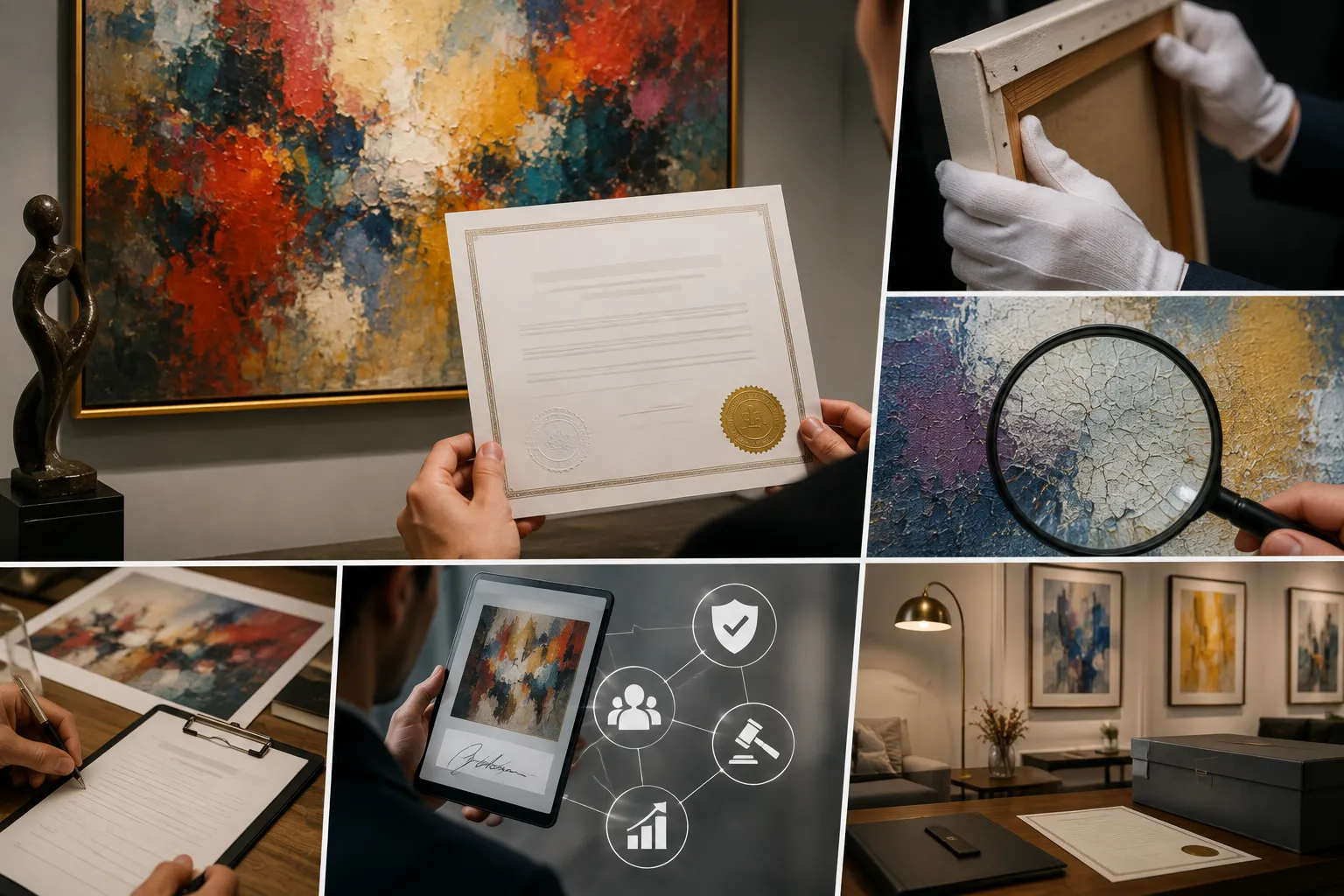

Buying artwork is more than owning a visually appealing masterpiece. Whether you’re purchasing a painting from a well-known artist, an emerging creator, or a private seller, you need the confidence that the work is legitimate and accurately represented. A certificate of authenticity (COA) plays a critical role in your artwork purchase and delivers long-term peace of mind.
In Australia’s competitive art market, this document authenticates your purchase’s origin, artist, title, and other pertinent information, supporting your artwork’s value and giving future buyers confidence about its legitimacy.
At Anthea Polson Art, we encourage our clients to understand these benefits so they can truly enjoy their purchased artwork. This blog explores why certificates of authenticity matter, the information they provide, and how they can help protect your investment in the local art scene.
Certificate of Authenticity Defined
A certificate of authenticity (COA) is a signed statement from an artist, gallery, or a renowned art expert verifying the legitimacy of a specific artwork. COAs became prominent in Australia through the Indigenous and Aboriginal art sector in the early 2000s. Many Aboriginal galleries provide buyers with certificates of authenticity to confirm community origin.
It’s important to remember that a COA isn’t mandatory for contemporary or non-indigenous art. An official sales receipt or a letter of provenance from a trusted art gallery or dealer authenticates the purchase.
A standard certificate of authenticity includes:
- Artist’s name, biography, or cultural language group.
- Artwork title, date of creation, size, and medium.
- A photo of the artwork or the artist with his creation.
- A catalogue number or serial number linked to the creator or art gallery.
- The edition number and signature for prints.
- Security features, such as watermarks or numbered holograms.
A COA authenticates artwork; it doesn’t predict its future value over time. Instead, it provides documentation that supports the buyer’s confidence in his purchase.
If you want to know your purchase’s potential future cost, we encourage you to consult a qualified art valuer or art consultant. It’s important to note that no professional can guarantee that an artwork will increase in value.
Why COAs Matter
It’s easy to assume that certificates of authenticity are only important for high-value artworks or serious collectors. Their value transcends those aspects—they provide protection regardless of the purchase price. Unfortunately, there have been many reported cases of forged and misattributed artwork in Australia, including the McBride v. Christie’s Australia case, in which an alleged Albert Tucker masterpiece was actually a forgery, per ArtNet News.
The risk of purchasing forged or inauthentic art exists because these pieces can be owned by multiple private individuals, dealers, and auction houses. To make matters worse, provenance records can lack critical information or verification. It’s important to remember that an artist’s signature is not sufficient proof of authenticity.
Conversely, a certificate of authenticity, with the artist’s and artwork’s information, a photo, a catalogue number, an edition number, and security features, creates a documented record of the artwork’s origins. This comprehensive record provides buyers with greater confidence and establishes the artwork’s legitimacy, delivering long-term peace of mind and a high return on investment.
How Certificates of Authenticity Reduce Risk
Aside from protecting you from purchasing counterfeit or misattributed artwork, certificates of authenticity help secure insurance coverage by establishing the piece’s legitimate origins. For instance, some insurers in Australia require proof of purchase, photographs, and a professional valuation when making claims for higher-value masterpieces.
COAs can also be beneficial when you decide to sell your artwork in the future. Some potential buyers, galleries, or auction houses request evidence of the work’s legitimacy before accepting it for resale. Keeping your certificate of authenticity can help facilitate future sales transactions and create a potential income opportunity.
A certificate of authenticity can preserve the artwork’s history for exhibitions, estate planning, or inheritance for future generations. It’s critical to note that a COA protects artists and buyers, preventing shady merchandisers from selling fraudulent artwork or falsely attributed versions. This strategy protects the artist’s reputation and ensures his artwork receives due recognition.
Making an Informed Art Purchase
Buying beautiful artwork from trusted, reputable sources helps significantly minimise authenticity issues. An established art gallery often has long-term relationships with the artists it represents and provides its customers with the proper documentation. If you are buying directly from an artist, we recommend asking for a signed certificate of authenticity before completing the transaction.
Local art exhibitions also provide art enthusiasts with a straightforward buying experience. These events provide you with opportunities to meet the artist, view their exhibits, and ask relevant questions about their work, providing deeper insight into an artwork’s origin than purchasing second-hand artwork without the appropriate documentation.
Key Details to Check Before Buying Artwork
Taking proactive steps before buying artwork significantly reduces the likelihood of future issues and delivers long-term peace of mind.
We encourage you to request the certificate of authenticity before finalising the purchase and ensure that all the details, including the title, artist, medium, and dimensions, are accurate. For limited-edition prints, check the edition number and confirm the total number produced in the series.
Be vigilant about pieces created by well-known artists sold at unusually low prices. Instead of considering it as a great bargain, check the artwork’s origin and documentation before buying it. Taking proactive measures helps prevent ill-advised purchases and ensures great value for money.
We recommend keeping the COA alongside photographs of your purchased artwork and other pertinent details, establishing clear ownership, arranging insurance coverage, and proving its authentic origin in case you decide to sell it in the future.
Frequently Asked Questions (FAQs)
What details must a certificate of authenticity include?
A certificate of authenticity must include the artist’s name, artwork title, date of creation, size, medium, photo of the artwork, catalogue number or serial number, edition number, and security features, such as watermarks or numbered holograms.
Do fake certificates of authenticity exist?
Unfortunately, fake certificates of authenticity exist in Australia. Regardless of your purchase price, buying artwork from an established gallery, artist, or retailer allows you to obtain an authentic COA and enjoy long-term peace of mind.
Are COAs mandatory for lower-priced artwork?
You must also secure a COA for lower-priced artwork. It’s important to remember that this document isn’t limited to higher-priced masterpieces. Regardless of your artwork’s price, obtaining a COA facilitates easier insurance, artwork verification, and future selling.
How do a certificate of authenticity and provenance differ?
A COA confirms the artwork’s legitimacy. On the other hand, provenance refers to the piece’s ownership history. These two documents enable buyers to make informed purchasing decisions with greater confidence and certainty.
Where do you recommend buying original artwork?
We recommend purchasing directly from the artist, an established art gallery, or a reputable art exhibit. These options enable you to ask relevant questions, obtain proper documentation, and confirm the seller’s genuine connection with your intended purchase.
Conclusion
A certificate of authenticity provides valuable documentation that proves an artwork’s legitimacy, provenance, and future sales potential. Whether you’re a first-time buyer or an experienced collector, taking proactive measures and securing the appropriate documentation helps you purchase with greater confidence.
At Anthea Polson Art, we are committed to helping art enthusiasts discover genuine, high-quality Australian artwork. Contact us to learn about our available pieces and discover potential additions to your art gallery.