
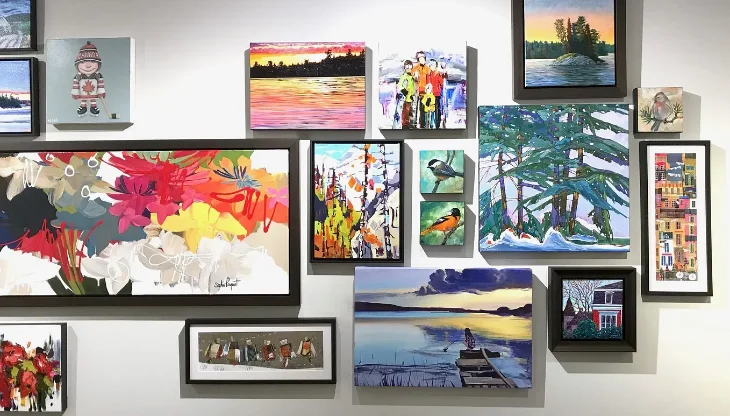

A lot of people assume that collecting art is something you do later in life, once the mortgage is paid down, the kids are through school, and there’s finally some money left over at the end of the month. The truth is, there’s no right time to start, and there’s certainly no minimum spend required.
Whether you have $200 or $20,000 to put toward your first piece, building an art collection is less about how much money you have and more about developing your eye, trusting your instincts, and buying with intention. Here’s how to get started.
Get Clear on Why You’re Collecting
Before you spend a single dollar, it’s worth spending a bit of time thinking about what you actually want from a collection.
Are you drawn to art because you want to surround yourself with things that are meaningful and beautiful? Are you furnishing a home or office and want something that feels more personal than a print from a homewares store? Or are you genuinely curious about the art world and want to engage with it more deeply over time?
There are no wrong answers. But knowing your motivation helps you make better decisions, especially early on when everything seems interesting and it’s easy to buy impulsively. Collectors who buy with a clear sense of purpose tend to end up with collections they actually love, rather than a mismatched group of pieces they eventually want to move on from.
Start With What You Can Genuinely Afford
The golden rule of collecting on a budget is simple: never stretch yourself to buy something. Art should bring you joy, not financial stress.
The good news is that there is genuinely excellent, original work available at every price point. Emerging artists, those in the early stages of their careers, often sell at prices that are accessible to new collectors, and buying their work early means you’re supporting their practice at a critical time.
A few things worth knowing as you set your budget:
- Under $500: You’ll find original works on paper, photography, small-scale paintings, and limited edition prints by emerging artists. This is a great entry point.
- $500–$2,000: This range opens up a much broader selection of original paintings, mixed media works, and pieces by artists who are beginning to build a following.
- $2,000–$10,000: At this level you’re looking at mid-career artists with exhibition histories, and works that are more likely to hold or grow in value over time.
The most important thing at every price point is that you’re buying something you genuinely connect with, not something you think you should like.
Educate Your Eye Before You Open Your Wallet
The single best investment you can make before buying your first piece is time. Spend it looking at as much art as possible, in galleries, at open studios, and at exhibitions.
Attending GC art exhibitions, for example, gives you direct exposure to a wide range of styles, mediums, and price points in a single visit. You’ll start to notice patterns in what draws your attention and what leaves you cold. You’ll begin to understand the difference between work that’s technically accomplished and work that genuinely moves you, and you’ll realise that those two things don’t always go together.
Follow artists on social media. Read about movements and periods that interest you. Visit your local galleries regularly, not just when you’re ready to buy, but to look and learn. The more you look, the more confident your eye becomes, and the better your buying decisions will be.
Buy Original Work When You Can
Limited edition prints and reproductions have their place, and there’s nothing wrong with buying them, particularly when you’re just starting out and working with a tight budget. But if you can stretch to an original work, even a small one, it’s almost always the more rewarding choice.
Original artworks carry something that reproductions simply can’t replicate: the direct mark of the artist’s hand. There’s a texture, an energy, and an intimacy to an original piece that you feel in the room with it. And from a collecting perspective, originals hold their value in a way that open edition prints never will.
Build a Relationship With a Gallery You Trust
One of the most valuable things a new collector can do is find a gallery that takes the time to understand what you’re looking for. A good gallery isn’t just a shop, it’s a resource. The staff can introduce you to artists you might not have found on your own, alert you to new works before they sell, and help you think through whether a piece genuinely suits your space and your collection.
Working with a Gold Coast boutique art gallery, for instance, gives you something you won’t get from scrolling online: personal relationships, genuine curatorial expertise, and the ability to see work in person before you commit. Boutique galleries tend to be selective about the artists they represent, which means you’re getting a degree of quality assurance built into the process.
Don’t Be Afraid of Emerging Artists
Some of the most exciting collecting happens at the emerging end of the market. These are artists who are developing their practice, building their exhibition history, and selling their work at prices that reflect where they are in their career rather than where they’re headed.
Australia’s cultural and creative sector contributed $67.4 billion to the national economy in 2023-24, a 6.6% increase on the previous year, according to the Office for the Arts. That kind of growth reflects a creative ecosystem that is producing a significant volume of serious, ambitious artistic work. The talent pool for new collectors to draw from has never been deeper.
Buying emerging work does carry some risk, not every artist’s career develops in a straight line, but it also carries the genuine reward of discovering someone early and watching their practice grow. Many of today’s most collected Australian artists were once unknowns whose work sold for a few hundred dollars.
Think About Where the Work Will Live
This is practical advice that new collectors sometimes overlook: before you buy, think carefully about where the piece is going to hang or sit.
Consider the size of the wall, the quality of the light, and what else is in the room. A work that’s breathtaking in a gallery can feel lost in a large open-plan space, or overwhelmed in a small hallway. Most galleries are happy to discuss scale and placement with you, and many will provide high-resolution images you can mock up in your space before committing.
For office spaces, think about what kind of environment you want to create. Art in a workplace sends a clear message about culture and values. Many businesses are choosing original works by Australian artists specifically because it signals a commitment to creativity and local culture.
Keep Records From Day One
Even if you’re just starting out with affordable pieces, get into the habit of keeping proper records for every work you buy. Hold onto receipts, certificates of authenticity, and any documentation about the artist or the work’s provenance. Keep photographs of each piece.
This matters more than most new collectors realise. If the artist’s career takes off, documentation can make a significant difference to a work’s value. And if you ever decide to sell, lend, or insure a piece, you’ll be very glad you kept the paperwork.
Collecting Is a Long Game
The collectors who end up with the most rewarding collections aren’t necessarily the ones with the biggest budgets, they’re the ones who bought slowly, bought with intention, and kept looking and learning throughout.
According to the 2025 Art Basel and UBS Global Art Market Report, 66% of high-net-worth collectors bought works by artists they had newly discovered, up from just 43% in 2022. Even serious, experienced collectors are constantly expanding their horizons and taking chances on new talent. That curiosity is at the heart of what collecting is really about.
Start small if you need to. Buy one piece that genuinely excites you. Hang it somewhere you’ll see it every day. Notice how it makes you feel over weeks and months. Then, when you’re ready, buy the next one.
The collection will grow. And so will your confidence in building it.